
How to choose two-stage RO system cost per set: selection, rollout and support checklist
Why "Cost Per Set" Varies Significantly in Two-Stage RO Projects
When evaluating the two-stage RO system cost per set, procurement teams often encounter wide price ranges from different suppliers. This variation is not arbitrary; it reflects fundamental differences in raw water conditions, target water quality standards, production capacity, and the scope of engineering services included.
At Chuxin Mingwei, we engineer non-standard, site-specific solutions where the configuration is derived from actual source water testing and facility constraints. A system designed for low-TDS mountain spring water differs vastly in component selection and cost from one treating high-salinity well water or municipal supply with fluctuating parameters.
Key Configuration Drivers Impacting Investment
The total investment for a two-stage reverse osmosis system is determined by several technical variables rather than a fixed unit price. Understanding these drivers helps in comparing quotations accurately.
1. Raw Water Quality and Pre-Treatment Complexity
The condition of your source water is the primary cost determinant. As noted in our engineering guidelines, factors like hardness, TDS, turbidity, iron, manganese, and organic content directly influence the pre-treatment train required before water reaches the RO membranes.
- Low Complexity:*
- If source water is already soft and low in organics, the pre-treatment may only require multi-media filtration and activated carbon.
- High Complexity:*
- Water with high hardness or scaling potential necessitates softening units, anti-scalant dosing systems, and potentially more frequent cleaning cycles, increasing both initial equipment costs and long-term operational expenses.
Without accurate water quality data, suppliers may propose under-configured systems that fail to meet production targets or over-configured systems that inflate your budget unnecessarily.
2. Capacity and Membrane Arrangement
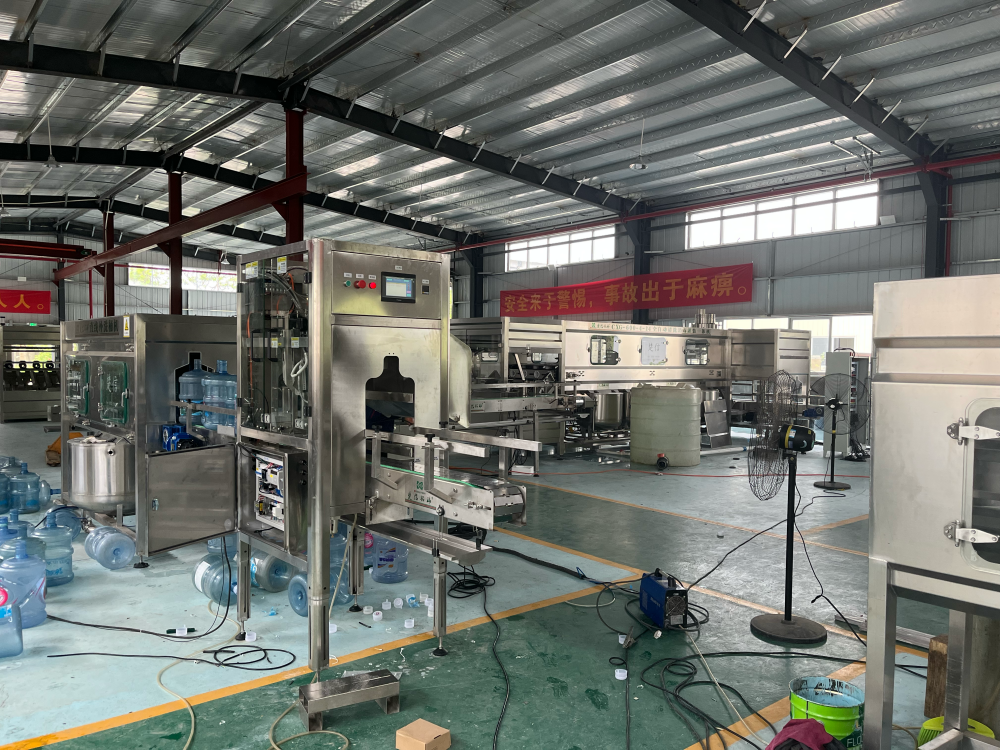
Production capacity dictates the number of membrane vessels, pump sizing, and pipe diameters. Our Fully Automatic Bottled Purified Water Filling Production Lines typically support capacities ranging from 200 to 2,500 bottles per hour (for 18.9L containers), but the underlying water treatment system must be scaled accordingly.
- Single-Stage vs. Two-Stage:*
- A two-stage RO configuration is specifically selected when single-stage permeate does not meet the required conductivity or purity standards. The second stage adds high-pressure pumps, additional membrane housings, and inter-stage monitoring, naturally increasing the system cost compared to a single-stage setup.
- Recovery Rate Optimization:*
- Higher recovery rates reduce wastewater but increase the risk of scaling and require more sophisticated control logic and higher-grade membranes. Balancing water efficiency with membrane life is a critical cost-trade-off.
3. Automation and Control Architecture
The level of automation significantly impacts the price. Basic systems may rely on manual valve adjustments and local gauges, while advanced lines feature:
- PLC + HMI Integration:*
- Real-time diagnostics, automated flushing, and remote-ready interfaces.
- Instrumentation:*
- Online conductivity meters, flow transmitters, and pressure sensors for each stage.
- Interlocking:*
- Automated shutdowns upon detecting abnormal parameters to protect expensive membrane elements.
For facilities aiming for minimal manual intervention and consistent product quality, investing in a higher level of automation reduces long-term labor costs and operational risks.
Defining the Scope: What Is Included in the Price?
A common source of confusion in budgeting is the ambiguity of "equipment only" versus "turnkey solution." When requesting a quote for a two-stage RO system cost per set, clarify the following boundaries:
- Equipment Fabrication:*
- Does the price include the skid-mounted frame, pumps, membranes, vessels, and piping?
- Installation & Commissioning:*
- As per our project delivery standards, installation services depend on the project location, site readiness (water, electricity, drainage), and whether client personnel can assist with rigging. These are often separate line items.
- Documentation & Training:*
- Comprehensive handover should include SOPs, P&ID diagrams, material certifications, and operator training on startup, shutdown, cleaning, and safety protocols.
- After-Sales Support:*
- Clarify the warranty period, response time for technical support, and availability of spare parts like membranes and filters.
Risk Factors and Budget Trade-Offs
Cutting costs on critical components can lead to higher total cost of ownership.
- Membrane Quality:*
- Lower-grade membranes may have lower upfront costs but suffer from faster fouling, higher energy consumption, and shorter replacement cycles.
- Material Selection:*
- For food and beverage applications, ensuring all wetted parts comply with food-grade standards (e.g., stainless steel 304/316) is non-negotiable. Compromising here risks product contamination and regulatory non-compliance.
- Pre-Treatment Gaps:*
- Skipping adequate pre-treatment to save money often results in premature membrane failure, forcing expensive replacements within months rather than years.
Practical Steps for Accurate Budgeting
To obtain a meaningful quotation that reflects your real project needs:
- Conduct Source Water Testing: Provide a full water analysis report including pH, TDS, hardness, turbidity, and specific ions.
- Define Target Output: Specify required hourly production volume and final water quality standards (e.g., conductivity limits).
- Assess Site Conditions: Share facility layout drawings, utility availability, and any space constraints.
- Clarify Service Expectations: Determine if you need just the equipment skid or full installation, commissioning, and training services.
Conclusion
The two-stage RO system cost per set is a function of specific engineering requirements rather than a commodity price. By focusing on raw water characteristics, capacity needs, and clear service scope definitions, procurement managers can avoid misleading comparisons and invest in a system that ensures stability, compliance, and long-term maintainability.
For a tailored evaluation based on your specific water source and production goals, our engineering team is ready to review your data and propose a optimized solution.
Next Steps
Ready to define your project scope? Request a Solution Consultation to discuss your water quality report, capacity targets, and facility layout. We will provide a preliminary configuration proposal and budget estimate aligned with your operational needs.