
Ultrafiltration System Components List: Core Equipment & Function Overview for Mineral Water Lines
Ultrafiltration System Components List: Core Equipment & Function Overview
For producers of mineral water, spring water, or mountain spring water, the core challenge is balancing microbial safety with the retention of natural mineral characteristics. Unlike reverse osmosis (RO), which removes most dissolved solids, an ultrafiltration (UF) system is designed specifically to intercept suspended solids, colloids, bacteria, and macromolecules while allowing beneficial minerals to pass through.
Selecting the right ultrafiltration system requires more than just buying a membrane module. It demands a complete process chain that protects the membrane from fouling and ensures the final product meets hygiene standards. Based on Chuxin Mingwei's engineering experience since 2008, this guide details the essential components of a functional UF system, their specific roles, and the critical pre-requisites for successful implementation.
1. Pre-Treatment Components: Protecting the Membrane
The lifespan and efficiency of an ultrafiltration membrane depend entirely on the quality of the incoming water. Without robust pre-treatment, membranes can clog rapidly, leading to frequent cleaning cycles or premature failure.
Raw Water Tank and Boosting Pump
The process begins with a raw water tank to stabilize supply fluctuations, followed by a boosting pump to provide the necessary pressure for subsequent filtration stages. The pump selection must match the flow rate requirements of the entire line to prevent cavitation or insufficient feed pressure.
Multi-Media and Activated Carbon Filters
Before water reaches the UF module, it typically passes through:
- Multi-Media Filters:*
- These remove larger suspended particles, silt, and turbidity. This step is critical for reducing the Silt Density Index (SDI) of the feed water.
- Activated Carbon Filters:*
- As noted in standard water treatment protocols, activated carbon is essential for adsorbing residual chlorine, odors, and organic compounds. Since many UF membranes are sensitive to oxidative damage from chlorine, this stage acts as a vital protective barrier.
Precision (Security) Filters
A precision filter (often 5-micron cartridge filtration) serves as the final safeguard before the high-pressure pump. It captures any fine particles that might have bypassed earlier stages, ensuring that only water meeting strict particulate limits enters the membrane housing.
2. The Core: Ultrafiltration Membrane Module
The heart of the system is the UF membrane module. In industrial applications, these are typically hollow-fiber membranes housed in pressure vessels.
- Filtration Mechanism:*
- The membrane acts as a physical barrier with pore sizes generally ranging from 0.01 to 0.1 microns. This effectively removes bacteria, viruses, and colloids.
- Mineral Retention:*
- Crucially for spring water producers, the UF process has limited removal of dissolved salts. This means calcium, magnesium, and other natural minerals remain in the water, preserving the product's original taste and nutritional profile.
- Configuration:*
- Systems can be configured in dead-end or cross-flow modes depending on the raw water quality. Cross-flow filtration is often preferred for waters with higher fouling potential as it continuously sweeps the membrane surface.
3. Post-Treatment and Disinfection Units
While UF removes microorganisms, the integrity of the membrane must be guaranteed, and the distribution system must remain sterile.
UV Sterilizers and Ozone Generators
To ensure absolute microbial safety, a UV sterilizer (typically 254 nm) is installed immediately after the UF unit to inactivate any potential breakthrough organisms. For spring water lines, ozone generators are often integrated for final disinfection and to maintain a residual disinfectant level in the finished water, preventing re-contamination during storage and filling.
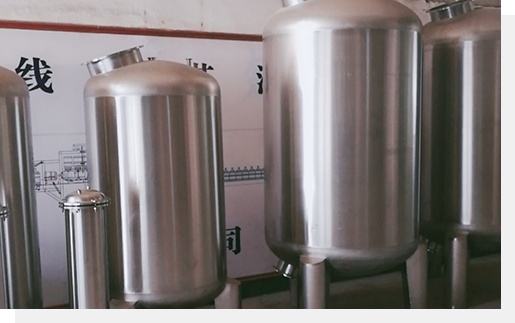
Finished Water Tanks and Circulation Loops
Treated water is stored in sanitary finished water tanks. To prevent stagnation and bacterial regrowth, the system should include a circulation loop that continuously moves water through the disinfection units. This is a standard requirement for maintaining water quality in bottling facilities.
4. Control and Monitoring Systems
Modern ultrafiltration systems rely on automated control to maintain consistent performance.
- PLC and HMI Interface:*
- A Programmable Logic Controller (PLC) manages pump operations, valve sequencing, and cleaning cycles. Operators interact via a Human-Machine Interface (HMI) to monitor real-time data.
- Key Instrumentation:*
- Essential instruments include inlet/outlet pressure gauges, flow meters, and turbidity sensors. Monitoring the trans-membrane pressure (TMP) is critical; a rising TMP indicates fouling and triggers the need for cleaning.
- Automatic Cleaning (CIP):*
- Integrated Clean-In-Place (CIP) systems allow for automated backwashing and chemical cleaning without disassembling the membrane modules, minimizing downtime.
Implementation Prerequisites and Suitability
Before adopting an ultrafiltration system, facility managers must evaluate specific site conditions:
- Source Water Analysis: A comprehensive water quality report is mandatory. Parameters like turbidity, SDI, iron/manganese content, and bacterial load determine the complexity of the pre-treatment required. For instance, high iron content may necessitate specialized oxidation and filtration steps before the UF unit.
- Product Definition: UF is ideal for mineral water, spring water, and mountain spring water where retaining natural composition is a regulatory or marketing requirement. It is not suitable if the goal is to produce pure water with near-zero TDS, which would require Reverse Osmosis.
- Facility Layout: The system requires adequate space for tank farms, pump skids, and maintenance access for membrane replacement. Electrical capacity must support high-pressure pumps and control systems.
Conclusion and Next Steps
An ultrafiltration system is a sophisticated assembly of pre-treatment filters, membrane modules, disinfection units, and intelligent controls. Its success lies not just in the membrane itself, but in the engineering of the surrounding components that protect it and ensure consistent output.
For beverage producers looking to launch or upgrade a spring water line, understanding these components is the first step toward a stable, compliant production process.
Ready to define your specific process route?
Share your raw water quality report and target production capacity with Chuxin Mingwei. Our engineering team will analyze your data to propose a tailored ultrafiltration solution that balances efficiency, mineral retention, and long-term maintainability.
Contact Us for a Solution Consultation
Following the precision filters, the core Ultrafiltration (UF) module intercepts suspended solids, colloids, bacteria, and macromolecules while allowing beneficial minerals to pass through, distinguishing it from Reverse Osmosis which removes most dissolved solids. To ensure final hygiene standards and system longevity, the process chain typically integrates disinfection units such as ozone generators or UV sterilizers, along with sterile storage tanks and CIP (Clean-in-Place) systems for regular maintenance.