
How to choose ultrafiltration system cost per : selection, rollout and support checklist
Ultrafiltration System Cost Per Set: Configuration Factors & Budget Planning Guide
For procurement managers and project leads in the beverage, food, and industrial sectors, understanding the ultrafiltration system cost per set is critical for accurate budget planning. Unlike standard off-the-shelf equipment, UF systems are engineered solutions where the final price is directly tied to your specific source water characteristics, production capacity goals, and the level of automation required.
At Chuxin Mingwei, we have observed that quoting a UF system without analyzing these variables often leads to misleading comparisons. A system designed for simple turbidity removal in a small spring water plant differs fundamentally in cost structure from a high-pressure UF skid serving as pre-treatment for a large-scale reverse osmosis (RO) plant.
Key Drivers Influencing UF System Pricing
The price of an ultrafiltration system is not a single fixed number but a sum of several engineered components. When evaluating quotes, focus on these four primary cost drivers:
1. Source Water Quality and Pre-Treatment Needs
The condition of your raw water is the most significant variable.
- Low Turbidity Sources:*
- If your source is relatively clean spring water requiring only particulate removal and bacterial reduction, the system may consist of a straightforward UF skid with basic pre-filtration.
- High Turbidity or Complex Sources:*
- Water with high suspended solids, organic load, or seasonal fluctuation requires robust pre-treatment (e.g., multi-media filtration, activated carbon) to protect the UF membranes. As noted in our technical guidelines, multi-media filters are essential for removing larger suspended solids and reducing turbidity to protect downstream units, while activated carbon is critical for adsorbing residual chlorine and organics that can damage membranes. Adding these stages increases the initial equipment footprint and cost but is necessary for long-term membrane life.
2. Membrane Configuration and Material
The heart of the system is the membrane module. Costs vary based on:
- Filtration Precision:*
- Standard UF removes suspended solids, colloids, and bacteria while retaining beneficial minerals—a key requirement for spring water and mineral water production where product positioning relies on natural composition.
- Material Science:*
- PVDF (Polyvinylidene Fluoride) membranes offer superior chemical resistance and durability compared to PES (Polyethersulfone), often commanding a higher price but reducing long-term replacement frequency.
- Hollow Fiber vs. Flat Sheet:*
- The geometry impacts packing density and cleaning protocols, influencing both the skid size and the complexity of the piping system.
3. Production Capacity and System Scale
Capacity is measured in cubic meters per hour (m³/h) or tons per hour (TPH).
- Small Scale (1–5 TPH):*
- Typically skid-mounted, semi-automated systems with manual valve control. Lower capital expenditure (CAPEX) but higher operational labor.
- Medium to Large Scale (10–50+ TPH):*
- Requires multiple membrane racks, larger feed pumps, and sophisticated flow balancing. The cost does not scale linearly; larger systems benefit from economies of scale in piping and structural supports but require more advanced instrumentation.
4. Automation and Control Architecture
The level of intelligence built into the system significantly impacts the price:
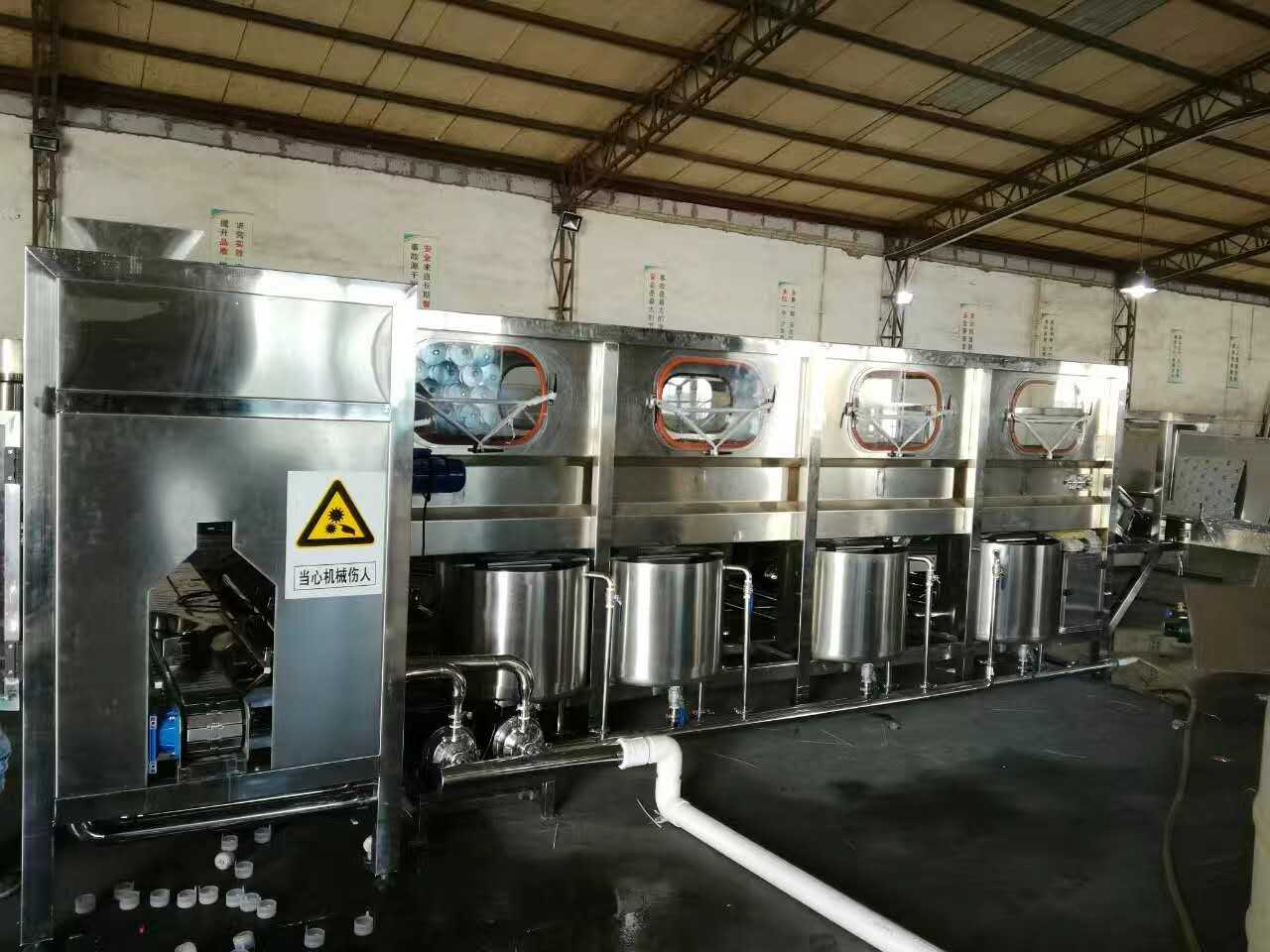
- Basic Control:*
- Manual start/stop with simple pressure gauges. Suitable for small operations with dedicated operators.
- PLC + HMI Integration:*
- Automated backwashing, air scouring, and chemical cleaning (CIP) cycles. A PLC-based intelligent control system allows for real-time diagnostics, automatic flux recovery, and remote monitoring. While this increases the upfront cost, it minimizes human error, ensures consistent water quality, and reduces long-term operational costs by optimizing chemical usage and energy consumption.
Application-Specific Cost Considerations
Your specific industry application dictates the necessary configuration, thereby influencing the final cost per set.
Spring Water and Mineral Water Retention
For producers of natural spring water, the goal is purification without demineralization. Here, the UF system acts as the primary barrier against microbes and particulates while preserving the water's natural mineral profile. The cost focus here is on hygienic design and mineral retention efficiency. The system must be validated to ensure it meets drinking water standards without altering the taste or mineral content that defines the product.
RO Pre-Treatment for Purified Water
In purified water lines, UF often serves as a high-efficiency pre-treatment for Reverse Osmosis. By replacing traditional sand filters and softeners, UF provides a consistent Silt Density Index (SDI) to the RO membranes, extending their life and stabilizing recovery rates. In this scenario, the budget must account for the integration complexity between the UF skid and the subsequent RO unit, including high-pressure pumping and interconnecting piping.
Industrial Separation and Clarification
For industries like electronics or pharmaceuticals, UF may be used for specific separation tasks or wastewater recovery. These applications often require specialized materials (e.g., 316L stainless steel instead of 304) and stricter validation protocols, which increase the manufacturing and documentation costs.
Hidden Costs and Budget Boundaries
When planning your budget, look beyond the equipment invoice. A comprehensive budget should include:
- Installation and Commissioning:*
- Site-specific engineering for piping layout, electrical connections, and foundation requirements.
- Spare Parts and Consumables:*
- Initial stock of membrane elements, seals, and cleaning chemicals.
- Training and Documentation:*
- Operator training on standard operating procedures (SOPs) and maintenance schedules is vital for system longevity.
- Regulatory Compliance:*
- Costs associated with water quality testing and certification to meet local health and safety standards.
Avoid suppliers who offer "guaranteed" results without analyzing your specific water report. As emphasized in our service philosophy, non-standard, site-specific solutions engineered from actual source water data prioritize stability and maintainability over generic low-ball pricing.
Making the Right Investment Decision
To accurately assess the ultrafiltration system cost per set for your project:
- Conduct a Water Analysis: Obtain a full chemical and biological profile of your source water.
- Define Capacity Clearly: Specify peak and average flow rates, not just a target number.
- Evaluate Total Cost of Ownership (TCO): Consider energy usage, membrane replacement cycles, and labor requirements, not just the purchase price.
- Request a Detailed Scope: Ensure the quote includes pre-treatment, control systems, and installation support.
At Chuxin Mingwei, we approach every UF project by first understanding your water source and production goals. Whether you need a compact unit for a boutique spring water brand or a large-scale pre-treatment skid for an industrial purified water line, our engineering team designs systems that balance performance, compliance, and budget.
Next Steps
Ready to evaluate the specific configuration and budget for your ultrafiltration needs? Share your source water report, target capacity, and facility constraints with us. We will provide a tailored technical proposal and a transparent cost breakdown aligned with your project requirements.
Request a Solution Consultation
Beyond the core filtration components, a comprehensive budget plan must account for the complete process chain and facility requirements. For beverage applications, this includes integrating specific pre-treatment stages like multi-media and activated carbon filters to protect membrane life, as well as downstream disinfection units such as ozone generators and UV sterilizers. Furthermore, total investment costs are influenced by auxiliary systems including CIP cleaning setups, sterile storage tanks, and cleanroom infrastructure for filling areas. Procurement strategies should also consider future expansion reserves and the level of automation required for operations, ensuring the selected configuration aligns with both current production goals and long-term scalability.