
Ultrafiltration vs. Multimedia Filtration for RO Pretreatment: A Procurement Decision Guide
Ultrafiltration vs. Multimedia Filtration for RO Pretreatment: A Procurement Decision Guide
When specifying a reverse osmosis (RO) system for bottled water production or industrial purification, the pretreatment stage is often where project stability is won or lost. Procurement teams frequently face a core decision: should the RO feed be protected by traditional multimedia filtration (sand/carbon) or modern ultrafiltration (UF) membranes?
This is not a question of which technology is universally "better." It is a question of matching the pretreatment method to your specific raw water characteristics, target water quality, and operational constraints. At Chuxin Mingwei, we engineer these decisions based on actual source water reports and production goals rather than generic templates.
The Core Function: Protecting the RO Membrane
Both multimedia filtration and ultrafiltration serve the same primary purpose in an RO system: to remove suspended solids, colloids, and particulates that could foul or damage the sensitive RO membranes. However, they achieve this through fundamentally different mechanisms, leading to distinct operational profiles.
Multimedia Filtration relies on depth filtration. Water passes through layers of sand, anthracite, or activated carbon, where particles are trapped within the media bed. It is effective for reducing turbidity, residual chlorine (via carbon), and some organic matter. Its performance is highly dependent on the quality of the media and the frequency of backwashing.
Ultrafiltration (UF) uses a membrane barrier with pore sizes typically around 0.01–0.1 microns. It physically blocks particles, bacteria, and large molecules while allowing water and dissolved salts to pass. UF provides a much more consistent effluent quality, often measured by Silt Density Index (SDI), regardless of fluctuations in raw water turbidity.
Decision Criteria: When to Choose Which?
1. Raw Water Quality Variability
If your source water is stable municipal tap water with low and consistent turbidity, multimedia filtration is often a cost-effective and robust choice. It handles moderate chlorine levels well (using activated carbon) and requires less sophisticated control logic.
However, if your source is surface water, well water with fluctuating iron/manganese, or water prone to seasonal algae blooms, ultrafiltration offers superior protection. UF can handle sudden spikes in turbidity without compromising the SDI of the water feeding the RO unit. As noted in industry best practices, relying solely on multimedia filters for highly variable sources can lead to frequent RO cleaning cycles and reduced membrane life.
2. Target Product Standards
For standard purified drinking water where the primary goal is TDS reduction, both methods can work if designed correctly. However, for projects requiring higher biological stability—such as natural spring water lines where mineral retention is critical but microbial risk must be minimized—UF provides an additional barrier against bacteria and cysts before the water even reaches the RO or final disinfection stage.
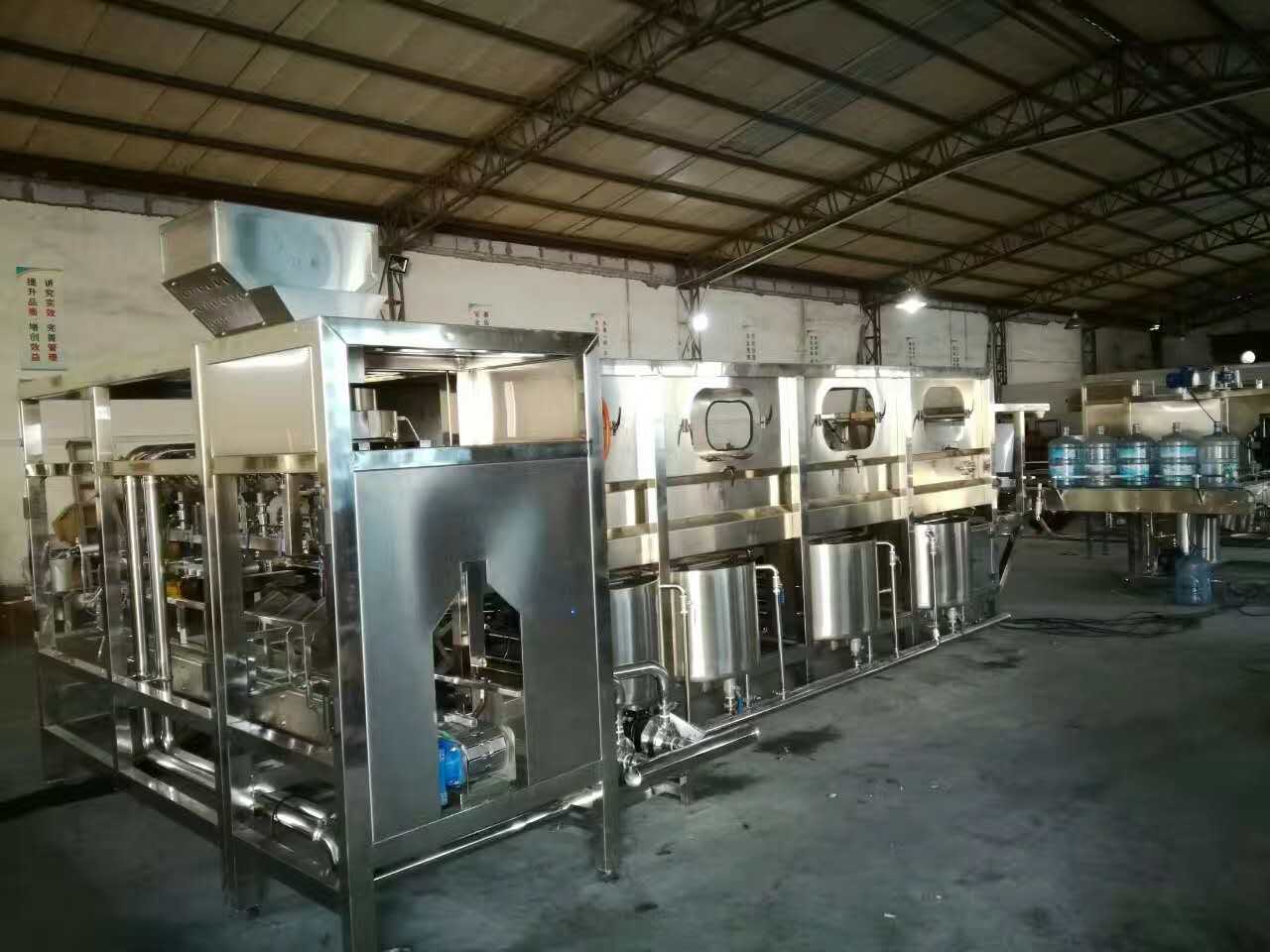
In our Bottled Spring Water Filling Production Lines, we often utilize a dual-membrane approach (NF + UF) or specific UF pretreatment to balance purification efficiency with the retention of beneficial minerals, ensuring the final product meets both safety and taste profiles without over-processing.
3. Operational Complexity and Maintenance
Multimedia systems require regular backwashing (often daily or based on pressure differential) and periodic media replacement (every 1–3 years). They involve larger footprints and significant water usage during backwash cycles. Operators must monitor pressure drops across the bed and adjust backwash duration manually or via simple timers.
UF systems operate with automated filtration and backwash cycles, often including chemical enhanced backwash (CEB) for deeper cleaning. While the initial control logic is more complex (typically PLC-driven), the output quality is more consistent, reducing the operational burden of constantly adjusting to raw water changes. The trade-off is the cost of membrane replacement and the need for more precise chemical dosing control.
Hidden Cost Drivers and Budget Trade-offs
When comparing quotes, looking only at the equipment purchase price can be misleading. Consider these lifecycle factors:
- Water Recovery Rate:*
- Multimedia filters consume a significant portion of feed water for backwashing (typically 3–5% of total flow). UF systems also use water for backwash but often achieve higher overall system recovery rates due to better protection of the downstream RO, allowing the RO to run longer between cleanings.
- RO Membrane Longevity:*
- The single largest operating cost in an RO system is membrane replacement. UF pretreatment typically extends RO membrane life by maintaining a lower and more stable SDI (<3), whereas multimedia filtration may allow occasional SDI spikes that accelerate fouling. Over a 5-year period, the savings in RO membrane replacements and cleaning chemicals with UF can offset its higher initial capital cost.
- Footprint and Civil Works:*
- Multimedia tanks are large and heavy, requiring substantial foundation work and floor space. UF skids are compact and modular, often reducing civil engineering costs and fitting better into existing facilities with space constraints.
Implementation Boundaries and Risks
It is critical to understand that ultrafiltration is not a substitute for all pretreatment steps. If your raw water has high hardness, scaling inhibitors or softening may still be required before UF or RO. Similarly, if chlorine levels are very high, a reduction step is necessary to protect certain types of UF membranes, although some are chlorine-tolerant.
Conversely, multimedia filtration cannot guarantee low SDI if the media is channeling or if the backwash is insufficient. A common failure mode we see in field audits is the assumption that a sand filter alone is sufficient for high-fouling potential waters, leading to premature RO failure.
Furthermore, the integration of the pretreatment system with the rest of the line is vital. As seen in our Fully Automatic Bottled Purified Water Filling Production Lines, the pretreatment unit must be synchronized with the high-pressure pump, RO skid, and final ozone/UV disinfection. A mismatch in flow rates or pressure settings can cause cavitation or membrane damage regardless of the filtration technology chosen.
Next Steps for Your Project
Selecting between ultrafiltration and multimedia filtration requires a data-driven approach. We recommend the following steps before finalizing your equipment specification:
- Obtain a Comprehensive Raw Water Report: Test for turbidity, SDI, iron, manganese, hardness, chlorine, and microbial content across different seasons if possible.
- Define Target Water Quality: Clearly state whether the goal is pure water (low TDS), mineral water (specific retention), or industrial process water.
- Evaluate Operational Capacity: Assess your team's ability to manage complex PLC-controlled systems versus simpler mechanical filters.
- Request a Process Flow Diagram (PFD): Ask your supplier to map out the specific pretreatment train, including chemical dosing points and waste discharge plans.
At Chuxin Mingwei, we do not offer one-size-fits-all solutions. Our engineering team analyzes your specific water source, capacity requirements (e.g., 200–2,500 bottles/hour), and facility constraints to propose a pretreatment strategy that ensures long-term stability and compliance. Whether your project needs the robust simplicity of multimedia filtration or the precision of ultrafiltration, the right choice is the one engineered for your unique conditions.
Ready to optimize your water treatment configuration? Share your raw water analysis and production targets with us. We will provide a tailored technical proposal outlining the recommended pretreatment method, expected recovery rates, and a clear breakdown of the system architecture.