
Utility Readiness Checklist for Water Filling Line Installation — What Your Site Must Confirm Before Equipment Arrival
Why This Matters: A Real-World Scenario
A beverage plant in Guangdong ordered a fully automatic 18.9 L bottled spring water filling line — rated at 1,200 bottles/hour. During commissioning, the system failed to sustain stable output. Investigation revealed: the on-site compressed air supply lacked sufficient pressure and drying capability, causing intermittent capping failures and repeated PLC fault resets. Resolving it required retrofitting an air treatment unit, delaying handover by 17 days.
This is not uncommon. As noted in our implementation FAQ, “Public utilities mismatch is the #1 cause of post-installation capacity shortfalls and unplanned rework.” For Chuxin Mingwei’s custom-engineered water treatment and filling systems — including bottled spring water lines (ID 60), purified water lines (ID 59), and cleanroom-integrated barrelled water solutions — utility readiness isn’t a final step. It’s a prerequisite for design validation, technical agreement sign-off, and risk-controlled delivery.
Who Uses This Checklist?
- Procurement managers: To align vendor scope with site infrastructure before signing contracts.
- Operations leads: To coordinate internal utility upgrades and cross-departmental handoffs (e.g., HVAC, power, drainage).
- Digital project teams: To integrate utility interface data into MES/SCADA planning and digital twin modeling.
All three roles operate across beverage, food, pharmaceutical, and electronics facilities in China — where local grid voltage, municipal water quality, and cleanroom ventilation standards vary significantly by region and plant age.
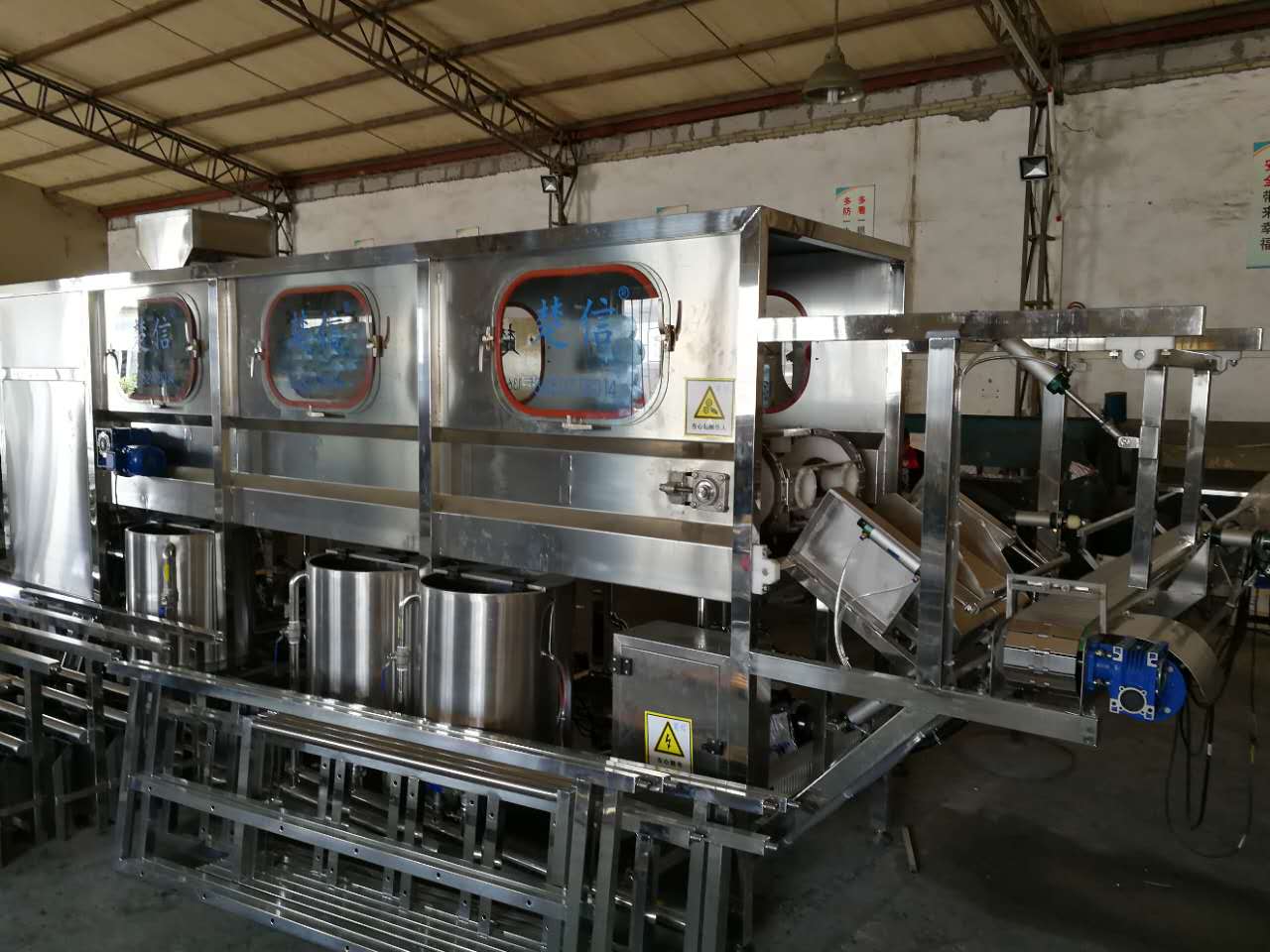
The 7-Point Utility Readiness Checklist
| Item | Required Confirmation | Why It’s Critical | Boundary Note |
|---|---|---|---|
| 1. Power Supply | Voltage (380 V ±5%), phase (3P+N+PE), frequency (50 Hz), total load (kW), and dedicated circuit breaker rating | Powers PLC control systems, UV sterilizers, and high-torque filling pumps. Undervoltage causes servo drift; unstable grounding triggers EMI faults. | Not included in standard equipment quote unless specified in technical agreement. |
| 2. Raw Water Inlet | Pressure, flow rate (≥ design peak demand), and pre-filtered status | Feeds multi-media + activated carbon + dual-stage RO (for purified lines) or NF+UF (for spring water). Unverified source water may overload pretreatment or compromise mineral retention. | Chuxin Mingwei engineers require lab-tested raw water report before process design. |
| 3. Drainage & Wastewater Outlet | Slope, pipe diameter, discharge point elevation, and local discharge limits | Handles bottle rinsing, CIP chemical recovery, and filter backwash. Insufficient slope causes pooling; undersized pipes trigger overflow alarms during cleaning cycles. | Not covered under standard after-sales support — requires civil coordination. |
| 4. Compressed Air | Stable pressure, low moisture content, oil-free condition, and adequate flow (≥1.2× max line demand) | Drives pneumatic cappers, cylinder actuators, and air-spray bottle washers. Moisture or oil contaminates HEPA filters in cleanroom-integrated systems. | Optional air dryer or oil-free compressor can be added as engineered package — quote separately. |
| 5. Cooling Water (if applicable) | Inlet/outlet temperature, flow rate, and corrosion-resistant piping | Required for RO high-pressure pumps and UV lamp cooling. Overheating reduces membrane lifespan and UV intensity. | Only needed for lines with ≥1,000 L/h RO capacity or continuous 24-hr operation. |
| 6. Cleanroom Ventilation Interface | Static pressure differential, airflow direction, and duct connection points | Essential for cleanroom-integrated systems. Mismatched duct routing or pressure zoning compromises particle control and fails GMP-relevant audits. | Duct layout and HEPA filter bank sizing are site-specific — finalized during factory acceptance test (FAT) review. |
| 7. Facility Layout Constraints | Clear height, column spacing, floor loading, and access corridor width | Determines machine footprint, crane path, and maintenance access. Low ceiling blocks overhead conveyor routing; narrow corridors prevent modular unit replacement. | Confirmed via signed site survey — included in Chuxin Mingwei’s standard pre-delivery workflow. |
What Happens If You Skip This?
- Delayed FAT and SAT due to unresolved interface gaps
- Unplanned civil works (e.g., trenching, conduit installation, structural reinforcement)
- Reduced effective capacity (e.g., 20–30% lower than rated output)
- Increased failure rate during first 90 days of operation
Chuxin Mingwei’s end-to-end service includes utility interface verification — but only if initiated before manufacturing begins. Once fabrication starts, changes incur engineering rework fees and schedule impact.
Next Steps: From Checklist to Commissioning
- Download our Utility Interface Data Sheet (Excel template, bilingual CN/EN) — pre-formatted for Chinese municipal utility reporting formats.
- Schedule a free 45-minute virtual site walkthrough with our engineering team — we’ll map your inputs against ID 60 / ID 59 / ID 58 specifications.
- Request a formal Technical Agreement draft — includes verified utility clauses, delivery boundaries, and commissioning success criteria.
Pro tip: For projects involving both water treatment and clean air systems (e.g., full bottling cleanroom), confirm utility alignment jointly — not in silos. Our integrated design ensures air handling units (AHUs) and RO skids share coordinated control logic and alarm interlocks.
Final Note
This checklist reflects actual field experience across installations in Huizhou and other Tier 2–3 industrial zones in China. It is not theoretical — it’s the minimum baseline Chuxin Mingwei requires to guarantee stability, applicability, and long-term maintainability — per our core value proposition.