
How to choose water treatment production line : selection, rollout and support checklist
Water Treatment Production Line Cost Per Set: Configuration Factors & Budget Planning Guide
For procurement managers and operations leads planning a new water bottling or industrial purification project, the question "What is the cost per set?" rarely has a simple answer. Unlike off-the-shelf consumer goods, a water treatment production line is a non-standard, engineered system. The final investment depends entirely on how well the equipment configuration matches your specific operational context.
At Chuxin Mingwei, we have delivered custom solutions since 2008 based on a core principle: stability and applicability over generic specifications. This guide explains the primary variables that drive cost, helping you move from a rough budget estimate to a defined technical scope.
Why "Cost Per Set" Varies by Project
A production line is not a single machine but an integrated chain of units working in sync. The price difference between two seemingly similar lines often lies in the details of the water source, the required purity level, and the degree of automation. Ignoring these factors can lead to under-performing systems or unnecessary capital expenditure.
1. Source Water Quality and Pre-treatment Complexity
The starting point of any cost calculation is the raw water analysis.
- Low Complexity:*
- If your source is municipal tap water with stable parameters, the pre-treatment may only require multi-media filtration and activated carbon.
- High Complexity:*
- Groundwater with high hardness, iron, manganese, or specific contaminants requires additional steps like softening, specialized oxidation, or dual-membrane processes (e.g., NF + UF) to balance purification with mineral retention.
Fact Check: As noted in our technical scope, raw water conditions dictate the pre-treatment strategy. For instance, spring water projects often utilize a Dual-membrane NF + UF process to ensure efficiency while retaining beneficial minerals, whereas purified water lines rely on Two-Stage RO combined with ozone and UV sterilization. The number of tanks, pump capacities, and membrane brands selected directly impact the base cost.
2. Target Capacity and Production Speed
Capacity is usually measured in bottles or barrels per hour (BPH), but the rated capacity determines the size of every component in the line.
- Small Scale:*
- A line producing 200–500 barrels/hour (e.g., for local distribution) uses compact fillers and simpler conveyors.
- Industrial Scale:*
- Lines targeting 1,800–5,000 barrels per shift require heavy-duty washers, high-speed rotary fillers, and robust accumulation tables.
Our Barrelled Water Sterilization & Filling Production Lines, for example, are modular. A client needing 500 barrels/8-hour shift will have a different configuration than one requiring continuous 24-hour operation at 5,000 barrels. Scaling up doesn't just mean a bigger filler; it often necessitates larger water storage tanks, higher-flow pumps, and more sophisticated electrical control systems.
3. Packaging Format and Container Type
The type of container you intend to fill is a major cost driver.
- Barrelled Water (PC/PET):*
- Requires extensive washing stations (internal/external brushing), disinfection tunnels, and specific capping mechanisms for 18.9L, 15L, or 10L containers.
- Bottled Water (PET/Glass):*
- Involves blow-molding integration (if producing bottles on-site), air conveyors, and high-speed tri-block fillers (washing-filling-capping).
- Automation Level:*
- A fully automatic line with servo positioning and vacuum-assisted bag handling (achieving ≥99.8% success rates in packaging) costs more than a semi-automatic setup but significantly reduces long-term labor costs and contamination risks.
4. Facility Constraints and Clean Air Requirements
Often overlooked in initial budgeting, the facility itself dictates auxiliary costs.
- Cleanroom Standards:*
- If your product requires ISO Class 8 (100,000) or higher cleanliness (common in pharmaceutical or high-end beverage sectors), you must invest in a custom Clean Air Purification System. This includes H13 HEPA filtration, precise airflow routing, and pressure zoning, which are engineered site-specifically.
- Layout & Utilities:*
- The distance between the water treatment room and the filling workshop affects piping costs. Existing power limits may require transformer upgrades or variable frequency drives (VFDs) to manage load.
Breaking Down the Investment: Key Components
When requesting a quote, ensure the proposal clearly distinguishes between the core water treatment unit and the filling/packaging line. A comprehensive turnkey solution typically includes:
- Raw Water Pre-treatment: Multi-media filters, carbon filters, softeners, and security filters.
- Core Purification: RO membranes, EDI modules (for ultra-pure water), or UF systems.
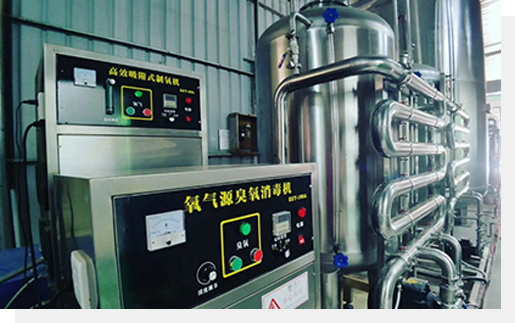
- Disinfection & Storage: Ozone generators, UV sterilizers (254 nm), and sterile tanks with breathing filters.
- Filling Block: The washer-filler-capper monoblock or linear line. Precision here is critical; our integrated units achieve filling accuracy ≤ ±2 mL and capping pass rates ≥99.6%.
- Post-Filling Equipment: Labelers, coders, shrink wrappers, and palletizers.
- Control System: PLC-based intelligent control with HMI for real-time diagnostics.
Hidden Costs and Risk Boundaries
To avoid budget overruns, consider these often-missed factors:
- Installation & Commissioning:*
- Equipment cost is only part of the equation. Professional installation, pipeline connection, and trial runs are essential for stability.
- Spare Parts & Consumables:*
- Budget for initial stocks of membranes, filters, ozone lamps, and sealing rings.
- Regulatory Compliance:*
- Ensure the design supports local SC (Production License) requirements, including material certifications and process documentation.
Boundary Note: We do not provide "guaranteed pass" services for regulatory audits, as these depend on your raw material management and operational hygiene. However, our equipment is designed to meet the mechanical and process standards required for such certifications.
Steps to Define Your Accurate Budget
To get a meaningful "cost per set" figure, follow this preparation workflow:
- Water Analysis: Provide a recent full-spectrum water quality report. This is the baseline for process design.
- Capacity Planning: Define your peak hourly demand and future expansion plans (e.g., "Start at 1,000 BPH, expandable to 2,500 BPH").
- Container Specs: Specify exact bottle/barrel dimensions, mouth types, and material (PC, PET, Glass).
- Site Survey: Share workshop dimensions, ceiling height, and utility access points (power, water, drainage).
- Automation Preference: Decide on the level of human intervention you can support vs. the labor cost savings of full automation.
Conclusion
The cost of a water treatment production line is a function of your specific engineering requirements, not a catalog price. By focusing on product-scenario matching—aligning equipment capabilities with your actual water quality, capacity, and facility constraints—you ensure a solution that is stable, compliant, and maintainable in the long term.
At Chuxin Mingwei, we prioritize delivery execution and sustained post-installation support. Whether you need a compact 200 BPH barrel line or a high-speed 2,500 BPH bottled water system, our team engineers every detail from the source water to the final pallet.
Next Steps
Ready to define your project scope? Share your water source data, target capacity, and packaging details with us. We will provide a tailored configuration proposal and a transparent budget breakdown aligned with your operational goals.
Request a Solution Consultation