
Water Treatment System Selection and Water Quality Assurance: Key Parameters and Implementation Steps
Introduction
For industrial buyers in the beverage, food, and pharmaceutical sectors, selecting the right water treatment system is critical to maintaining product quality and operational efficiency—especially when scaling production capacity. This guide outlines the key parameters and implementation steps to ensure your water treatment system meets current and future needs while maintaining consistent water quality.
Understanding Your Water Source and Quality Requirements
Before selecting a water treatment system, it’s essential to analyze the source water thoroughly. Key parameters to consider include:
- Total Dissolved Solids (TDS):*
- Determines whether a single-stage or double-stage reverse osmosis (RO) system is needed.
- Hardness and Iron/Manganese Content:*
- Influences the need for water softening or iron removal stages.
- Turbidity and Organic Load:*
- Affects the choice of pre-filtration and disinfection methods.
- Microbial Contamination:*
- Dictates the necessity of UV or ozone sterilization.
Chuxin Mingwei’s approach begins with a comprehensive water quality assessment to ensure the system is engineered for your specific source water and target standards.
Matching System Capacity to Production Needs
System capacity must align with your production line’s throughput and operational schedule. For example:
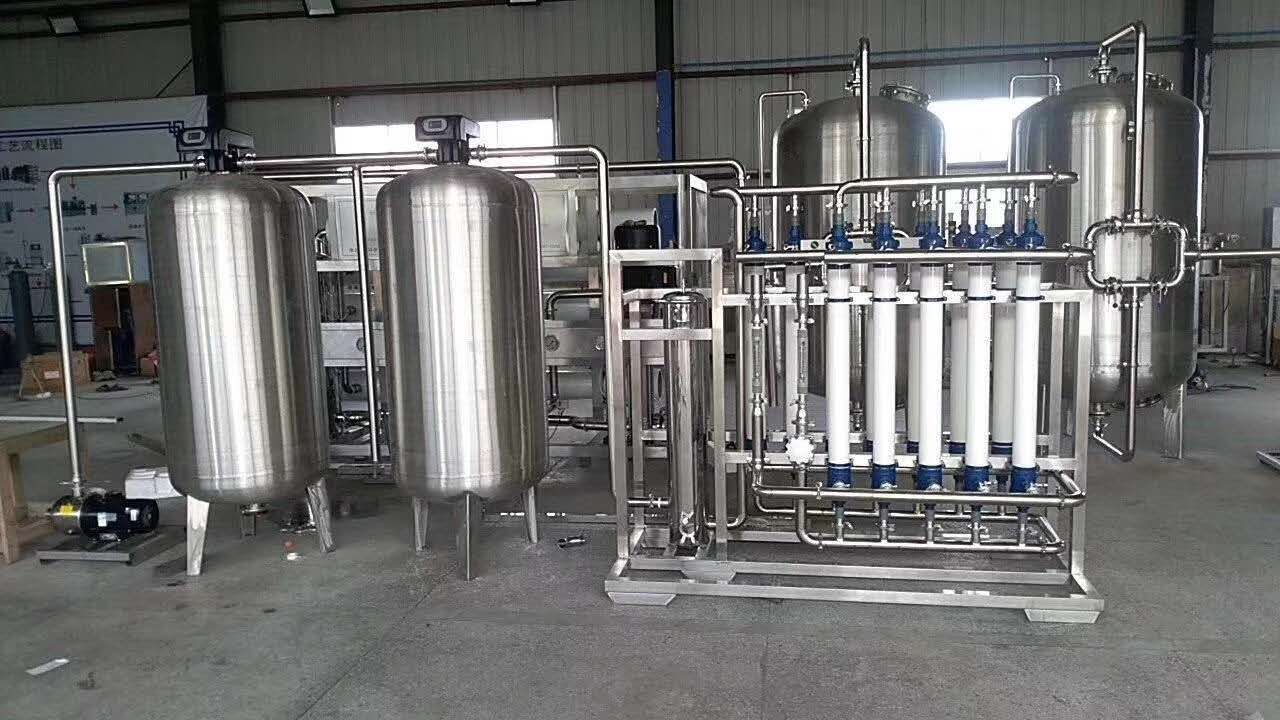
- A bottled purified water filling line
- with a rated capacity of customizable output will require a water treatment system that can supply consistent flow and quality during peak production.
- If you operate multiple shifts or plan for future expansion, designing the system with some flexibility ensures it can handle increased demand.
The system must also accommodate variations in water demand, such as peak flow during cleaning-in-place (CIP) cycles or equipment startup.
Facility Constraints and System Integration
Your facility’s physical layout, available utilities (water, electricity, drainage), and environmental conditions (e.g., cleanroom requirements) influence system design. For example:
- Clean air purification systems must be integrated with water treatment and filling lines to maintain ISO Class 8 (100,000) standards in bottling environments.
- Space limitations may require modular or compact system configurations.
- Electrical and control system compatibility (e.g., PLC + HMI integration) ensures seamless operation with existing automation.
Chuxin Mingwei provides site-specific engineering to ensure all components work together efficiently.
Implementation Steps: From Design to Commissioning
- Initial Consultation and Water Testing: Submit your source water report and production requirements to determine the optimal treatment process.
- Process Design and Equipment Selection: Based on your needs, a customized system is designed, including pre-treatment, purification, and post-treatment stages.
- Manufacturing and Pre-Installation Checks: Equipment is manufactured to your specifications and undergoes factory acceptance testing (FAT).
- On-Site Installation and Commissioning: Our team ensures proper integration with your facility’s infrastructure and conducts site acceptance testing (SAT).
- Operator Training and Handover: Training covers system operation, maintenance, and troubleshooting to ensure smooth long-term performance.
Post-Installation Support and Long-Term Performance
A well-designed system is only as effective as its ongoing maintenance and support. Chuxin Mingwei provides:
- Remote diagnostics and troubleshooting
- using real-time monitoring and data logging.
- Scheduled maintenance and consumables replacement
- to prevent downtime and extend system life.
- Technical support and spare parts availability
- to ensure rapid response to any issues.
Regular system audits and performance checks help maintain water quality and compliance with industry standards.
Conclusion
Selecting the right water treatment system is a strategic decision that impacts product quality, operational efficiency, and long-term scalability. By focusing on source water characteristics, production capacity, facility constraints, and post-installation support, you can ensure a system that delivers consistent water quality and adapts to future needs.
Next Steps
If you’re planning a production expansion or evaluating water treatment options, contact Chuxin Mingwei to discuss your requirements. Our team will help you select, design, and implement a system tailored to your specific application and facility conditions.