
Enterprise
Water Treatment Technologies

Practical guidance for better product and service decisions.

Which Water Quality Factors Affect UV Disinfection Performance: Process Flow, Interface Requirements & Operational Best

Published: 2026-07-25

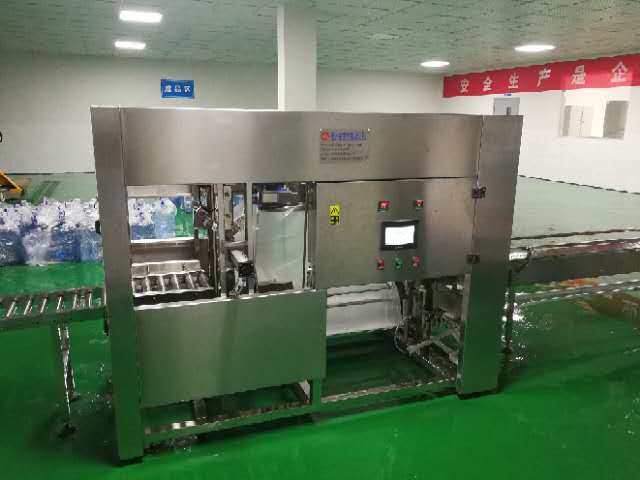
Which Water Quality Factors Affect UV Disinfection Performance: Process Flow, Interface Requirements & Operational Best Practices \\![Hero Image](http://rpidj9qp.saas.cookeji.com/uploads/images/20260714/202607141643293e6060045.jpg) \\[Image Caption: Custom Water Treatment & Filling Solutions by Chuxin Mingwei] \\ \\\n
Which Water Quality Factors Affect UV Disinfection Performance: Process Flow, Interface Requirements & Operational Best

Introduction \\ \\\nUV disinfection is a critical component in many industrial water treatment systems, particularly in the beverage, food, pharmaceutical, and electronics industries. The effectiveness of UV disinfection depends on several water quality factors. This article will delve into these factors, explaining their impact on UV disinfection performance, and providing practical guidance for optimal system design and operation. \\ \\\n

Key Water Quality Factors Affecting UV Disinfection \\ \\\n

1. Ultraviolet Transmittance (UVT) \\ \\\nUVT is a measure of how much UV light can pass through the water. High levels of suspended solids, organic matter, or other contaminants can reduce UVT, thereby decreasing the effectiveness of UV disinfection. For example, in a bottled purified water filling line, maintaining high UVT is crucial to ensure that the UV dose is sufficient to inactivate microorganisms. \\ \\\n

2. Turbidity \\ \\\nTurbidity refers to the cloudiness or haziness of water caused by suspended particles. High turbidity can scatter UV light, reducing its penetration and effectiveness. In a fully automatic bottled purified water filling production line, ensuring low turbidity is essential to maintain consistent UV disinfection. \\ \\\n

3. Color and Organic Matter \\ \\\nColored water or water with high levels of organic matter can absorb UV light, reducing its effectiveness. For instance, in a clean air purification system designed for water bottling cleanrooms, it is important to remove color and organic matter to ensure optimal UV disinfection. \\ \\\n

4. pH and Temperature \\ \\\nWhile pH and temperature do not directly affect UV transmittance, they can influence the overall water quality and the effectiveness of pre-treatment processes. For example, in a barrelled water sterilization and filling production line, maintaining the correct pH and temperature is crucial for the effectiveness of the triple-layer disinfection process. \\ \\\n

Process Flow and Interface Requirements \\ \\\n

1. Pre-Treatment \\ \\\nEffective pre-treatment is essential to ensure that the water entering the UV disinfection unit has the necessary UVT and low turbidity. Common pre-treatment steps include sedimentation, filtration, and activated carbon adsorption. \\ \\\n

2. UV Disinfection Unit \\ \\\nThe UV disinfection unit should be designed to provide the required UV dose based on the specific water quality and flow rate. The unit should also have a robust monitoring system to ensure that the UV dose is consistently delivered. \\ \\\n

3. Post-Treatment \\ \\\nPost-treatment may include additional filtration or disinfection steps to ensure that the water meets the required standards. For example, in a fully automatic barrel filling line, post-treatment may include a final filtration step to remove any remaining particles. \\ \\\n

Operational Best Practices \\ \\\n

1. Regular Maintenance \\ \\\nRegular maintenance of the UV disinfection unit is essential to ensure its continued effectiveness. This includes cleaning the quartz sleeves, replacing the UV lamps, and checking the monitoring system. \\ \\\n

2. Monitoring and Control \\ \\\nContinuous monitoring of UVT, turbidity, and other water quality parameters is crucial to ensure that the UV disinfection unit is operating effectively. Automated control systems can help to adjust the UV dose based on real-time data. \\ \\\n

3. Training and Documentation \\ \\\nProper training of operators and detailed documentation of the UV disinfection process are essential for long-term maintainability. This includes standard operating procedures (SOPs), maintenance schedules, and troubleshooting guides. \\ \\\n

Conclusion \\ \\\nUnderstanding the key water quality factors that affect UV disinfection performance is crucial for the design and operation of effective water treatment systems. By following the process flow, interface requirements, and operational best practices outlined in this article, you can ensure that your UV disinfection system operates at peak efficiency. \\ \\\n

Next Steps \\ \\\nIf you need further guidance on designing and implementing a UV disinfection system, or if you have specific questions about your water quality and treatment needs, please contact us for a consultation. Our team of experts can provide tailored solutions based on your specific requirements. \\ \\\n--- \\ \\\nChuxin Mingwei provides custom water treatment and filling solutions, including UV disinfection systems, for a wide range of industries. Contact us today to learn more.