
Why Does Carbonated Beverage Leak Gas After Capping: Root-Cause Diagnosis & Step-by-Step Troubleshooting
Why Does Carbonated Beverage Leak Gas After Capping: Root-Cause Diagnosis & Step-by-Step Troubleshooting
Gas leakage after capping is one of the most frequent quality deviations on carbonated beverage production lines. For procurement managers, operations leads, and digital project teams, resolving this issue requires a structured approach that separates equipment capability from process execution. This guide outlines the primary causes, verification checkpoints, corrective actions, and operational boundaries to help you stabilize output and reduce waste.
Immediate Answer: What Typically Causes Post-Capping Gas Leakage
Gas leakage after capping usually stems from one or more of the following:
- Insufficient capping torque or misaligned sealing surfaces
- Inconsistent bottle mouth geometry or contamination
- Over-pressurization during filling or temperature-induced expansion
- Cap or liner incompatibility with the beverage or filling conditions
- Worn or improperly adjusted capping heads and sealing components
Carbonated beverages require precise control over pressure, temperature, and sealing mechanics. Unlike still water or purified water lines, carbonated filling systems must manage dissolved CO₂, internal pressure, and cap sealing dynamics simultaneously.
Step-by-Step Diagnosis & Verification Path
1. Verify Capping Torque & Sealing Alignment
- Check torque settings against cap manufacturer specifications.
- Inspect capping head alignment and pressure distribution across all stations.
- Confirm that the cap liner is properly seated and compatible with the beverage chemistry.
Checkpoint: Use a calibrated torque tester on 5–10 consecutive samples. If torque varies by more than ±10%, adjust or replace capping components.
2. Inspect Bottle Mouth & Pre-Fill Handling
- Examine bottle mouth dimensions for deformation or flash.
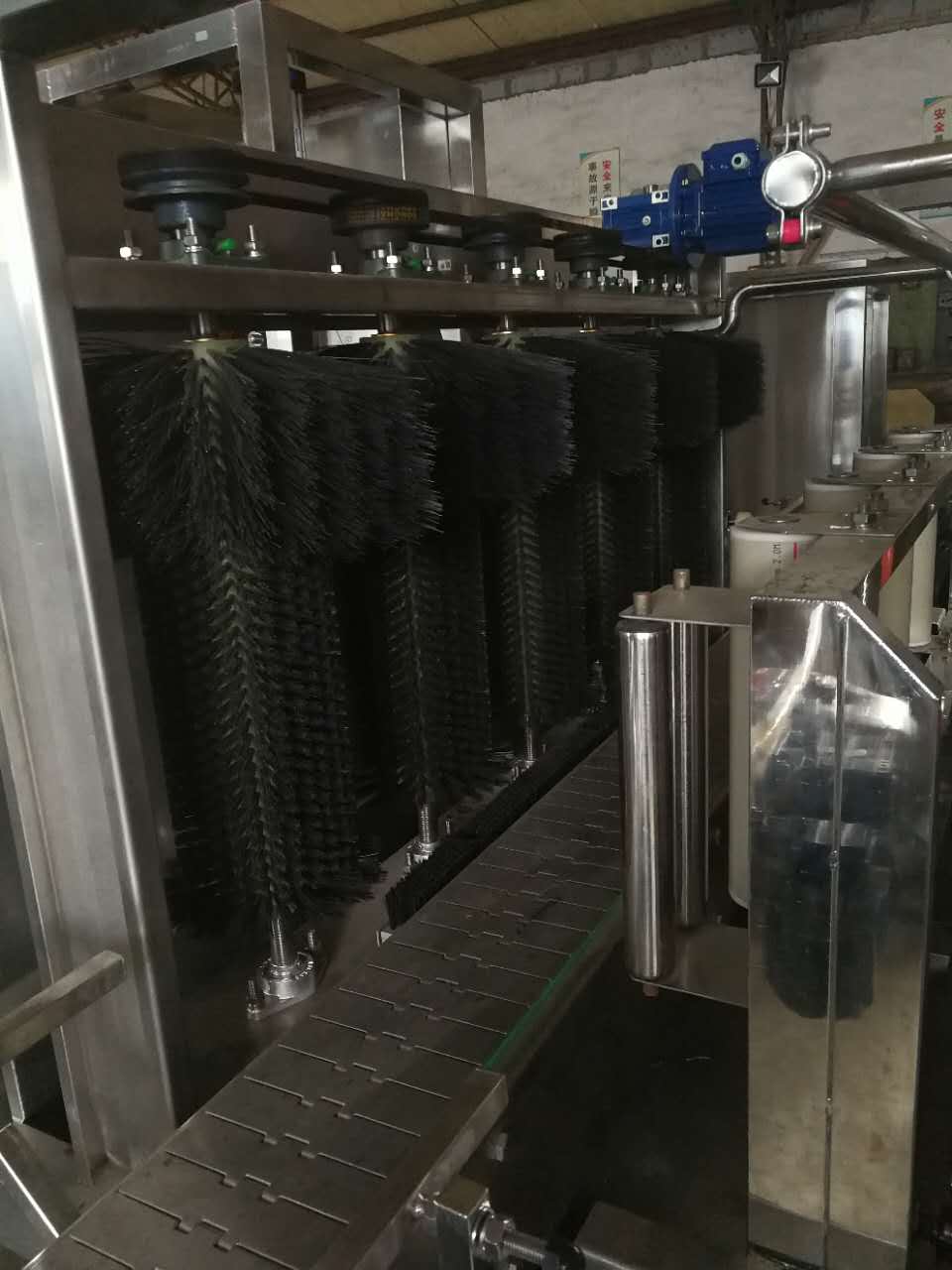
- Ensure rinsing or air-blowing stations remove particulates and moisture before filling.
- Verify that bottle orientation and transfer mechanisms do not cause micro-scratches on sealing surfaces.
Checkpoint: Randomly sample 20 bottles post-rinse and pre-fill. Reject any with visible defects or residue.
3. Evaluate Filling Pressure & Temperature Control
- Confirm that filling pressure matches the target carbonation level and bottle pressure rating.
- Monitor product temperature before and during filling; higher temperatures increase internal pressure.
- Check for pressure spikes during valve closure or line transitions.
Checkpoint: Log filling pressure and product temperature over a 30-minute run. If pressure exceeds bottle design limits or temperature fluctuates beyond ±2°C, adjust cooling or pressure regulation.
4. Assess Cap & Liner Compatibility
- Verify that the cap material and liner are rated for carbonated beverages and the specific filling temperature.
- Confirm that the liner provides a consistent seal without excessive compression or rebound.
- Cross-check cap batch consistency and storage conditions.
Checkpoint: Perform a seal integrity test using dye penetration or vacuum decay methods on capped samples.
Corrective Actions & Operational Boundaries
| Issue | Action | Boundary / Risk |
|---|---|---|
| Low or inconsistent torque | Recalibrate capping heads; replace worn components | Over-torquing can crack bottle mouths or deform caps |
| Bottle mouth defects | Adjust blow molding parameters; add pre-fill inspection | High defect rates may require upstream process review |
| Filling pressure/temperature drift | Stabilize cooling; adjust pressure regulators; verify valve timing | Exceeding bottle pressure limits risks structural failure |
| Cap/liner mismatch | Switch to certified carbonated-grade caps; validate with supplier | Incompatible liners may degrade or fail under CO₂ exposure |
Important Note: Carbonated filling lines are not interchangeable with still water or purified water systems. The valve design, pressure control, and sealing requirements differ significantly. Attempting to run carbonated products on equipment optimized for non-carbonated liquids will likely result in sealing failures, product loss, or safety risks.
When to Escalate or Redesign
If leakage persists after verifying torque, bottle integrity, pressure/temperature control, and cap compatibility, consider the following:
- Equipment capability mismatch: The filling line may not be rated for the target carbonation level or bottle format.
- Process integration gaps: Upstream water treatment, carbonation mixing, or downstream packaging may be introducing variability.
- Site-specific constraints: Facility layout, utility stability, or operator training may affect consistent execution.
In such cases, a site-specific engineering review is recommended. Custom carbonated beverage filling solutions should be designed around actual product parameters, target capacity, packaging format, and facility constraints—prioritizing stability, applicability, and long-term maintainability.
Next Steps for Procurement & Operations Teams
- Document baseline parameters: Record current torque, pressure, temperature, and cap specifications.
- Run controlled trials: Isolate variables and test one adjustment at a time.
- Engage engineering support: If leakage exceeds acceptable thresholds, request a technical review with your equipment supplier.
- Plan for scalability: Ensure future capacity increases or format changes are supported by modular, site-specific design.
For teams evaluating new or upgraded carbonated filling systems, it is critical to align equipment capabilities with real-world operational contexts. A qualified water treatment equipment manufacturer can provide end-to-end engineering support, from source water analysis to post-installation commissioning and operator training.
Conclusion
Post-capping gas leakage in carbonated beverages is a multi-factor issue that requires systematic diagnosis and targeted correction. By verifying torque, bottle integrity, pressure/temperature control, and cap compatibility, most leakage scenarios can be resolved without major line modifications. When operational boundaries are exceeded or equipment capability is mismatched, a custom-engineered solution with sustained technical support is the most reliable path forward.