
Why Vacuum Filling Is Suitable for Certain Juice and Tea Beverages: Engineering Rationale, Configuration Basis & Common
Who Should Consider Vacuum Filling — and When It Is the Wrong Choice
Vacuum filling — also called negative-pressure or gravity-vacuum filling — is a liquid packaging method where a partial vacuum is drawn inside the bottle to pull product from the filling tank. It is commonly specified for hot-fill juice, tea beverages, sports drinks, and certain functional beverages packaged in PET or glass containers.
However, it is not suitable for every liquid. Carbonated beverages require isobaric (counter-pressure) filling to preserve CO₂. High-viscosity products like syrups or dairy-based drinks may need piston or pump fillers. And ambient-temperature purified water lines typically use gravity or flow-meter filling.
For procurement managers and operations leads evaluating a new juice or tea production line, the decision to specify vacuum filling should be grounded in three factors: product characteristics, container type, and line integration requirements.
How Vacuum Filling Works: Operating Principles
In a vacuum filling system, the bottle is sealed against the filling valve, and a vacuum pump or venturi creates negative pressure inside the container. This pressure differential draws liquid from the product tank into the bottle until the liquid level reaches the vacuum return port — at which point filling stops automatically.
Key Operating Parameters
| Parameter | Typical Range | Engineering Note |
|---|---|---|
| Vacuum level | -0.02 to -0.06 MPa | Too high risks bottle collapse; too low causes slow fill and inconsistent levels |
| Fill temperature (hot-fill) | 85–92 °C | Must align with upstream pasteurization and downstream inversion/holding tunnel |
| Fill accuracy | ±1–2 mL (500 mL bottle) | Depends on valve design, vacuum stability, and bottle mouth tolerance |
| Bottle compatibility | PET (heat-set), glass | Lightweight PET not designed for hot-fill may deform under vacuum + heat |
The fill level is determined by the position of the vacuum return port, not by timed flow or weight measurement. This means fill-level consistency is directly tied to bottle mouth geometry and valve seal integrity — a critical quality checkpoint for any line.
Why Vacuum Filling Matches Hot-Fill Juice and Tea Products
1. Oxygen Exclusion Supports Product Stability
Juice and tea beverages are sensitive to oxidation, which degrades color, flavor, and nutritional content. The vacuum environment inside the bottle during filling displaces headspace oxygen. For products relying on hot-fill sterilization rather than aseptic processing, this oxygen reduction is a meaningful quality advantage.
2. Compatibility with Hot-Fill Temperature Ranges
Hot-fill processes typically require product temperatures between 85 °C and 92 °C at the filler. Vacuum filling valves — constructed from 304 or 316L stainless steel with heat-resistant seals — are engineered to operate continuously at these temperatures. The negative-pressure mechanism does not rely on pressurized product tanks, which simplifies thermal management compared to pressure-gravity systems.
3. Overflow and Foam Management
Many juice formulations contain natural surfactants or pulp residues that generate foam during filling. The vacuum return path in a well-designed valve captures overflow and routes it back to the product tank or a recovery vessel, reducing product waste and preventing foam from contaminating the bottle exterior or capping zone.
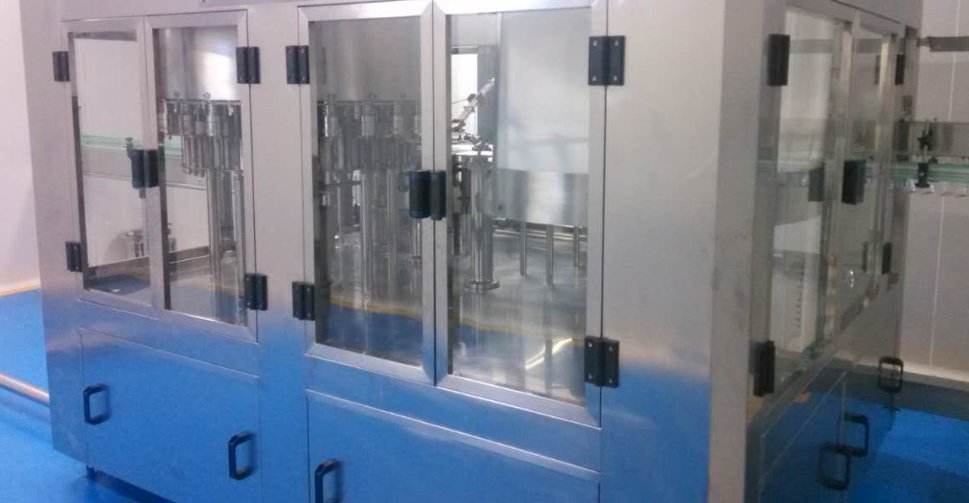
4. Fill-Level Consistency Across Variable Bottle Tolerances
Because the fill level is set by the vacuum port position rather than volumetric timing, minor variations in bottle internal volume — common with heat-set PET bottles that experience slight deformation during hot-fill — do not significantly affect the visible fill height. This is important for retail presentation and regulatory compliance.
Configuration Basis: What to Specify Before Ordering Equipment
When requesting proposals from a water treatment equipment manufacturer or filling line integrator, the following parameters must be defined to ensure the vacuum filler is correctly configured:
Product Profile
- Viscosity range: Vacuum filling is effective for low-to-medium viscosity liquids (typically < 200 cP). Products with large pulp particles (> 3 mm) or high fiber content require valve designs with wider flow passages and may need separate validation.
- Acidity (pH): High-acid products (pH < 4.0) are standard for hot-fill vacuum lines. Low-acid products may require retort or aseptic processing instead.
- Fill temperature: Confirm the exact range based on your upstream sterilization process (e.g., UHT, HTST, or batch pasteurization).
Container Specification
- Bottle material and heat resistance: Hot-fill PET bottles must be heat-set rated. Standard lightweight PET will deform under combined vacuum and thermal load.
- Bottle mouth finish: The vacuum valve seal must match the bottle neck geometry. Common finishes for juice/tea include 38 mm (standard) and 28 mm PCO.
- Bottle volume range: A single filler may handle 300 mL to 2,000 mL bottles, but changeover time and valve adjustment requirements vary by machine design.
Line Integration
- Upstream connection: The filler typically receives bottles from a rinsing station and product from a hot-fill buffer tank with temperature recirculation.
- Downstream connection: Immediate capping, bottle inversion (for cap sterilization), and a cooling tunnel are standard. The conveyor buffer between the filler and capper must be minimized to maintain product temperature.
- CIP coverage: The filling valve, product tank, and all wetted paths must be included in the CIP circuit. Confirm that the vacuum return lines are also CIP-compatible.
Common Misconceptions and Engineering Boundaries
Misconception 1: "Vacuum filling works for all beverages"
Reality: Carbonated products cannot be vacuum-filled — the vacuum would strip dissolved CO₂. High-viscosity products (e.g., honey-based drinks, thick smoothies) fill too slowly under vacuum alone and require positive-displacement methods.
Misconception 2: "Higher vacuum = faster filling"
Reality: Excessive vacuum increases the risk of PET bottle collapse, especially with lightweight or non-heat-set containers. The vacuum level must be calibrated to the bottle's structural rating and the product's flow characteristics.
Misconception 3: "Vacuum filling eliminates the need for bottle sterilization"
Reality: The vacuum environment reduces headspace oxygen but does not sterilize the bottle interior. Pre-fill bottle rinsing with sterile water or sanitizing solution remains mandatory for juice and tea products.
Misconception 4: "Any stainless steel filler works for hot-fill"
Reality: Seal materials, valve spring ratings, and thermal expansion tolerances must be specified for continuous operation at 85–92 °C. Standard ambient-temperature fillers will experience seal degradation and inconsistent fill levels when used outside their thermal design range.
Implementation Checklist: From Specification to Commissioning
- Confirm product suitability: Verify that your juice or tea formulation falls within the viscosity, pH, and particle-size boundaries for vacuum filling. If the product contains large pulp or is carbonated, evaluate alternative filling methods.
- Define bottle specifications early: Provide your equipment supplier with actual bottle samples or detailed drawings, including neck finish, wall thickness, and heat-set rating. Do not rely on generic catalog dimensions.
- Validate thermal integration: Ensure the hot-fill buffer tank, product recirculation loop, and filler product tank maintain temperature within ±2 °C of the target fill temperature throughout the production run.
- Test fill-level consistency: During commissioning, measure fill volumes across a statistically significant sample (minimum 30 bottles per valve) at operating speed. Document variance and adjust vacuum port positions as needed.
- Verify CIP effectiveness: Run CIP validation with conductivity and temperature logging at the most remote valve position. Confirm that vacuum return lines achieve the required flow velocity for effective cleaning.
- Establish changeover procedures: If the line handles multiple bottle sizes, document the valve adjustment steps, seal replacement intervals, and changeover time targets.
When to Involve Your Equipment Supplier Early
Vacuum filling is a mature technology, but its successful application depends on matching the filler configuration to your specific product, container, and facility constraints. Engaging your equipment supplier during the solution design phase — before finalizing bottle molds or upstream processing equipment — prevents costly rework during commissioning.
Share your product formulation data, target shelf life, bottle specifications, and facility layout. A qualified supplier will propose a process route that integrates water treatment, product preparation, filling, capping, and packaging as a coordinated system — not as isolated equipment purchases.
For teams evaluating a new juice or tea filling line, the next step is to request a technical consultation with your product and packaging data in hand. This allows the engineering team to confirm whether vacuum filling is the correct method for your application — or whether an alternative approach better serves your production goals.