
What’s Included in a New 5-Gallon Barrelled Water Production Line? A Practical Configuration Guide
Who This Guide Is For
Procurement managers, plant engineers, and digital project leads at beverage, food, or pharmaceutical companies in China who are evaluating or specifying a new 5-gallon (18.9 L) barrelled water production line — especially those building a greenfield facility or replacing legacy equipment with full automation and integrated water treatment.
Why 'New' Matters: The Core Boundary
This guide covers newly commissioned lines — not retrofits or partial upgrades. It assumes your project starts from source water quality data, defined output capacity (e.g., 800–2,000 barrels/hour), confirmed packaging format (standard 5-gallon PET or HDPE reusable drum), and known facility constraints (floor height, utility availability, cleanroom zoning). It does not apply to reused-drum-only lines without integrated purification, nor to small-scale manual setups.
What a Complete 5-Gallon Line Actually Includes (Based on Real Deployments)
Chuxin Mingwei’s engineered solutions for new 5-gallon barrelled water production follow a validated sequence — each unit selected and sized against your site-specific inputs:
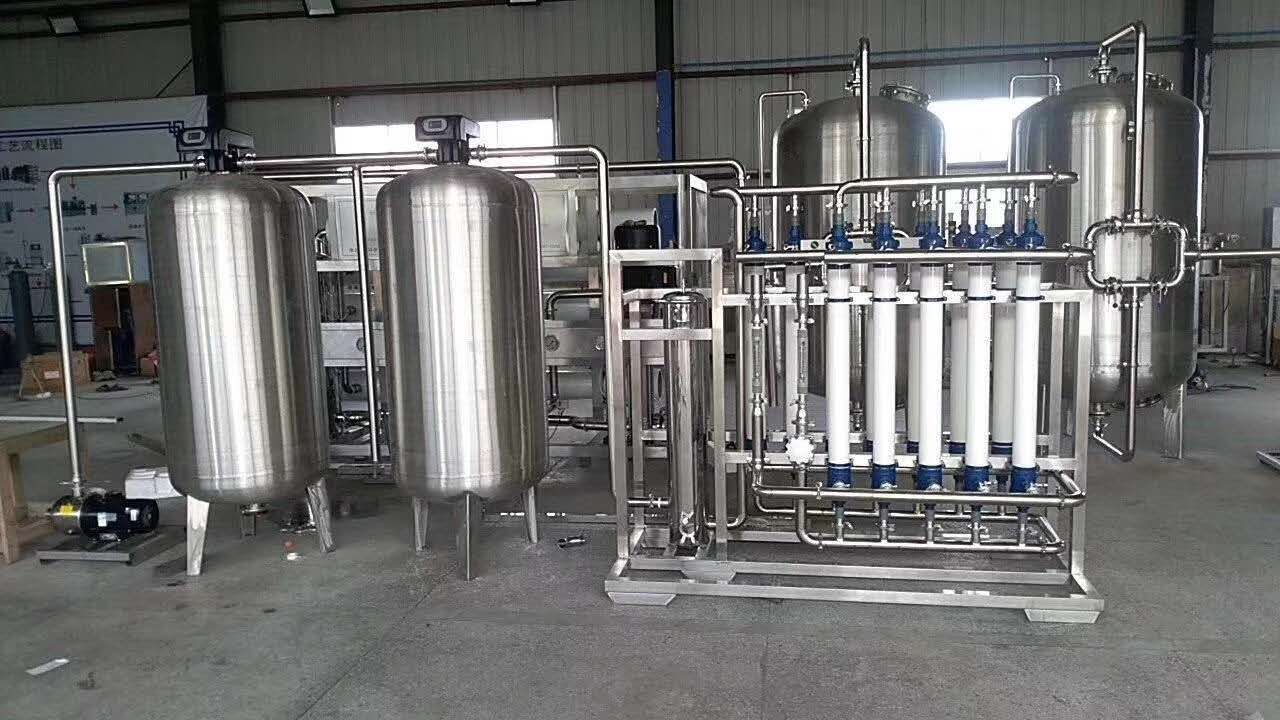
1. Pre-Treatment & Purification System
- Required when source water is municipal, well, or spring water — not optional
- for bottled-grade compliance.
- Typical configuration: Multi-media filtration → activated carbon → softening (if hardness exceeds local operational threshold) → dual-stage RO (for purified water) or NF + UF (for mineral-retentive spring water).
- Critical boundary: RO systems require post-membrane disinfection; NF+UF preserves minerals but demands stable, low-turbidity feed water.
2. Barrel Handling & Cleaning Unit
- Designed for reusable
- 5-gallon drums with standard neck geometry and common material specifications (PET/HDPE).
- Includes: Drum inspection station → automatic cap removal → external brush wash → internal high-pressure rinse & chemical disinfection → final purified water rinse.
- Key spec: Cap removal success rate verified under real-time operational conditions; final rinse meets residual chemical limits required for food-contact compliance.
3. Filling & Capping Station
- Fully automatic, PLC-synchronized washing-filling-capping unit.
- Filling accuracy verified at 18.9 L volume; capping pass rate validated under continuous production load.
- Supports standard polypropylene (PP) or aluminum caps — cap feed and torque control configured per your supplier’s mechanical interface.
4. Post-Fill Quality Assurance
- Integrated lamp inspection for fill level, foreign particles, and cap integrity.
- Optional: Vacuum-based leak detection for sealed cap verification — added only when microbiological containment is part of your quality protocol.
5. Clean Air Integration
- Engineered as part of the line layout — not an afterthought.
- HEPA H13 filtration, airflow range selected per cleanroom zone volume and air change rate requirements.
- Designed to meet ISO Class 8 (100,000) cleanroom performance; upgrade path to higher classification available where process validation requires it.
6. Control & Diagnostics Layer
- PLC + HMI interface with real-time monitoring of critical process parameters: flow rates, pressure differentials, rinse conductivity, and cap torque.
- Remote-ready architecture supports secure access for after-sales diagnostics and firmware updates — subject to client network policy and physical isolation requirements.
What’s Not Standard — And Why You Must Specify It Early
- Drum type: New vs. reused; material (PET/HDPE); neck standard (e.g., PCO-1881, G30) — affects mechanical compatibility and cleaning nozzle design.
- Utility readiness: Minimum inlet water pressure, compressed air dew point, and electrical supply must be confirmed before equipment layout finalization.
- Waste handling: Chemical rinse wastewater volume and pH range must be declared to align with local discharge regulations and pretreatment needs.
- Training scope: Operator training includes SOPs for daily start-up, shift changeover, and basic fault triage — scoped to your team’s existing technical baseline.
Next Steps: From This Guide to Your Project
- Verify your source water report — TDS, hardness, iron/manganese, microbiology.
- Confirm target output — e.g., “1,200 barrels/hour of purified water, 18.9 L HDPE drums, ISO Class 8 cleanroom.”
- Share facility drawings — floor plan, utility points, ceiling height, drainage routes.
- Request a technical alignment session — we’ll map your inputs to equipment specs, delivery milestones, and support handover terms.
For a formal equipment list and quotation aligned to your parameters, contact our engineering team directly.