
5-Gallon Water Filling Machine Working Principle: Core Components, Operational Logic & Application Scenarios
Who Needs to Understand This Working Principle
Procurement managers and operations leads evaluating a 5-gallon water filling machine are rarely buying a single filling valve. They are investing in an integrated wash-fill-seal system that must handle recycled 18.9L (5-gallon) PC or PET barrels at rated capacities between 200 and 1,800 barrels per hour. The working principle of this equipment determines whether your line achieves stable output, regulatory compliance, and long-term maintainability — or whether contamination, downtime, and product loss erode your margins.
This article explains the operational logic of a 5-gallon barrel filling line as an engineered system, not as a standalone machine. It is written for technical buyers in the beverage, food, and industrial water sectors who need to verify equipment capabilities against their actual production conditions.
---
The Standard Process Chain: From Empty Barrel to Sealed Output
A 5-gallon water filling line follows a defined sequence. Each stage has a specific function, and skipping or under-specifying any stage introduces measurable risk.
Step 1: Barrel Recovery, Inspection, and Sorting
Recycled barrels arrive with variable contamination levels — residual labels, dust, microbial biofilm, and physical damage. The first operational checkpoint is manual or automated sorting: barrels with cracks, deformed mouths, or embedded odors are rejected before entering the wash cycle. This step is not optional. Feeding damaged barrels into an automated washer damages brushes, blocks conveyors, and compromises downstream hygiene.
Step 2: De-capping and External Brushing
An automatic de-capping machine removes the old cap and seal ring. An external brush station then scrubs the barrel exterior with detergent and water to remove surface grime. For operations handling heavily soiled return barrels, this stage prevents cross-contamination of the internal wash system.
Step 3: Internal Brushing and Multi-Stage Washing
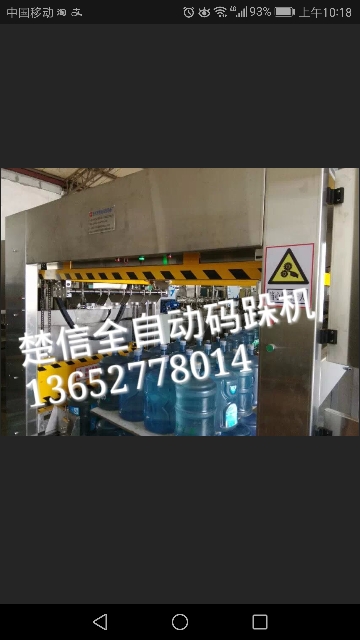
This is the most critical hygiene stage. An internal brush machine inserts rotating brushes into the barrel to scrub interior surfaces. Following this, a multi-station washer-disinfector subjects each barrel to sequential cycles:
- Alkaline detergent wash
- — dissolves organic residue and biofilm.
- Acid or sanitizer rinse
- — neutralizes detergent and targets mineral deposits.
- Clean water pre-rinse
- — removes chemical carryover.
- Final rinse with product water
- — ensures no foreign substances remain before filling.
The number of wash stations (typically 4 to 12) directly affects cycle time and throughput. A line configured for 500 barrels per shift may use fewer stations than one rated for 5,000 barrels per 8-hour shift.
Step 4: Filling
The filling stage uses a volumetric or flow-meter-based system to dispense a precise volume of treated water into each barrel. In a wash-fill-seal integrated machine, the barrel moves from the final rinse directly into the filling zone without exposure to unfiltered air. Filling accuracy on configured systems typically targets ≤ ±5 mL per barrel, though actual performance depends on water temperature, line pressure stability, and valve calibration.
Step 5: Capping and Sealing
An automatic cap-sorting and cap-pressing system places a new cap onto the barrel mouth and applies controlled pressure to achieve a hermetic seal. Cap disinfection — typically via UV or ozone — occurs immediately before placement. A capping pass rate of ≥99.6% is achievable on well-maintained systems, but this depends on cap quality, barrel mouth condition, and press alignment.
Step 6: Inspection, Labeling, and Packaging
Post-fill operations include light inspection (visual check for particulates and fill level), sleeve labeling or heat-shrink labeling, date coding via inkjet or laser, and optional barrel bagging. An automatic barrel-wrap packaging machine can handle 200–1,200 barrels per hour using food-grade PE or PP film, compliant with food-contact material standards.
---
Core Components and Their Operational Logic
| Component | Function | Key Selection Variable |
|---|---|---|
| Multi-station washer-disinfector | Sequential internal cleaning and disinfection | Number of stations, wash cycle duration, chemical dosing precision |
| Wash-fill-seal integrated unit | Combines final rinse, filling, and capping in one enclosed system | Barrel compatibility (10L, 15L, 18.9L), filling head count (4–12), automation level |
| Automatic cap sorter and press | Cap orientation, disinfection, and sealing | Cap type, press force calibration, pass rate target |
| PLC + HMI control system | Centralized monitoring, parameter adjustment, fault diagnostics | Remote-readiness, data logging, integration with upstream water treatment |
| Conveyor and barrel handling system | Barrel transport between stages | Speed synchronization, anti-jam design, cleanroom-compatible materials |
The PLC-based control system is the operational backbone. It synchronizes conveyor speed with wash cycle timing, filling volume, and capping sequence. On configured systems, a single operator can oversee the entire line from the HMI panel, with real-time diagnostics flagging pressure drops, fill deviations, or cap misalignment.
---
Application Boundaries: Where This System Works — and Where It Doesn't
Suitable Scenarios
- Purified water production
- using dual-stage RO with ozone and UV sterilization, filling into 18.9L standard PC barrels.
- Spring water or mineral water
- lines where ultrafiltration preserves mineral content, and the filling environment must meet ISO Class 8 (100,000) cleanroom standards.
- Mixed-container operations
- that need to switch between 10L, 15L, and 18.9L barrels — provided the line is configured with adjustable guides and compatible filling heads.
Boundary Conditions and Risks
- Barrel condition matters.*
- The system assumes barrels are structurally sound. Severely degraded PC barrels with micro-cracks will leak during pressurized washing and cannot be reliably sealed.
- Water quality is a prerequisite.*
- The filling machine does not purify water. If upstream treatment (multi-media filtration, activated carbon, RO, or UF) is undersized or poorly maintained, the filling stage will package contaminated product regardless of how clean the barrel is.
- Cleanroom compliance is not automatic.*
- The filling zone requires dedicated air handling — typically H13 HEPA filtration with controlled airflow and positive pressure. A filling machine installed in an uncontrolled environment will not meet food safety audit requirements.
- Capacity ratings assume stable upstream supply.*
- A line rated at 1,800 barrels per hour requires continuous product water delivery at matching flow rates. If the water treatment system or storage tank cannot sustain this, the filling machine will idle, reducing actual throughput.
---
Implementation Checkpoints for Technical Buyers
Before specifying a 5-gallon water filling line, verify the following:
- Barrel audit. Sample your return barrels. Measure mouth deformation, wall thickness, and residual contamination. This determines whether you need a 4-station or 12-station washer.
- Water source and treatment match. Confirm your raw water TDS, hardness, and microbial load. The treatment process — whether RO-based for purified water or UF-based for spring water — must be sized to feed the filling line at peak demand.
- Facility layout. The wash zone, fill zone, and packaging zone require physical separation with defined clean/dirty boundaries. Confirm your facility can support this before ordering equipment.
- Utility conditions. Verify available electrical capacity, water pressure, drainage, and compressed air supply. Automated barrel lines have specific utility requirements that must be met at the installation site.
- Regulatory scope. Identify the food safety and production licensing standards applicable in your target market. Equipment documentation — including material certifications, SOPs, and process flow diagrams — should be aligned with these requirements from the design phase.
---
Next Steps
If you are evaluating a 5-gallon water filling system for a new plant or line upgrade, the most productive next step is to share your barrel type, target capacity, water source report, and facility layout. This allows a water treatment equipment manufacturer to propose a line configuration matched to your actual conditions — rather than a generic catalog specification.
Chuxin Mingwei engineers barrelled water filling lines for 18.9L, 15L, and 10L containers, with integrated washing, filling, capping, and packaging — designed, manufactured, and supported from our Huizhou facility since 2008.