18.9L Bottled Water Equipment Use Cases: Deployment Scenarios and Configuration Prerequisites
18.9L Bottled Water Equipment Use Cases: Deployment Scenarios and Configuration Prerequisites
For procurement managers and operations leads in the beverage, food, and pharmaceutical sectors, selecting the right 18.9L bottled water equipment is not merely about purchasing a machine; it is about engineering a production line that matches specific water sources, target output, and facility constraints. Chuxin Mingwei designs these systems as non-standard, site-specific solutions rather than off-the-shelf commodities.
This article outlines the primary use cases for 18.9L (5-gallon) filling lines, the technical composition required for each scenario, and the critical prerequisites for successful implementation.
Primary Use Cases for 18.9L Filling Systems
The configuration of a 18.9L production line varies significantly based on the source water quality and the desired final product standard. We typically engineer solutions for two distinct operational contexts:
1. Natural Spring Water Production (Mineral Retention)
When the source is natural spring water, the objective is to remove particulates and microbes while retaining beneficial minerals.
- Solution Composition:*
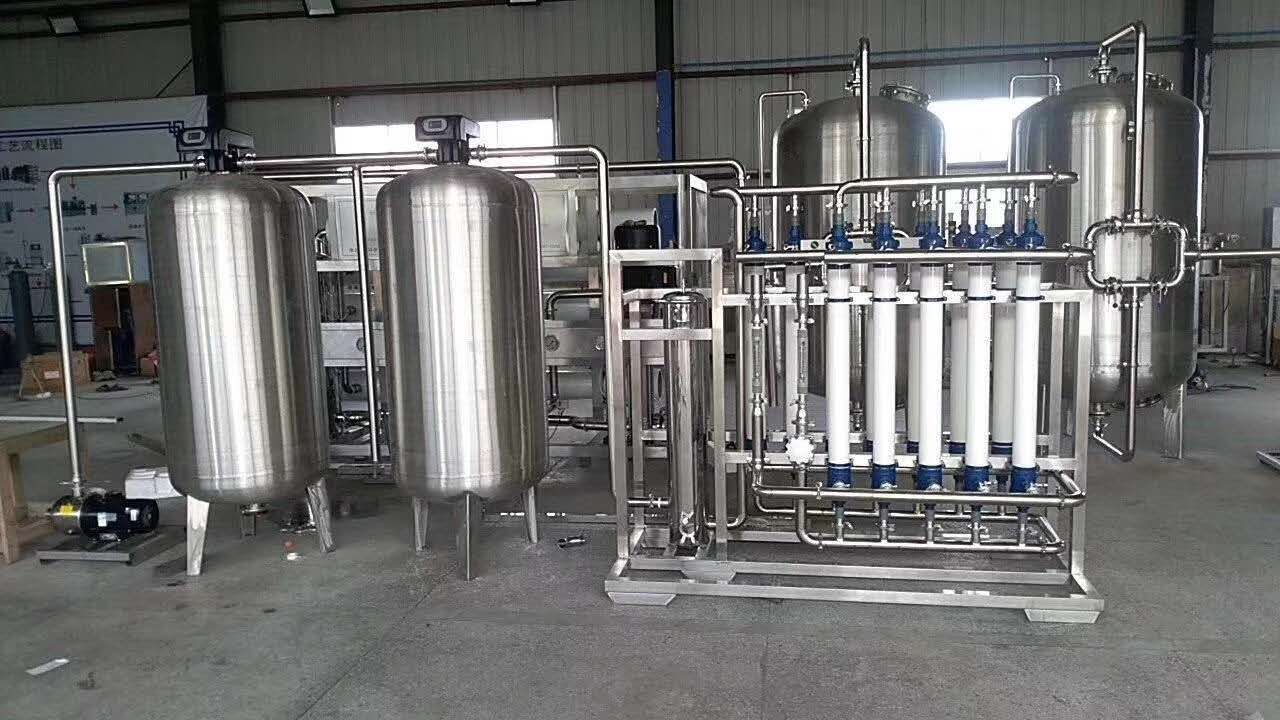
- These lines utilize a Dual-membrane NF (Nanofiltration) + UF (Ultrafiltration) process. Unlike reverse osmosis, this balance ensures purification efficiency without stripping essential minerals.
- Equipment Focus:*
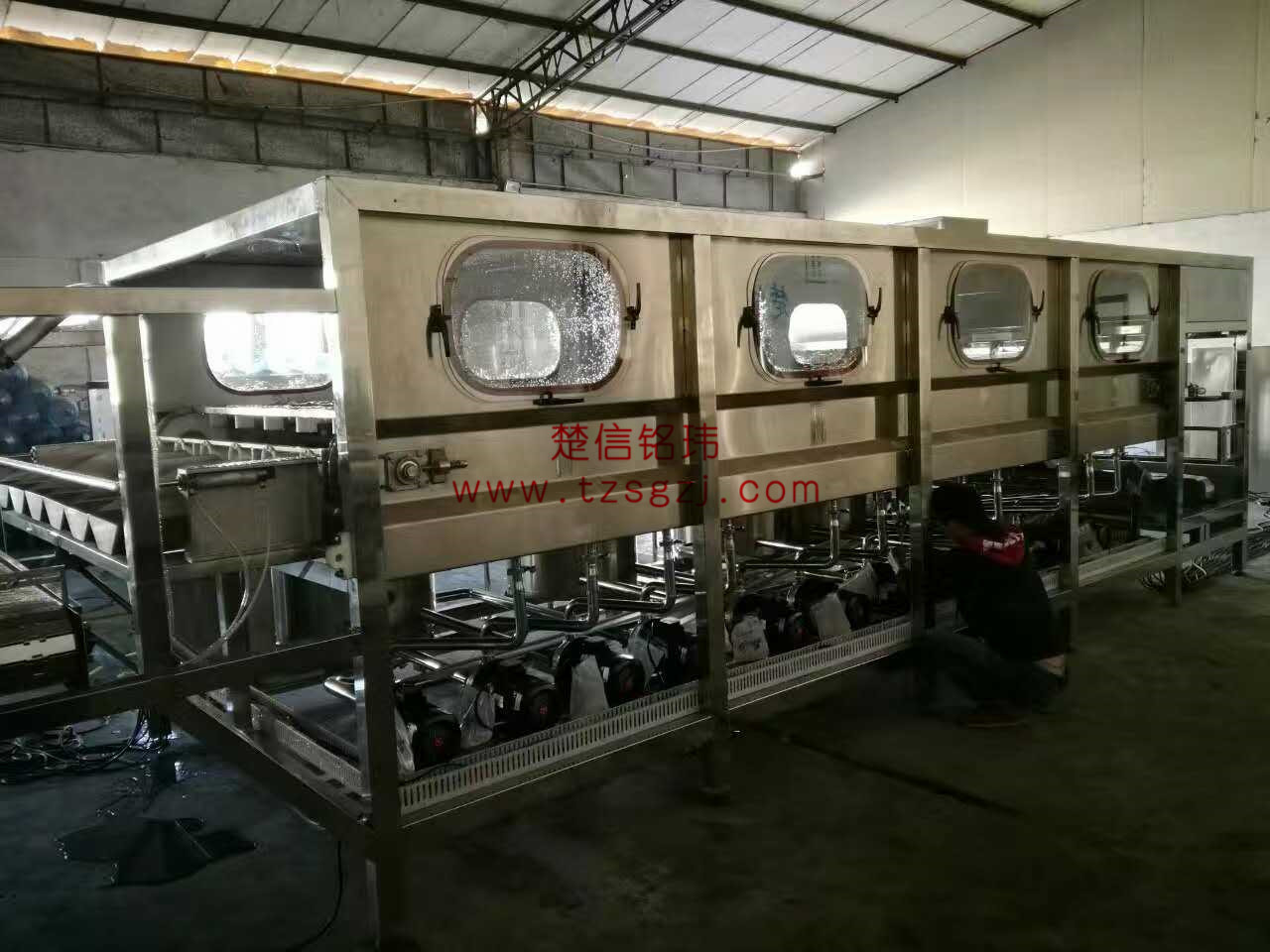
- The filling unit must handle potential variations in water chemistry without scaling. Our integrated bottle washing-filling-capping units are calibrated for these specific fluid dynamics, ensuring high capping reliability even with varying viscosity or mineral content.
- Target Output:*
- Typically configured for capacities between 200–1,800 bottles/hour (based on 18.9L standards), depending on the source flow rate and seasonal stability.
2. Purified Drinking Water Production (Deep Purification)
For municipal tap water or groundwater requiring extensive treatment to meet strict purity standards, the focus shifts to deep contaminant removal.
- Solution Composition:*
- These systems rely on a Two-stage RO (Reverse Osmosis) deep purification process, often combined with ozone and UV sterilization to ensure biological stability.
- Equipment Focus:*
- The workflow is fully automated, synchronizing bottle washing, filling, capping, and inspection with minimal manual intervention. The core purification train includes multi-media filtration, activated carbon, and precise membrane staging.
- Target Output:*
- These lines support higher throughput customization, ranging from 200–2,500 bottles/hour, suitable for high-volume distribution centers or large-scale industrial campuses.
System Composition and Technical Boundaries
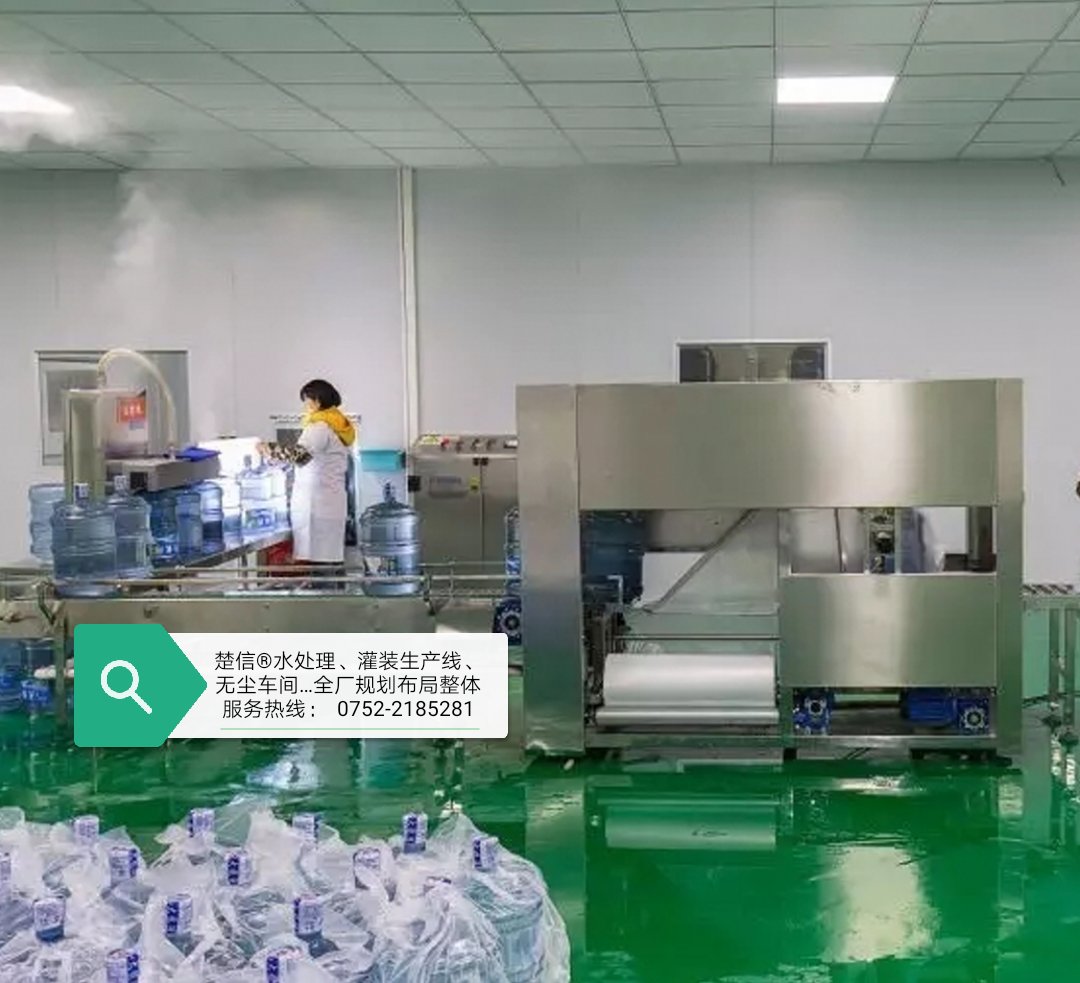
A complete 18.9L bottled water solution extends beyond the filler. It is an end-to-end engineering service comprising:
- Water Treatment Module:*
- Custom-engineered based on actual source water analysis reports. This defines whether NF, UF, or RO technologies are deployed.
- Filling Block:*
- Compatible with standard 18.9L, 11.3L, and 5L drinking water bottles. Key performance metrics include high filling accuracy and robust capping mechanisms designed for repeated use containers or single-use PET barrels.
- Clean Air Support:*
- For facilities requiring higher hygiene standards, we integrate clean air systems designed to meet ISO Class 8 (100,000) standards, with options for higher classifications. This includes HEPA filtration and real-time pressure zoning to protect the filling zone from airborne contaminants.
- Control Architecture:*
- PLC-based intelligent control systems with HMI interfaces allow for real-time diagnostics and remote-ready monitoring, ensuring consistent operation across shifts.
Implementation Prerequisites and Site Readiness
Before deploying a 18.9L filling line, project teams must validate several site-specific conditions to avoid costly retrofits or capacity bottlenecks.
1. Water Source Verification
You cannot finalize equipment selection without a comprehensive water quality report. The choice between NF and RO hinges entirely on the raw water's TDS (Total Dissolved Solids), hardness, and microbial load. Chuxin Mingwei engineers design the purification train only after analyzing these parameters to guarantee the target water standard is met consistently.
2. Facility Layout and Airflow
The physical footprint must accommodate not just the machinery, but also the airflow dynamics. If integrating a clean air system, the facility layout must support specific duct routing and pressure differentials. Our team conducts site-specific engineering to map airflow and zoning before manufacturing begins.
3. Capacity Planning and Buffering
Do not simply equate the filler's rated speed with your daily sales target. Effective planning requires calculating the material balance, accounting for:
- Bottle washing and CIP (Clean-in-Place) cycles.
- Peak demand buffering.
- Upstream water treatment recovery rates.
- Downstream packaging (labeling, bagging, palletizing) speeds.
We recommend sizing the water treatment system to exceed the filler's peak demand by a safety margin to prevent starvation during continuous runs.
Risk Checks and Selection Criteria
When evaluating vendors for 18.9L bottled water equipment, focus on these critical differentiation points:
- Scenario Matching:*
- Does the vendor offer a generic machine, or do they engineer the purification process based on your source water? Generic setups often fail to maintain mineral balance or achieve required purity levels.
- Delivery Execution:*
- Verify the scope of delivery. A true turnkey solution includes design, manufacturing, installation, commissioning, and operator training. Ambiguity here often leads to project delays.
- Post-Installation Support:*
- Long-term maintainability is paramount. Ensure the control system allows for easy diagnostics and that spare parts for critical components like filling valves and membranes are accessible.
Conclusion and Next Steps
Deploying a 18.9L bottled water production line is a capital-intensive decision that requires precise alignment between water chemistry, production capacity, and facility infrastructure. Chuxin Mingwei prioritizes stability and applicability, delivering custom-engineered systems that bridge the gap between raw water sources and market-ready products.
If you are currently defining requirements for a new line or upgrading an existing facility, the first step is a technical review of your source water data and target capacity.
Contact our engineering team to initiate a preliminary feasibility assessment. We will help you map your specific operational context to the appropriate equipment configuration, ensuring a clear path from project conception to stable commercial operation.
Recommended
Bottled Spring Water Filling Production Line
Chuxin Mingwei’s customized bottled spring water filling production line is specifically...
Fully Automatic Bottled Purified Water Filling Production Line
Chuxin Mingwei’s customized fully automatic bottled purified water filling production li...
Clean Air Purification Systems
Custom-engineered air purification systems for water bottling and barrelled water fillin...