
Balancing RO Output with Filling Speed: A Technical Checklist for Bottled Purified Water Lines
Balancing RO Output with Filling Speed: A Technical Checklist for Bottled Purified Water Lines
The Core Challenge: Capacity Mismatch in Automated Lines
For technical evaluators preparing to implement or scale a bottled purified water filling line, the most critical failure point is often not the filler itself, but the upstream water treatment system. A common scenario involves selecting a high-speed filling machine (e.g., 2,000 bottles/hour) while underestimating the water demand required to support it.
According to industry engineering principles, line capacity must be calculated based on the slowest equipment. If the water treatment output cannot sustain the filler during peak operation—accounting for bottle rinsing, Clean-in-Place (CIP) cycles, and process losses—the entire line will bottleneck, leading to idle time, reduced efficiency, and potential quality risks from insufficient water pressure or volume.
This guide provides a technical checklist for aligning your Bottled Purified Water Filling Production Line design with actual operational demands, ensuring stability and scalability.
Technical Principles: Why "Host Speed" Is Not Enough
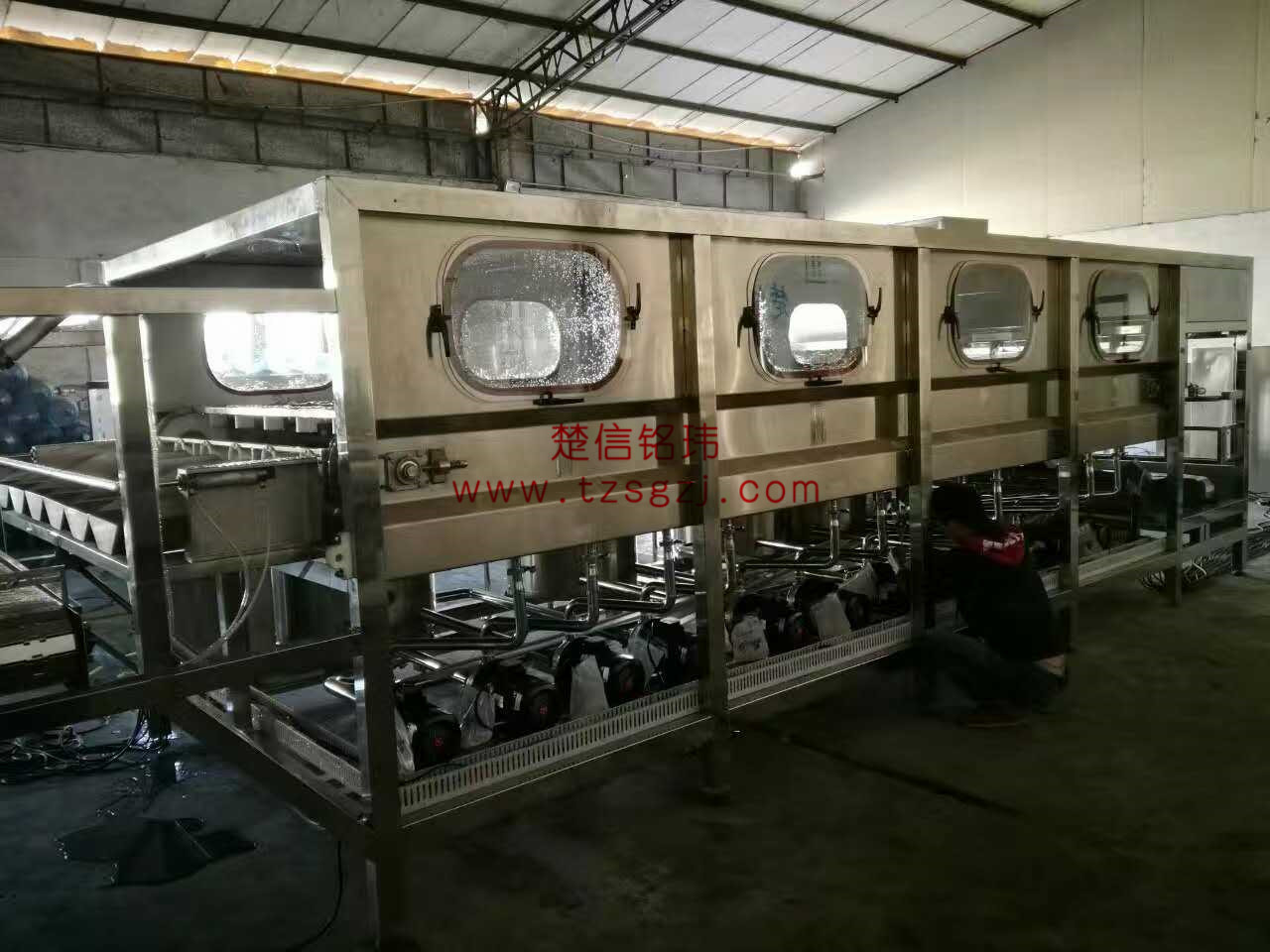
When evaluating the Fully Automatic Bottled Purified Water Filling Production Line, many buyers focus solely on the rated output of the filling machine. However, the actual water consumption per hour is significantly higher than the net product output.
The Hidden Water Demand Factors
- Rinsing Requirements: Each bottle requires multiple rinse cycles before filling. For a 5L or 18.9L bottle, this can consume 0.5–1.5 liters of purified water per unit just for cleaning.
- CIP (Clean-in-Place) Cycles: Daily or shift-based cleaning of tanks, pipes, and filters consumes substantial volumes of water and chemicals. This is not reflected in hourly production rates but must be accounted for in total daily capacity.
- Process Losses: Backflushing of membranes, sampling, and minor leaks contribute to additional water usage.
Key Fact: As noted in engineering standards, water treatment output must account for rinsing, CIP, and losses, not just host speed. Ignoring these factors leads to a system where the filler stops waiting for water, or worse, operates at reduced pressure, compromising seal integrity.
Implementation Checklist: Sizing Your Treatment System
To avoid implementation failures, use the following checklist when defining your project scope. This applies specifically to **Chuxin Mingwei's custom-engineered solutions for beverage, food, pharmaceutical, and electronics sectors.
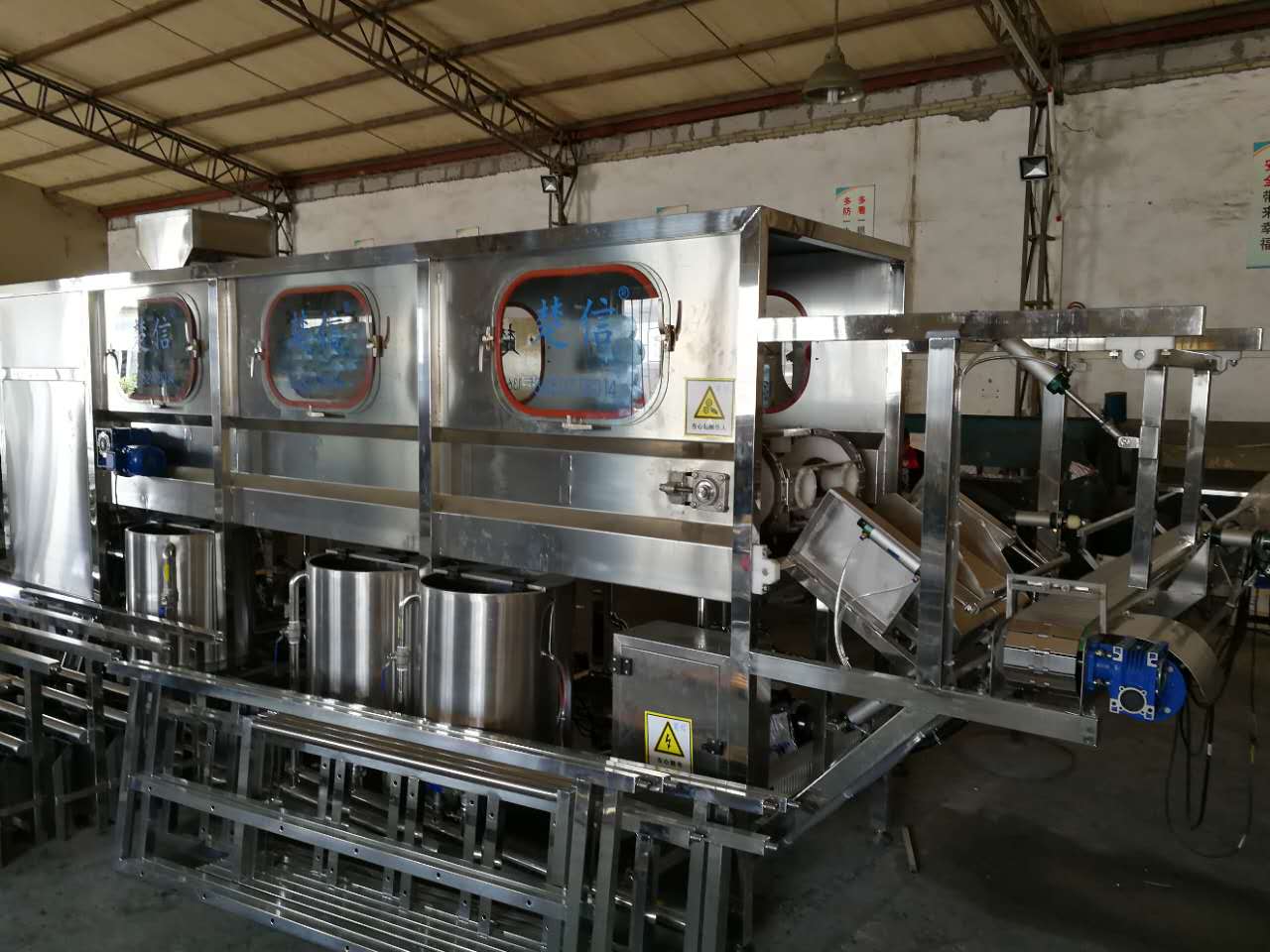
1. Define Bottle Specifications and Target Capacity
- Compatible Bottle Types: Confirm if you are using 5 L, 11.3 L, or 18.9 L (5-gallon) bottles.
- Note: Larger bottles (18.9 L) require significantly more water per unit for rinsing compared to 5 L bottles.
- Rated Output Capacity: Determine your target throughput (e.g., 200–2,500 bottles/hour).
- Constraint: Chuxin Mingwei lines are customizable within this range, but the water system must be sized for the maximum theoretical output plus safety margins.
2. Calculate Total Water Consumption
Do not simply multiply the bottle count by the bottle volume. Apply the following multipliers:
- Base Volume: Sum of all filled product per hour.
- Rinsing Factor: Add 30–50% of base volume for pre-fill rinsing (depending on bottle cleanliness).
- CIP & Maintenance Buffer: Add an additional 15–20% for daily cleaning cycles and membrane backwashing.
- Result: This total determines the required flow rate of your Dual-stage RO reverse osmosis deep purification process.
3. Verify Purification Process Compatibility
Ensure the selected purification technology matches your source water quality and target standards.
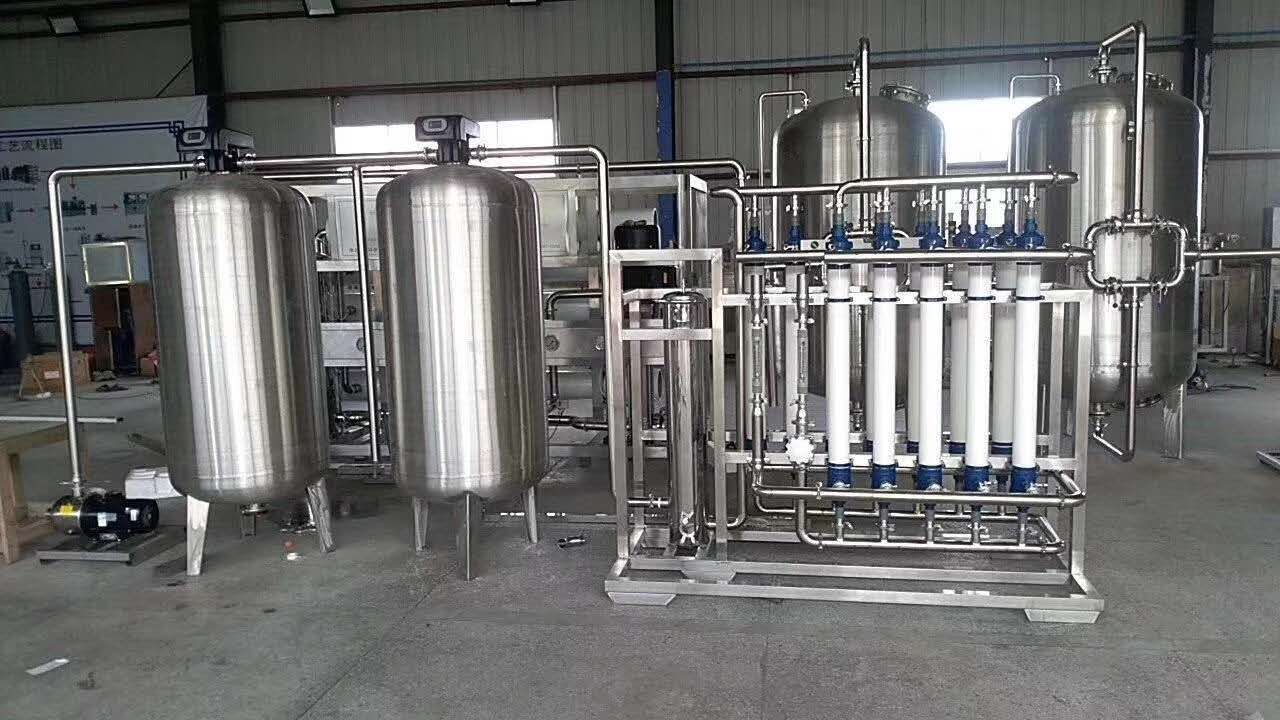
- Core Process: The standard for purified water lines is a Multi-media + activated carbon + Dual-stage RO
- configuration.
- Sterilization: Verify integration of ozone and UV (254 nm) dual sterilization
- to meet hygiene standards without altering water chemistry.
- Source Water Analysis: Custom engineering must begin with actual source water quality data. Non-standard site-specific solutions are engineered from real-world constraints, not generic assumptions.
4. Assess Facility Constraints and Integration
- Space Layout: Ensure sufficient space for the water treatment skid, storage tanks, and piping runs to the filling line.
- Power & Utilities: Confirm availability of stable power and drainage for the high-volume water discharge from rinsing and CIP.
- Control Systems: The system should feature a PLC-based intelligent control system
- that synchronizes water production with filling demand, preventing over-production or shortages.
Risk Boundaries and Delivery Scope
Understanding the boundaries of delivery is crucial for accurate budgeting and timeline planning.
- Scope of Supply: A typical turnkey solution includes design, manufacturing, installation, commissioning, operator training, and after-sales support. However, specific components like civil works, external piping, and local utility connections are often client responsibilities.
- Performance Guarantees: Stability and long-term maintainability are prioritized. While specific performance metrics (e.g., capping pass rate ≥99.6%) are achievable, they depend on correct installation and adherence to operating procedures.
- Scalability: If you plan to expand capacity later, the initial design shouldReserved (reserve) headroom in the water treatment system to accommodate future growth without requiring a full system replacement.
Next Steps for Technical Evaluation
Before finalizing your procurement decision, verify the following:
- Request a Detailed Water Balance Sheet: Ask the manufacturer to provide a calculation showing how the proposed RO system meets your specific bottle size and speed requirements, including rinsing and CIP loads.
- Review Source Water Data: Provide your raw water analysis report to enable a precise engineering design.
- Clarify Service Boundaries: Explicitly define what is included in the installation and commissioning phases to avoid unexpected costs.
Chuxin Mingwei specializes in delivering non-standard, site-specific water treatment and filling solutions. Our team ensures that every component, from the dual-membrane NF + UF process (for spring water) to the dual-stage RO (for purified water), is engineered to match your exact operational context.
Conclusion
Achieving a stable, high-efficiency bottled purified water filling line requires more than just buying a fast filler. It demands a holistic approach where water treatment output is rigorously calculated to support the entire production cycle, including rinsing, cleaning, and losses. By following this technical checklist, procurement managers and operations leads can eliminate bottlenecks, ensure consistent quality, and build a scalable foundation for their production facility.
---
Knowledge Evidence Used:
[
{"": "", "": "water treatment output must account for rinsing, CIP, and losses, not just host speed", "": "The article emphasizes that line capacity calculations must include rinsing, CIP, and process losses, not just the filler's rated speed."},
{"": "", "": "Dual-stage RO reverse osmosis deep purification process", "": "The content specifies the core purification process as Multi-media + activated carbon + Dual-stage RO for purified water lines."}
]
Recommended
Bottled Spring Water Filling Production Line
Chuxin Mingwei’s customized bottled spring water filling production line is specifically...
Fully Automatic Bottled Purified Water Filling Production Line
Chuxin Mingwei’s customized fully automatic bottled purified water filling production li...
Clean Air Purification Systems
Custom-engineered air purification systems for water bottling and barrelled water fillin...