
Custom Barrelled Water Filling Line: Upgrade Path and Cross-Regional Collaboration Boundaries
Custom Barrelled Water Filling Line: Upgrade Path and Cross-Regional Collaboration Boundaries
Executive Summary: Defining the Upgrade Scope
For procurement managers and operations leads overseeing beverage, food, pharmaceutical, or electronics sector facilities, upgrading a barrelled water filling line is not merely a hardware replacement; it is a systemic integration challenge. When expanding capacity or coordinating between regional teams, the primary decision point is not "which machine," but rather "what are the verified process boundaries and delivery scopes?"
Chuxin Mingwei designs custom barrelled water filling production lines that integrate raw water purification, bottle handling, precise filling, and clean air support. The core value proposition lies in engineering solutions based on actual source water quality, target standards, and facility constraints. For enterprise owners reviewing an upgrade or cross-regional project, success depends on validating three specific areas: the purification process match, the mechanical interface compatibility, and the explicit definition of installation and commissioning responsibilities.
1. Technical Verification: Matching Purification to Product Standards
The first step in any upgrade or new deployment is verifying that the water treatment process aligns with the specific product type (e.g., spring water vs. purified water) and the target output quality. A generic approach often leads to post-installation failures in product stability or regulatory compliance.
Spring Water vs. Purified Water Processes
Different water sources require distinct purification architectures. Chuxin Mingwei's engineering approach distinguishes these clearly:
- Spring Water Lines:*
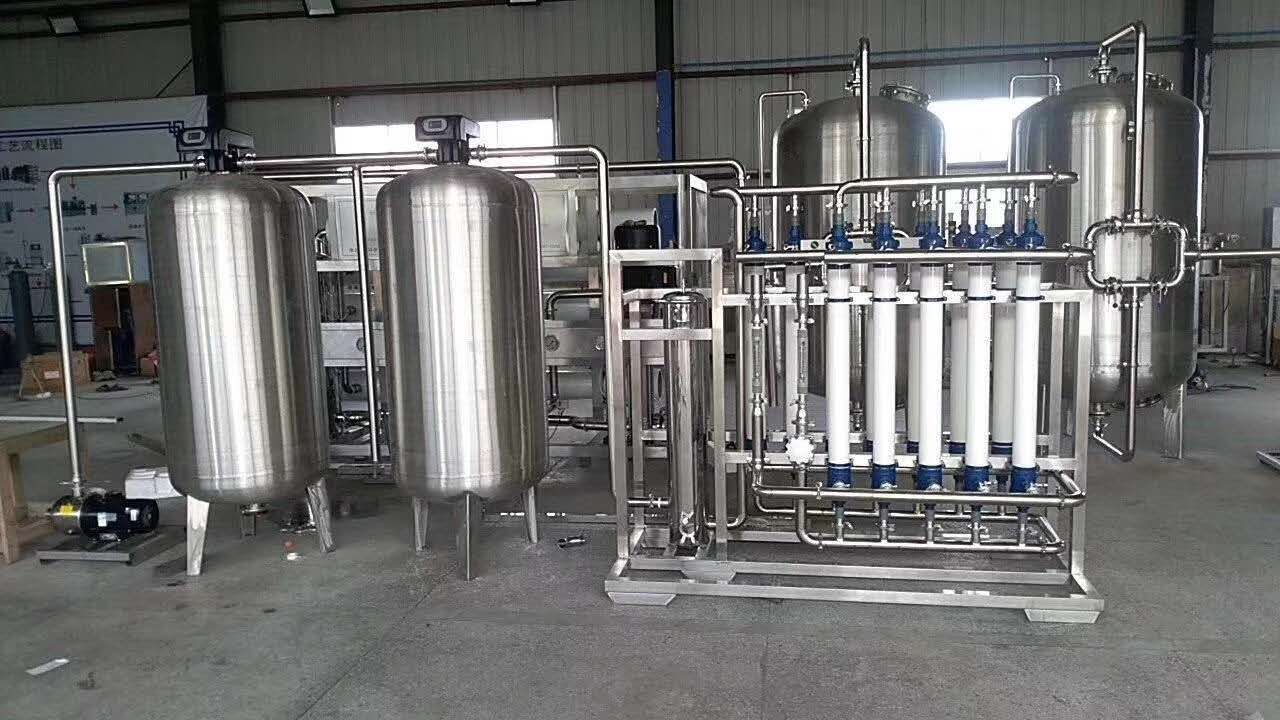
- For natural spring water, the priority is balancing purification efficiency with mineral retention. The system typically employs a dual-membrane process combining Nanofiltration (NF) and Ultrafiltration (UF). This configuration ensures the removal of impurities while preserving the natural mineral content required by the product specification.
- Purified Water Lines:*
- For standard purified water, the requirement is deep purification. The system utilizes a two-stage Reverse Osmosis (RO) process, often combined with ozone and UV sterilization (254 nm) to ensure microbial safety. The core purification sequence includes multi-media filtration, activated carbon, and precision filtration before the RO stage.
Decision Point: Before initiating an upgrade, verify your source water report against the target water standard. If you are switching from a single-stage RO to a dual-membrane NF+UF setup (or vice versa), this requires a complete re-engineering of the water treatment skid, not just a line speed adjustment.
Capacity and Bottle Compatibility
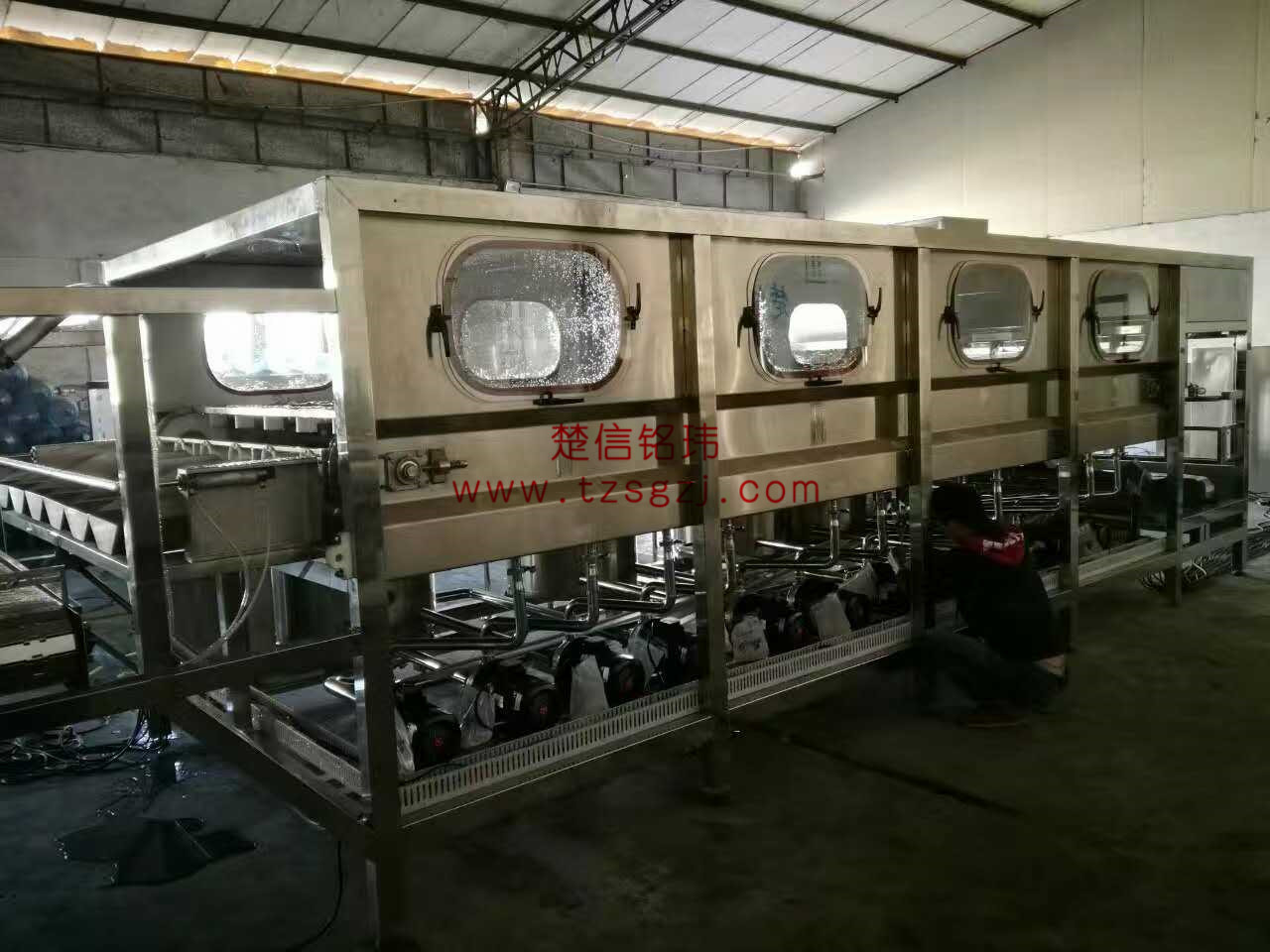
When scaling up, the rated output capacity must be matched to the physical bottling format. Chuxin Mingwei's automated lines are engineered for specific bottle sizes, including the industry-standard 18.9 L (5-gallon), 11.3 L, and 5 L formats.
- Capacity Range:*
- Production capacity is scalable, typically ranging from 200 to 1,800 bottles per hour for spring water lines, and up to 2,500 bottles per hour for purified water lines, depending on the specific configuration and bottle size.
- Filling Accuracy:*
- Critical for high-speed operations, the integrated washing-filling-capping units achieve filling accuracy of ≤ ±2 mL and a capping pass rate of ≥99.6%.
Action Item: Confirm the exact bottle dimensions (diameter and height) and the required hourly throughput. Do not assume a line designed for 18.9 L bottles can seamlessly handle 5 L bottles without adjusting the conveyor synchronization and filling valve timing.
2. Cross-Regional Collaboration: Interface and Cleanroom Standards
When managing projects across different regions or collaborating with digital project teams, the complexity shifts from equipment selection to interface management and environmental control. A common failure point is the assumption that local site conditions match the design parameters.
Air Quality and Cleanroom Compliance
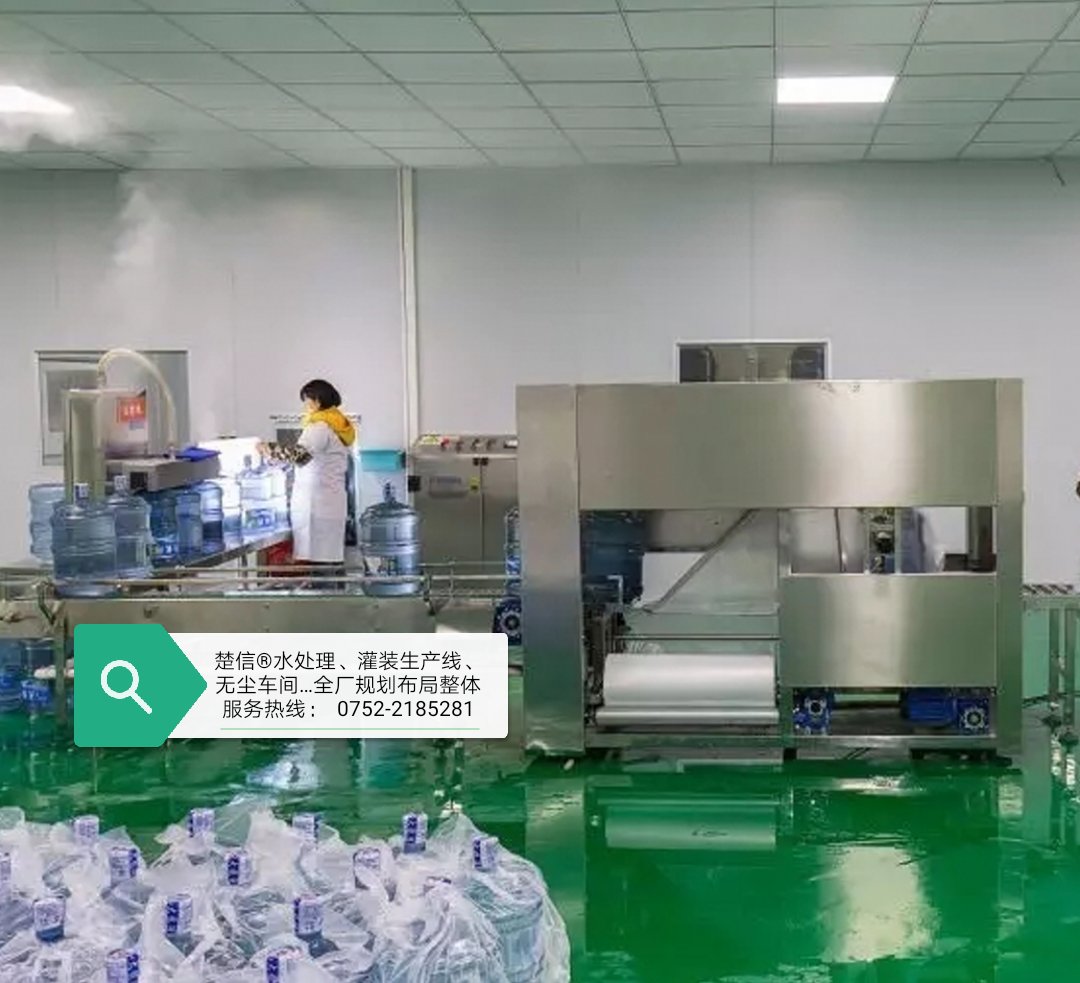
Water filling lines, particularly those for bottled and barrelled water, operate within controlled environments. Chuxin Mingwei provides custom-engineered clean air purification systems designed to meet ISO Class 8 (100,000) standards, with options to upgrade to Class 7 (10,000).
- Integration Requirement:*
- The air system is not a standalone unit; it must be integrated with the water treatment and filling line operation. Key parameters include airflow range (1,500 – 20,000 m³/h), H13 HEPA filtration efficiency, and pressure zoning.
- Collaboration Boundary:*
- Regional teams must verify that the local HVAC infrastructure can support the specified airflow and pressure differentials. The PLC + HMI control system allows for real-time diagnostics, but the physical duct routing and room sealing must be validated by the local construction team.
Delivery Scope and Handover Protocols
Ambiguity in delivery scope is a major risk in cross-regional projects. A "turnkey" solution does not automatically imply all civil works or third-party utilities are included.
- Explicit Boundaries:*
- The engineering service scope covers design, manufacturing, installation, commissioning, operator training, and after-sales support. However, specific exclusions often apply to:
- Client-side civil works (foundations, floor leveling).
- External utility connections (main power supply, main water intake, compressed air mains).
- Local permitting and inspection fees.
- Verification Step:*
- During the review phase, request a detailed Bill of Materials (BOM) and a scope matrix that explicitly lists what is included in the factory acceptance test (FAT) versus what is required at the site acceptance test (SAT). Ensure the contract defines who is responsible for the "last meter" of electrical and piping connections.
3. Implementation Risks and Operational Readiness
Upgrading a line introduces risks related to downtime, hygiene validation, and staff competency. The transition from old to new equipment requires a structured handover plan.
Hygiene and CIP Validation
Cleaning and disinfection are critical for long-term maintainability. Whether using ozone, UV, or CIP (Clean-in-Place) systems, the process must be validated.
- Process Control:*
- The system must account for cleaning liquid concentration, temperature, flow rate, and contact time. Dead legs, bypasses, and valve cavities must be clearly defined in the design documents.
- Validation:*
- Simply reaching a set time is insufficient. The verification process must confirm that the cleaning loop covers all targeted equipment and that no residual contaminants remain.
Operator Training and Maintenance
Stability relies on operator proficiency. Chuxin Mingwei emphasizes sustained post-installation support, which includes comprehensive operator training.
- Training Scope:*
- Training should cover daily operation, basic troubleshooting, preventive maintenance schedules, and spare parts identification.
- Spare Parts Strategy:*
- Develop a criticality-based spare parts inventory. Identify components that require immediate replacement during a breakdown versus those that can wait. This is essential for minimizing downtime in remote locations.
Conclusion: Next Steps for Enterprise Leaders
Upgrading a custom barrelled water filling line or expanding operations across regions requires a rigorous review of technical specifications, environmental interfaces, and delivery boundaries. Success is achieved by anchoring decisions in verified data—source water reports, bottle specifications, and clear scope matrices—rather than general assumptions.
To proceed with a reliable upgrade or expansion:
- Audit Current Data: Gather recent source water analysis and current production bottleneck metrics.
- Define Scope: Explicitly list all client-provided utilities and civil work requirements.
- Request Engineering Review: Engage with Chuxin Mingwei's engineering team to validate the proposed configuration against your specific site constraints and target standards.
Contact our technical sales team to schedule a site-specific feasibility study and receive a customized proposal based on your actual operational needs.
Key Points Summary
- Process Specificity:*
- Spring water lines require NF+UF processes to retain minerals, while purified water lines use dual-stage RO with UV/Ozone sterilization.
- Capacity & Accuracy:*
- Systems support 18.9L, 11.3L, and 5L bottles with capacities up to 2,500 bottles/hour and filling accuracy of ±2 mL.
- Cleanroom Integration:*
- Air purification systems must be designed to ISO Class 8 (upgradable to Class 7) and integrated with the filling line's airflow and pressure zones.
- Delivery Boundaries:*
- Clarify exclusions regarding civil works, external utilities, and local permits to avoid project delays.
- Operational Readiness:*
- Validate CIP loops and establish a critical spare parts inventory to ensure long-term stability.
Call to Action
Ready to optimize your barrelled water production? Contact Chuxin Mingwei today for a free consultation on custom water treatment and filling line upgrades tailored to your facility's unique constraints.
Recommended
Bottled Spring Water Filling Production Line
Chuxin Mingwei’s customized bottled spring water filling production line is specifically...
Fully Automatic Bottled Purified Water Filling Production Line
Chuxin Mingwei’s customized fully automatic bottled purified water filling production li...
Clean Air Purification Systems
Custom-engineered air purification systems for water bottling and barrelled water fillin...