
Fully Automatic Bottled Spring Water Filling Line: A Comparison and Alternatives Checklist for First-Time Deployment
Evaluating Comparison and Alternatives for Spring Water Filling Equipment
For implementation and maintenance leads managing a first-time deployment, selecting a fully automatic bottled spring water filling line involves navigating complex vendor proposals. The core challenge in any comparison and alternatives exercise is distinguishing between standardized catalog specifications and site-specific engineering realities.
Unlike purified water systems that rely on reverse osmosis, spring water requires a dual-membrane NF (Nanofiltration) and UF (Ultrafiltration) process to balance purification efficiency with essential mineral retention. When comparing equipment alternatives, procurement and operations teams must evaluate how well the proposed machinery integrates with this specific water profile, packaging format, and facility constraints.
Below is a practical buyer decision checklist designed to help you evaluate proposals, identify hidden risks, and establish clear delivery boundaries.
Must-Haves: The Non-Negotiable Engineering Baselines
When comparing different spring water filling equipment configurations, certain technical and operational baselines cannot be compromised.
1. True Capacity Calculation vs. Nameplate Speed
A common pitfall during vendor comparison is relying solely on the "bottles per hour" (BPH) metric. You cannot simply convert the filling line's BPH into finished product water volume. A realistic material balance must account for bottle rinsing water, CIP (Clean-In-Place) cleaning cycles, equipment flushing, blending losses, peak buffering, and planned operational hours. Always verify if the vendor's capacity claim includes these operational realities or just theoretical mechanical speed.
2. Hygiene and Contamination Control
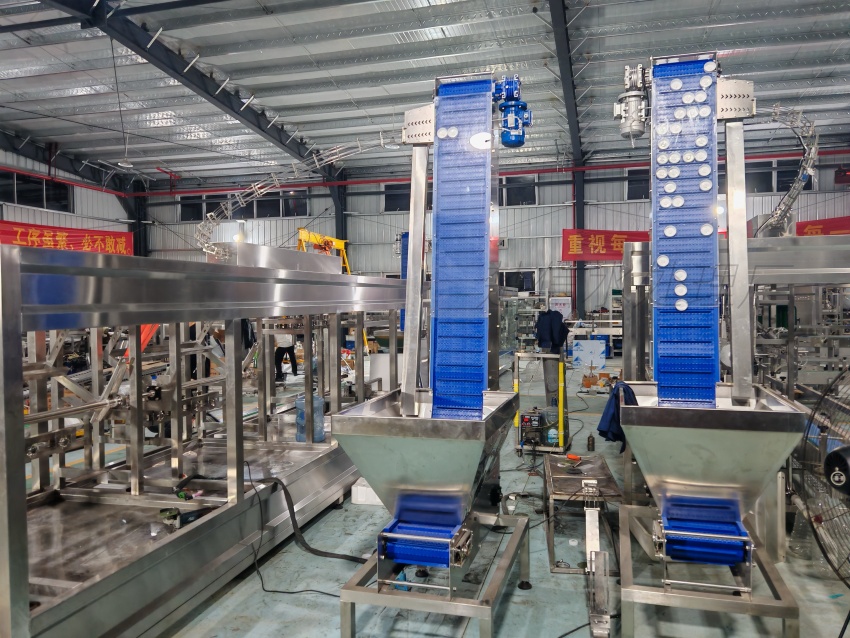
For natural spring water, preserving water quality post-treatment is critical. An integrated washing-filling-capping monoblock (3-in-1 machine) is generally preferred over separate units. By concentrating these three processes in a continuous conveying path, the monoblock reduces transfer points and minimizes bottle mouth exposure to the ambient environment. When comparing alternatives, verify the machine's critical quality controls: rinsing water pressure, secondary pollution prevention at the bottle mouth, liquid level consistency, no-bottle-no-fill logic, and cap presence detection.
3. Cleanroom and Airflow Integration
Filling equipment does not operate in a vacuum. The machinery layout must align with your facility's cleanroom zoning. Evaluating the water plant cleanroom process flow early in the comparison stage ensures that the filling monoblock's physical dimensions and maintenance access points do not disrupt ISO Class 8 or Class 7 airflow patterns and pressure differentials.
Optional Factors: Where Alternatives Diverge
Once the must-haves are satisfied, you can compare alternatives based on operational flexibility and automation levels.
- Format Flexibility and Changeover:*
- If your production plan includes multiple formats (e.g., 18.9L, 11.3L, and 5L bottles), compare the changeover time and the complexity of replacing change parts. Some alternatives offer quick-release starwheels and adjustable filling valves, while others require extensive manual recalibration.
- Capping System Adaptability:*
- Spring water brands often use varied cap types (e.g., standard plastic caps, sports caps). Compare how different machines handle cap sorting, orientation, and torque control without damaging the cap or compromising the seal.
- Automation Boundaries:*
- Decide where manual intervention is acceptable. While the core filling process should be fully automated, alternatives diverge on back-end operations like visual inspection, labeling, and palletizing. Assess these based on your local labor costs and available floor space.
Risks and Delivery Boundaries: What Quotes Often Hide
When forming your shortlist of alternatives, scrutinize the boundaries of the vendor's scope of supply and performance guarantees.
The "Standard Bottle" Capacity Illusion
Vendors frequently use a standard 500mL PET bottle as the baseline for their BPH samples. This does not mean other bottle sizes will achieve the same speed. When filling larger formats like 18.9L or 5L barrels/bottles, filling time, liquid flow dynamics, bottle stability, and downstream packaging rhythms change significantly. Therefore, the technical parameter sheet must explicitly state the material, bottle type, volume, and testing conditions. Avoid proposals that only list a maximum speed detached from actual working conditions.
Scope of Supply Clarity
A "turnkey" label can mean different things to different suppliers. Does the quotation cover front-end raw water storage and back-end shrink wrapping, or just the monoblock? Clarify whether auxiliary systems like ozone generators, UV sterilizers, and air compressors are included. Understanding the bottled water production line cost requires a line-by-line breakdown of what is included versus what requires local procurement.
Long-Term Support and Maintenance Checklist
For the maintenance lead, the true cost of an alternative is revealed during troubleshooting and daily upkeep. Include these factors in your final comparison:
- Troubleshooting Accessibility:*
- If filling levels become inconsistent, can your team easily determine if it is a systemic issue (supply liquid level, pressure, temperature, foam) or a single-valve anomaly (seal wear, sensor fault, pneumatic path)? The control system (PLC + HMI) should provide clear alarm histories and trend logs to facilitate this diagnosis.
- Capping Torque Adjustments:*
- If caps are loose or skewed, the maintenance team needs to quickly check cap specifications, chute alignment, and capping head height. Compare how easily different machine designs allow for these adjustments without requiring specialized vendor intervention.
- Spare Parts and Training:*
- Define the boundary of after-sales support. Does the vendor provide a comprehensive wear-parts list, and is operator training included in the commissioning phase?
Next Steps for Implementation Teams
Selecting the right bottled spring water production line is not about finding the cheapest alternative, but the most applicable one. Prioritize vendors who map their equipment capabilities to your actual source water quality, target capacity, and facility layout.
Chuxin Mingwei engineers non-standard, site-specific water treatment and filling solutions. We prioritize stability, applicability, and long-term maintainability over generic catalog sales. Contact our engineering team to review your source water report and facility constraints, and let us design a production line tailored to your operational reality.