
Complete Equipment List for 5-Gallon Barrel Water Filling Line
A 5-gallon barrel water filling line is not a single machine — it is an integrated system of interconnected equipment designed to handle the unique challenges of reusable or single-use rigid containers in regulated industries. For procurement managers and operations leads in beverage, food, and pharmaceutical sectors in China, selecting the right configuration requires understanding not just what machines are included, but how each component aligns with water quality, container type, hygiene standards, and facility constraints.
Core Equipment Components
Based on Chuxin Mingwei’s delivered systems for 5-gallon (18.9 L) barrel applications, a complete filling line typically includes:
- Barrel Inspection & Sorting Station: Manual or automated check for physical damage, residue, or labeling errors — critical when processing recycled barrels.
- Barrel Cap Removal Unit: Mechanized cap removal designed for standard threaded or snap-on lids used in China’s domestic market.
- External Barrel Washer: Rotary brushes and high-pressure spray nozzles to remove dirt, dust, and labels from barrel exteriors — especially required for reused containers.
- Internal Barrel Cleaner & Disinfection Unit: Multi-stage cleaning with targeted spray nozzles, followed by ozone or UV disinfection. Flow rates and contact times must align with your source water quality and final product standard.
- Rinse Station: High-purity water rinse to remove cleaning agents and residual contaminants before filling. Water source must be pre-treated to meet food-grade standards.
- Filling Machine: Precision volumetric filling heads calibrated for 18.9 L barrels. Chuxin Mingwei’s systems use servo-controlled valves to maintain filling accuracy within ±2 mL, minimizing waste and ensuring compliance with volume labeling regulations.
- Capping Machine: Torque-controlled sealing units designed for barrel-specific caps. Over-tightening can deform the barrel neck; under-tightening risks leakage — both are common failure points if not calibrated to your cap material and barrel geometry.
- Online Inspection System: Visual or light-based detection for fill level, cap seal integrity, and barrel cleanliness. Optional but recommended for GMP or HACCP compliance.
- Labeling & Bagging Station: Automatic sleeve labeling and heat-shrink film wrapping for pallet-ready packaging.
- Conveyor & Control System: PLC-based automation with HMI interface for monitoring, fault alerts, and production tracking. All units must be synchronized to avoid bottlenecks.
Operational Boundaries & Common Misconceptions
Not all components are required in every project. Key decision boundaries include:
- New vs. Recycled Barrels: If using recycled barrels, you must include cap removal, external washing, and multi-stage internal cleaning. New barrels may only require rinsing and disinfection — reducing equipment cost and footprint.
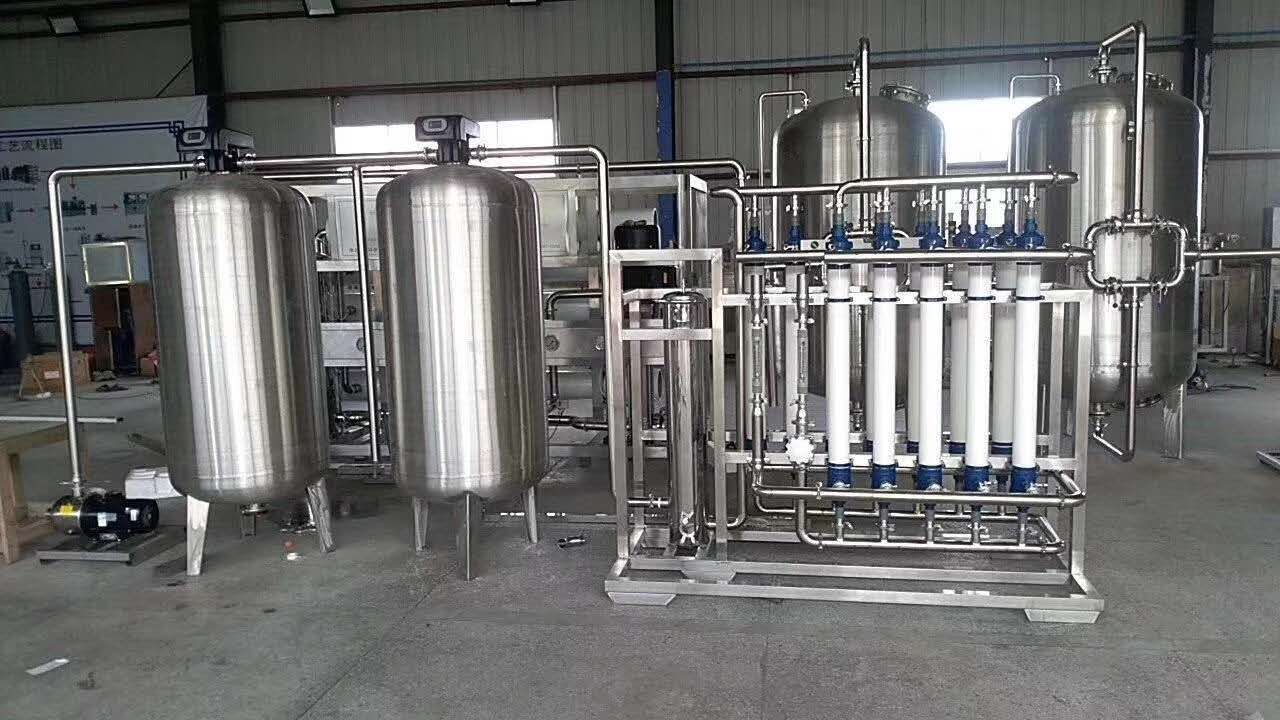
- Water Source Compatibility: The cleaning and rinsing stages depend on your raw water quality. If your source has high TDS or organic load, you may need pre-treatment upstream — such as multi-media filtration or RO — which is not part of the filling line but must be integrated.
- Throughput Requirements: A line rated for 200–1,800 barrels/hour (based on 18.9 L) requires matching upstream water storage and downstream packaging capacity. Do not assume filling speed equals total output — CIP cycles, changeovers, and maintenance downtime must be factored into daily production planning.
- Cleanroom Integration: For pharmaceutical or high-purity applications, the filling zone must be enclosed within an ISO Class 8 (or higher) clean air system. Chuxin Mingwei’s clean air solutions are engineered to integrate directly with the filling line’s airflow and pressure zoning.
Implementation Considerations
Before finalizing your equipment list:
- Confirm barrel dimensions, neck thread type, and lid specification — these vary by supplier and region.
- Define your water quality target (e.g., purified vs. spring water) — this determines whether you need RO, NF, or UV-only disinfection upstream.
- Clarify whether the line includes CIP (Clean-in-Place) functionality or if it’s a manual cleaning process.
- Verify electrical, water, and drainage capacity at your site — a 5-gallon line may require 3–5 m³/h of process water and a power supply sufficient to operate all synchronized units.
- Ensure your facility layout allows for equipment access, maintenance clearance, and waste water discharge.
Next Steps
If you are evaluating a 5-gallon barrel water filling line for your facility, start by documenting:
- Your barrel source (new or recycled)
- Your target water standard
- Your expected daily output
- Your current utility infrastructure
From there, request a site-specific equipment configuration from a manufacturer who provides end-to-end engineering services — not just equipment quotes. Chuxin Mingwei delivers systems designed around actual operational conditions, not generic templates.
For a detailed breakdown of how water treatment, filling, and clean air systems are integrated in real projects, see our guide on bottled water production line quotation.