
How to Configure Barrel Washing Stations for New vs. Recycled 5-Gallon Containers
How to Configure Barrel Washing Stations for New vs. Recycled 5-Gallon Containers
If you’re commissioning your first 3–5 gallon barrelled water filling line—whether for purified or spring water—one of the earliest technical decisions involves how to handle empty containers. Specifically: Will you use new barrels, recycled (returnable) barrels, or a mix of both? This choice isn’t just logistical; it dictates the configuration, complexity, and hygiene validation of your washing station.
Chuxin Mingwei’s engineered filling lines for bottled purified and spring water are designed around actual operational inputs—including container condition. Below, we break down the key differences and why separate or adaptable washing stations are often required.
Why Container Type Dictates Washing Design
Recycled Barrels Require Multi-Stage Internal Cleaning
Recycled 5-gallon (18.9L) barrels typically return with biofilm, mineral deposits, residual water, and potential microbial contamination. To meet food-grade hygiene standards, they demand a rigorous internal wash sequence:
- Alkaline detergent wash (to remove organic residues)
- Acid rinse (to dissolve scale)
- High-pressure fresh water rinse
- Final sanitization (often via ozone or hot water)
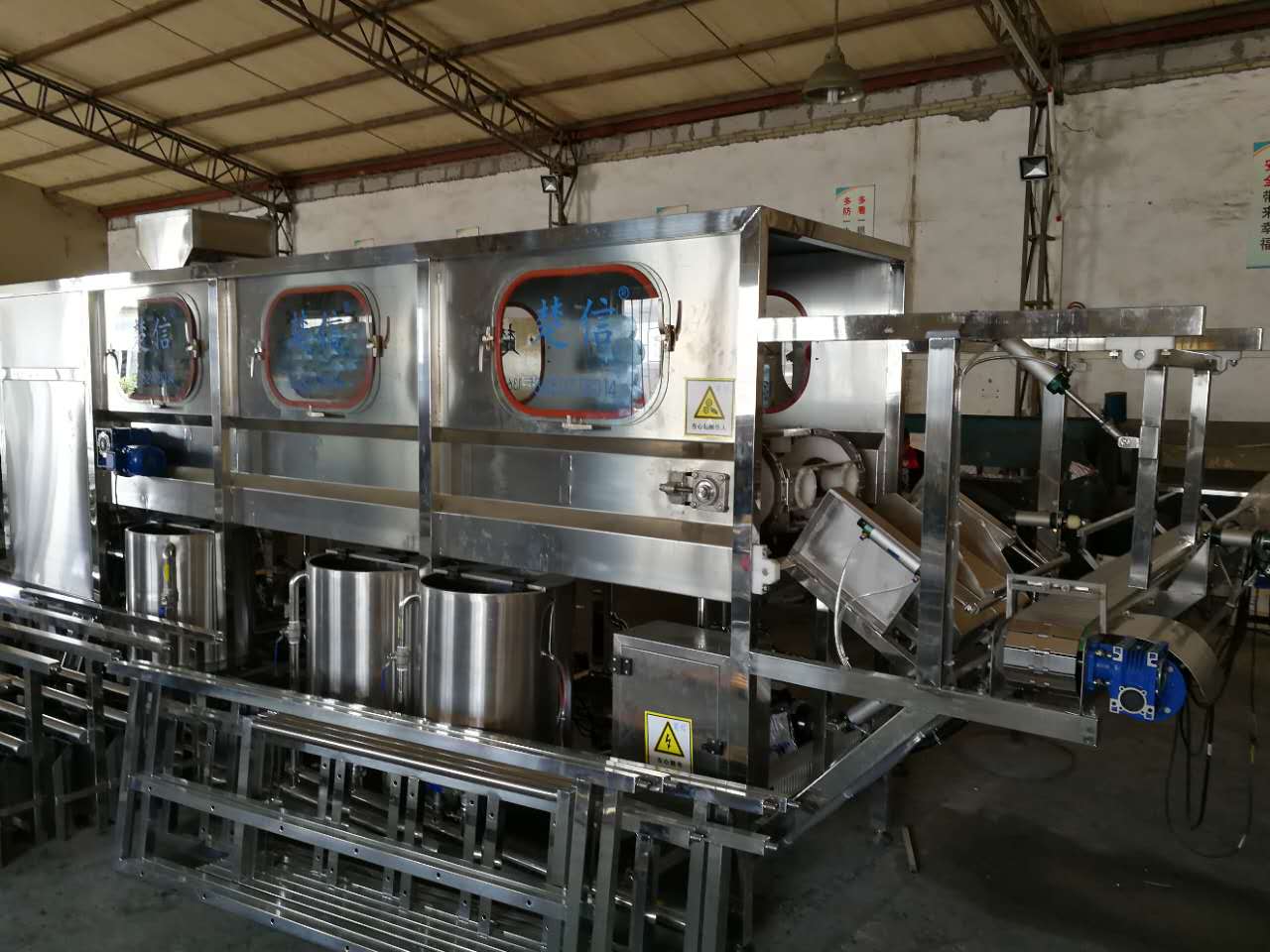
This process requires dedicated internal spray nozzles, chemical dosing systems, drainage control, and validated contact time—features integrated into Chuxin Mingwei’s fully automatic bottled purified water filling lines.
Fact from product specs: The Bottled Purified Water Filling Line includes synchronized bottle washing, filling, and capping with minimal manual intervention—implying an engineered wash cycle suitable for returnable containers.
New Barrels Need Only External Decontamination
New barrels, while factory-sealed, may accumulate dust or handling contaminants during transport and storage. They generally require only:
- External brushing or rinsing
- Sterile air blow-off
- Optional UV or ozone surface treatment
No internal chemical wash is needed, reducing water, energy, and chemical consumption. However, if your line must handle both new and recycled barrels, running them through the same aggressive wash cycle risks:
- Unnecessary wear on new barrels
- Chemical residue if rinsing isn’t optimized
- Cross-contamination if drainage or zoning isn’t isolated
Engineering Implications: One Line, Two Paths?
Chuxin Mingwei’s approach prioritizes product-scenario matching. For clients using exclusively new barrels, the washing segment can be simplified—omitting internal chemical stages. For mixed or recycled-only operations, the full wash train is essential.
Critically, a single washing station cannot optimally serve both types without compromise. Attempting to do so often leads to:
- Over-processing new barrels (reducing lifespan)
- Under-processing recycled ones (risking hygiene failures)
- Complex changeover procedures that disrupt throughput
Therefore, for facilities planning to use both container types, Chuxin Mingwei typically recommends either:
- Two parallel washing infeed lanes (one for new, one for recycled), merging before filling, or
- A configurable wash module with selectable programs—but only if throughput and validation allow.
Fact from service scope: Chuxin Mingwei delivers end-to-end engineering services including design, manufacturing, and installation—enabling site-specific adaptation of washing segments based on actual container logistics.
Validation & Operational Boundaries
As a technical evaluator, verify these points during specification review:
- Does the washing station include independent control of internal/external wash cycles?*
*
- Is drainage segregated to prevent backflow from recycled-barrel zones?*
*
- Can the system log wash parameters (time, temperature, chemical concentration) for audit purposes?*
*
- Is the wash segment compatible with your barrel supplier’s dimensions and valve types?*
*
Note: Chuxin Mingwei’s standard compatibility includes 5L, 11.3L, and 18.9L (5-gallon) containers—but confirm neck finish and base dimensions early.
Next Steps for First-Time Adopters
If you’re in the selection phase:
- Audit your container strategy: Will you own the barrel pool, or rely on third-party returns? What’s your expected ratio of new vs. recycled over Year 1–3?
- Map facility layout: Does your plant allow dual infeed paths, or must you consolidate upstream?
- Request a scenario-based layout from your equipment provider—showing wash station options tied to your actual barrel flow.
Chuxin Mingwei engineers solutions based on actual source water quality, target standards, capacity, packaging format, and facility constraints—not generic templates. This ensures long-term maintainability and operational stability.
Ready to validate your barrel handling requirements? Share your container plan and facility sketch with our engineering team for a tailored washing station assessment.
For facilities handling both new and recycled 5-gallon containers, Chuxin Mingwei’s QGF-series barrel washing stations—designed specifically for 3–5 gallon returnable barrels—integrate modular cleaning stages that can be bypassed or activated based on container type. This adaptability aligns with the system’s standard configuration: 'recycled barrel inspection, cap removal, external brushing, internal washing and disinfection, rinsing, filling, capping, lamp inspection, bagging, and conveyance.' When processing new barrels, operators can skip internal chemical washes and sanitization steps, reducing resource use while maintaining hygiene through external decontamination methods like sterile air blow-off or optional UV/ozone surface treatment—technologies recognized in industry-standard microbial control units.
Recommended
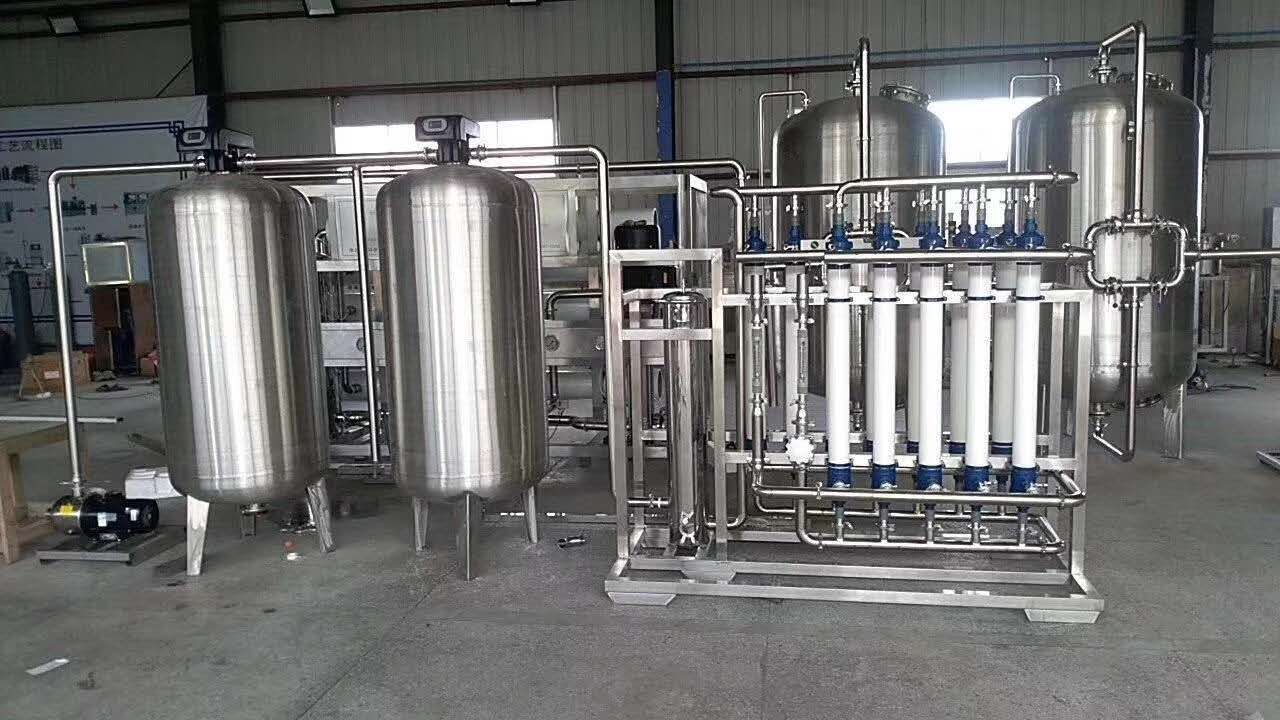
Bottled Spring Water Filling Production Line
Chuxin Mingwei’s customized bottled spring water filling production line is specifically...
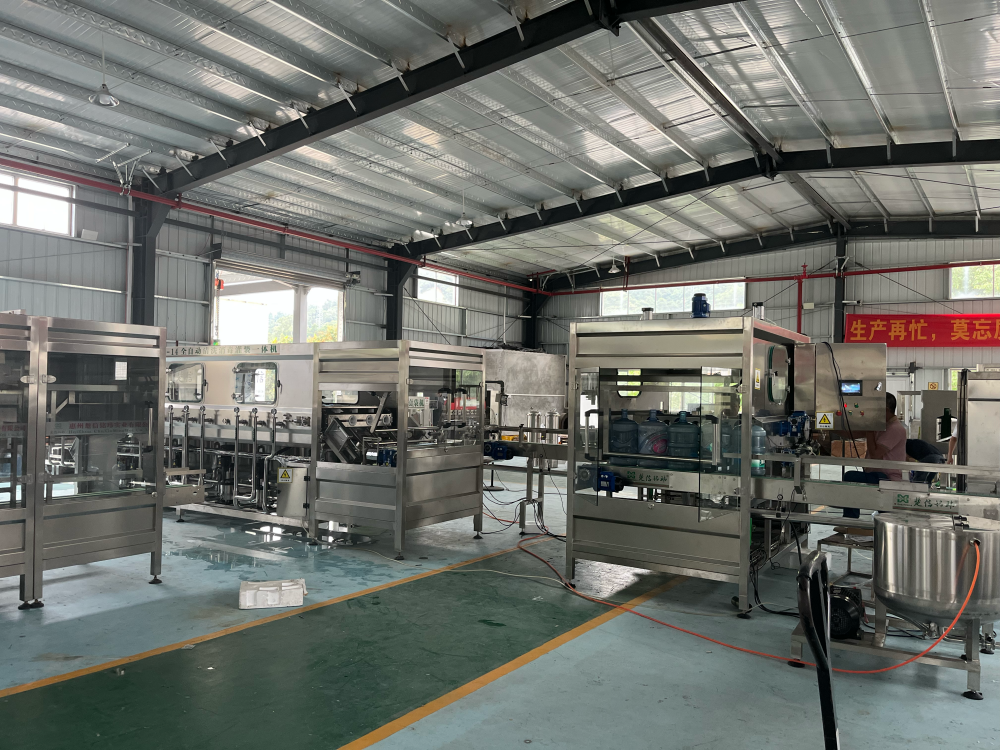
Fully Automatic Barrel Filling Line (Wash-Fill-Seal Integrated System)
A fully automatic, integrated wash-fill-seal system engineered for high-efficiency, SC-c...
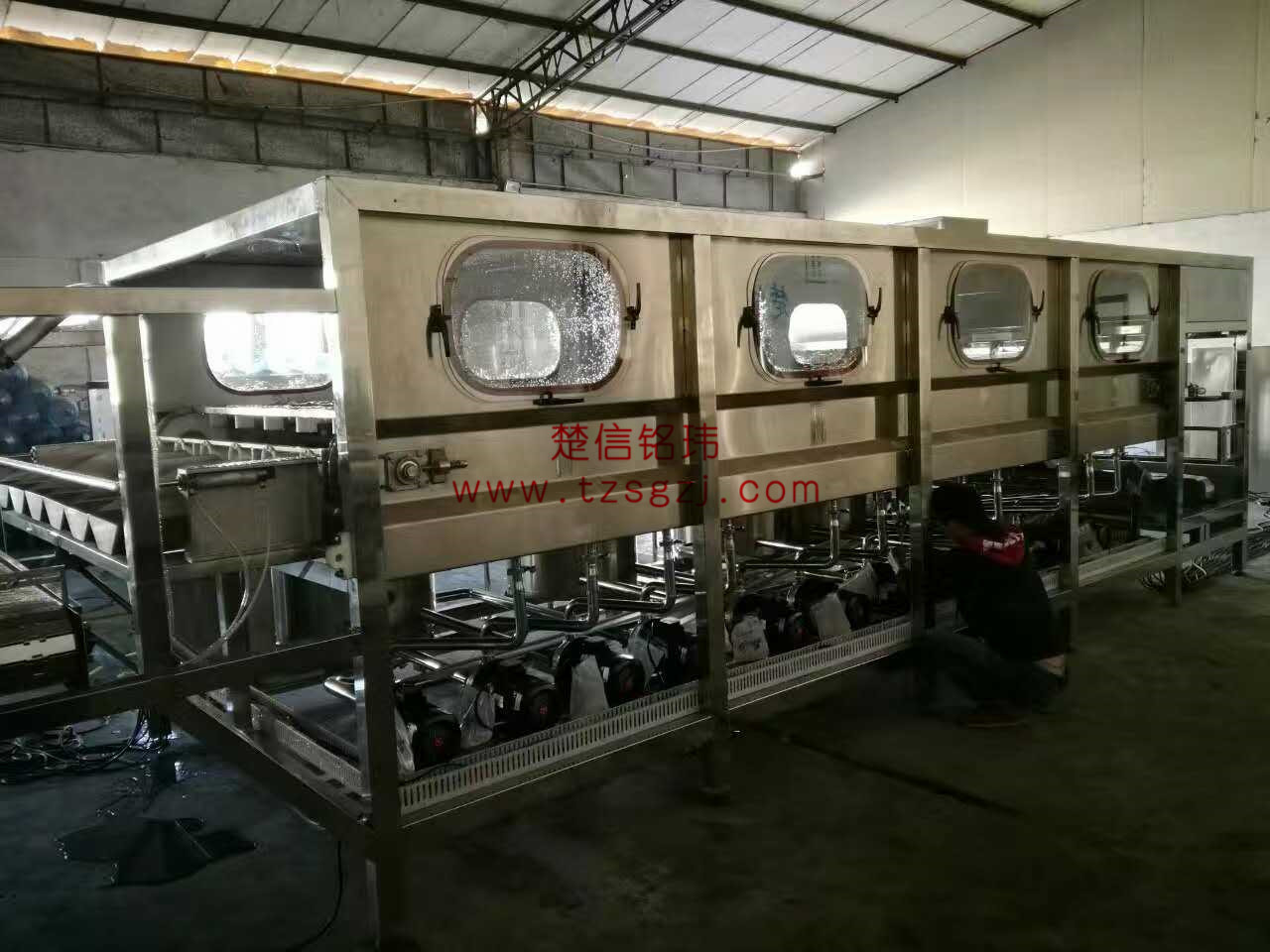
Fully Automatic Bottled Purified Water Filling Production Line
Chuxin Mingwei’s customized fully automatic bottled purified water filling production li...