
Feasibility Analysis of Co-Line Production for 3-Gallon and 5-Gallon Barrel Water Filling Lines
Introduction
For beverage and water production enterprises, the integration of 3-gallon and 5-gallon barrel water filling lines into a single co-line system presents both opportunities and challenges. This feasibility analysis explores the technical, operational, and planning considerations necessary for a successful implementation, particularly for clients in the beverage, food, and pharmaceutical industries.
Target Audience and Use Case
This analysis is tailored for technical evaluators, procurement managers, and operations leads involved in the planning or upgrading of bottled water production facilities. It addresses the specific needs of enterprises seeking to optimize floor space, reduce equipment redundancy, and streamline production workflows while maintaining hygiene and filling accuracy.
Technical Compatibility Considerations
1. Bottle and Cap Standardization
A critical factor in co-line feasibility is the compatibility of bottle types and cap specifications. The 3-gallon and 5-gallon barrels often differ in neck diameter, cap thread design, and overall height. To ensure smooth operation, the filling line must support multiple cap types and be equipped with adjustable grippers or clamping mechanisms.
Chuxin Mingwei’s bottled water filling lines are engineered to handle a variety of bottle sizes, including 5 L, 11.3 L, and 18.9 L (5-gallon) containers. While not explicitly listed, the modular design of these systems allows for customization to accommodate 3-gallon barrels with appropriate tooling adjustments.
2. Filling Accuracy and Process Control
Maintaining consistent filling accuracy across different barrel sizes is essential. Chuxin Mingwei’s filling systems feature PLC-based intelligent control, ensuring filling accuracy within ≤ ±2 mL. However, when integrating two different barrel sizes, additional calibration and sensor adjustments may be required to maintain this precision across both formats.
3. Cleaning and Sanitation Requirements
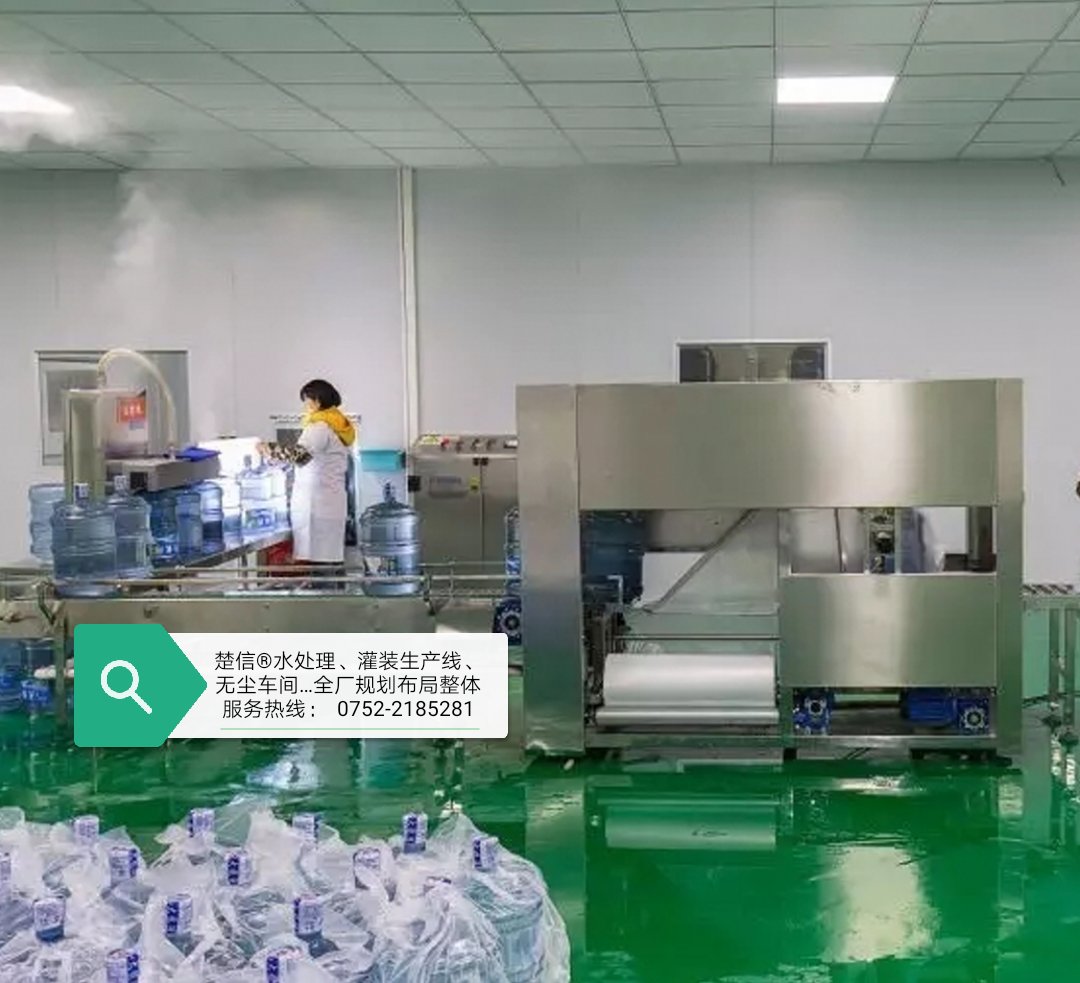
Barrel water production lines must include thorough internal and external cleaning stations. For co-line systems, the cleaning process must be adaptable to the varying volumes and surface areas of 3-gallon and 5-gallon barrels. Chuxin Mingwei’s integrated systems include multi-stage internal washing, disinfection, and rinsing, which can be configured to meet the hygiene standards required for both sizes.
Operational and Facility Constraints
1. Production Capacity and Throughput
The rated output capacity of Chuxin Mingwei’s bottled water filling lines ranges from 200 to 2,500 bottles/hour, depending on configuration. When integrating two barrel sizes, throughput must be carefully balanced to avoid bottlenecks. This may require dual filling heads or a flexible indexing system that can switch between formats without significant downtime.
2. Cleanroom and Air Purification Integration
To maintain product quality, especially for mineral or spring water, cleanroom environments are essential. Chuxin Mingwei offers ISO Class 8 (100,000) certified clean air systems, which can be integrated with filling lines to ensure contamination-free operation. These systems support airflow rates from 1,500 to 20,000 m³/h, suitable for co-line configurations.
3. Space and Layout Optimization
A co-line system requires careful layout planning to accommodate dual bottle handling, cap sorting, and labeling stations. Modular system design allows for compact layouts that maximize floor space efficiency while maintaining accessibility for maintenance and cleaning.
Implementation Boundaries and Risks
1. Equipment Customization and Cost
While technically feasible, integrating 3-gallon and 5-gallon lines into a single system may require significant customization. This includes mechanical adjustments, software configuration, and possibly dual conveyor systems. Clients should evaluate whether the cost savings from shared infrastructure justify the initial investment.
2. Maintenance and Spare Parts Complexity
Operating a co-line system introduces complexity in maintenance and spare parts inventory. It is essential to ensure that the system is designed with standardized components where possible to reduce long-term operational costs.
3. Operator Training and Changeover Time
Operators must be trained to manage format changes efficiently. Quick-change tooling and intuitive HMI interfaces, such as those featured in Chuxin Mingwei’s systems, can minimize downtime during changeovers.
Conclusion
Integrating 3-gallon and 5-gallon barrel water filling lines into a co-line system is technically feasible with the right equipment and planning. Chuxin Mingwei’s customizable filling lines and clean air systems provide a solid foundation for such integration. However, clients must carefully assess the trade-offs between operational efficiency, customization cost, and long-term maintenance complexity.
Next Steps
If you are evaluating the feasibility of a co-line system for 3-gallon and 5-gallon barrel water production, consider the following actions:
- Request a Custom System Design: Engage with Chuxin Mingwei to explore tailored configurations that meet your specific production needs.
- Conduct a Pilot Test: Evaluate format changeover times and filling accuracy in a controlled environment before full-scale implementation.
- Review Cleanroom Integration Options: Ensure that your facility meets the required hygiene standards with appropriate air purification systems.