
What 'Fully Automatic' Really Means in Purified Water Filling Lines — And What It Doesn’t
What 'Fully Automatic' Really Means in Purified Water Filling Lines — And What It Doesn’t
As a plant owner considering a replacement or upgrade of your bottled purified water line, you’ve likely seen vendors advertise “fully automatic” systems. But if your current line still requires frequent manual adjustments during shifts—or unexpected downtime during cleaning cycles—you’re right to question what “fully automatic” actually delivers in practice. At Chuxin Mingwei, our Fully Automatic Bottled Purified Water Filling Production Line is engineered for minimal manual intervention, but its autonomy is bounded by real-world conditions: source water stability, facility utilities, packaging consistency, and defined maintenance protocols. Below, we clarify common misconceptions across four critical phases—preparation, implementation, acceptance, and maintenance—based on actual project boundaries.
Misconception 1: “Fully Automatic” = No Operator Needed On-Site
Reality: Automation reduces labor intensity but doesn’t eliminate the need for trained personnel. Our line integrates synchronized bottle washing, filling, capping, and inspection with minimal manual intervention required—but only when upstream and downstream conditions are stable. For example:
- Empty bottles must be consistently supplied (via conveyor or auto-feeder) without jams.
- Bottle caps must be clean, dry, and correctly oriented in the hopper.
- Compressed air pressure and cooling water flow must meet specified ranges. If your facility uses mixed bottle batches or inconsistent cap types, even the most advanced line will trigger alarms or require resets. True autonomy starts with standardized inputs.
Misconception 2: The System Handles Any Water Quality Without Adjustment
Reality: The purification process is fixed at commissioning based on your source water report. Chuxin Mingwei’s purified water line uses a dual-stage RO reverse osmosis deep purification process, combined with ozone and UV dual sterilization. However, this configuration is finalized during engineering design using your actual raw water analysis. If your source water changes seasonally (e.g., higher TDS in dry months), the system may require pre-treatment adjustments or membrane cleaning—not automatic compensation. Unlike generic equipment, our solution is non-standard and site-specific, meaning it’s optimized for your baseline water profile. Significant deviations beyond design parameters will affect output quality and may require manual intervention or service support.
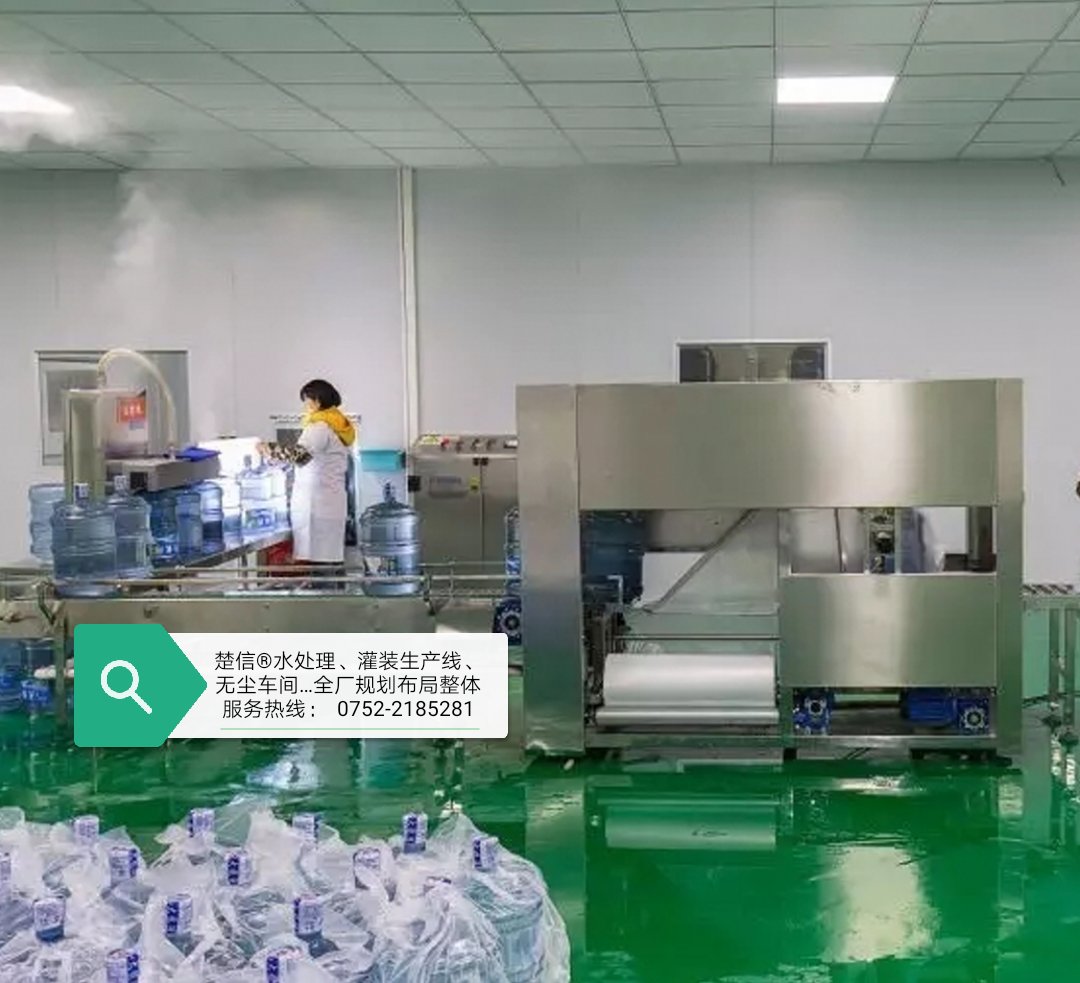
Misconception 3: Output Capacity Is Always Achievable in Daily Operation
Reality: Rated capacity assumes ideal conditions; real-world throughput varies. The line is rated for 200–2,500 bottles/hour (customizable), typically based on 18.9L (5-gallon) bottles. But this figure reflects peak performance during acceptance testing—not sustained daily output. Actual throughput depends on:
- Changeover time between bottle sizes
- Cleaning frequency and duration
- Utility stability (power, air, water)
- Operator response time to minor faults For replacement projects, we recommend benchmarking against your actual finished goods output per shift, not just machine speed. A line running reliably often outperforms one rated higher but prone to stops.
Where Automation Truly Delivers Value
Chuxin Mingwei’s approach prioritizes stability, applicability, and long-term maintainability over marketing claims. Key automated features include:
- PLC-based control with fault logging and remote diagnostics
- Integrated bottle washing-filling-capping unit reducing contamination risk
- Real-time monitoring of UV intensity and ozone residual
- Automatic rejection of under-filled or uncapped bottles These reduce variability and support consistent compliance—critical for food, beverage, and pharmaceutical clients.
Next Steps for Plant Owners Evaluating Replacement
If you’re forming a shortlist for a purified water line upgrade:
- Audit your current bottlenecks: Is downtime due to mechanical failure, utility gaps, or input inconsistency?
- Share your source water report and facility layout: Custom engineering requires accurate baseline data.
- Define your support expectations: Our end-to-end service includes installation, commissioning, operator training, and after-sales support—but scope must be confirmed upfront. Remember: “Fully automatic” isn’t a universal promise—it’s a system designed within clear operational boundaries. The best solution matches your actual production context, not an idealized spec sheet.