
How to choose Industrial Clean Air Solutions, : selection, rollout and support checklist
When a beverage, food, or pharmaceutical plant integrates a bottled spring water production line or a bottled purified water filling line, the cleanroom environment around the filling zone directly affects product safety, regulatory compliance, and line uptime. Yet many procurement teams evaluate clean air systems in isolation—comparing only HEPA grades or airflow numbers—without mapping them to the actual filling process, facility layout, or long-term maintenance reality.
This checklist is built for operations leads and digital project teams who need to compare clean air alternatives on a like-for-like basis, identify what is truly required versus what is optional, and understand where delivery and support boundaries lie.
Must-Have Criteria
These are non-negotiable factors that should appear in any serious proposal for a water bottling or barrelled water filling cleanroom.
1. Cleanroom class aligned to filling risk
For non-aseptic bottled water and barrelled water filling, ISO Class 8 (100,000) is the baseline. If your product positioning, customer contracts, or export markets require tighter control, the system must be upgradable to ISO Class 7 (10,000) without full rebuild. Chuxin Mingwei's clean air purification systems are designed to this standard, with H13 HEPA filtration and site-specific pressure zoning.
2. Airflow matched to room volume and heat load
Airflow is not a single number to compare across vendors. It must be calculated against room dimensions, equipment heat output (especially from filling valves, conveyors, and capping heads), and personnel load. A system rated at 1,500 m³/h may be correct for a small single-line enclosure, while a multi-line facility may require 20,000 m³/h or more. The selection must be project-specific, not catalog-default.
3. Integration with filling line control logic
Modern filling lines use PLC-based control with HMI interfaces. The clean air system should share diagnostics, alarm states, and—where applicable—remote monitoring capability. Standalone air systems that cannot communicate with the filling line create blind spots during fault diagnosis.
4. Duct routing and pressure zoning based on actual layout
Clean air is only effective if it reaches the right zones at the right pressure differentials. The filling zone, capping zone, and bottle handling zone each have different contamination risk profiles. Duct routing must be engineered from the facility drawing, not assumed from a generic template.
Optional Factors Worth Evaluating
These are not always required, but they can reduce long-term operating cost or simplify compliance audits.
Energy recovery and variable-speed drives
If the facility runs multiple shifts with variable production schedules, VFD-controlled fans can reduce energy consumption during low-output periods. This is an optional upgrade, not a baseline requirement.
Pre-filter staging and differential pressure monitoring
Adding a staged pre-filter bank with real-time differential pressure readout extends main HEPA filter life and provides early warning of loading. Useful in dusty environments or where outdoor air quality fluctuates seasonally.
Redundant fan modules
For facilities where downtime cost is high, N+1 fan redundancy allows continued operation during single-module maintenance. This adds capital cost and should be justified by actual production criticality.
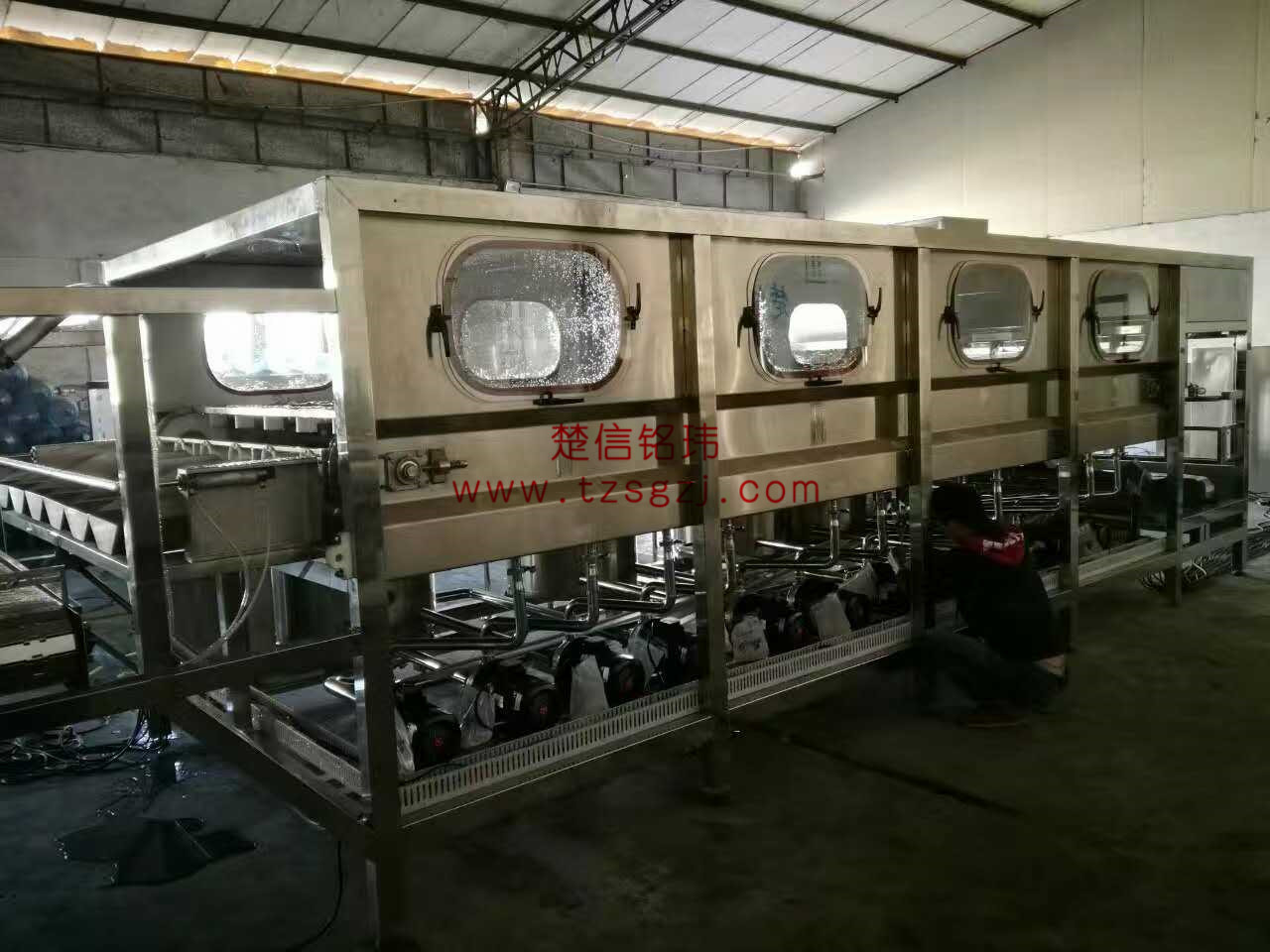
Risks and Common Comparison Mistakes
Comparing only filter grade without airflow validation
An H13 HEPA filter performs as rated only if the air volume, face velocity, and room sealing are correctly engineered. A vendor quoting H13 without demonstrating airflow calculation is not comparable to one that provides a full room-by-room design.
Ignoring the interface between air system and filling process
The clean air system does not replace good filling hygiene. Bottle rinsing water quality, capping torque control, and conveyor design all affect airborne particle generation inside the cleanroom. If the filling line itself generates excessive contamination, no air system can compensate.
Overlooking changeover impact
When a filling line switches between bottle sizes—such as from 5 L to 18.9 L barrels—the airflow pattern and personnel movement inside the cleanroom change. The air system design should account for the worst-case changeover scenario, not just the steady-state running condition.
Long-Term Support and Delivery Boundaries
Clean air systems are not drop-in products. They require site survey, duct installation, balancing, and validation. Before signing, clarify:
- Who performs the initial balancing and ISO class verification?
- What is the response time for filter replacement or fan module failure?
- Are spare parts stocked locally, or do they ship from a central warehouse?
- Is remote diagnostics available, or does every fault require an on-site visit?
Chuxin Mingwei delivers clean air systems as part of an end-to-end engineering service—including design, manufacturing, installation, commissioning, operator training, and after-sales support. This means the air system is validated together with the bottled spring water production line or bottled purified water filling line, not as a disconnected subcontract.
Next Steps
If you are comparing clean air alternatives for an existing or planned filling facility, start by documenting your room layout, filling line configuration, target ISO class, and shift pattern. Then request a site-specific engineering proposal—not a catalog quote. The difference in proposal quality will quickly reveal which vendor is designing for your actual conditions versus selling a standard package.
For guidance on how cleanroom zoning integrates with your filling process flow, see our article on water plant cleanroom process flow design and zoning. If you need to understand the full cost structure of a bottling line including clean air, review our breakdown of bottled water production line cost components.
Contact Chuxin Mingwei with your facility drawing and production requirements to receive a tailored clean air engineering assessment.