
Maintenance and Support for Fully Automatic Bottled Spring Water Filling Lines: Myths vs. Operational Facts
Who This Article Is For
This guide addresses procurement managers, operations leads, and technical project teams evaluating or operating a fully automatic bottled spring water filling line. It focuses on the maintenance and support dimension of equipment selection—specifically, what is verifiable, what depends on site conditions, and where buyers commonly overestimate or underestimate long-term service requirements.
The context applies to lines producing bottled spring water in formats such as 5 L, 11.3 L, and 18.9 L, using processes like dual-membrane NF + UF purification integrated with washing-filling-capping units.
Myth 1: "A Fully Automatic Line Requires Minimal Maintenance"
The Assumption
Because the line is labeled "fully automatic," some buyers assume that maintenance is limited to occasional visual checks and that the equipment will run indefinitely without intervention.
The Operational Fact
Full automation reduces manual labor during production, but it does not eliminate maintenance. In a typical bottled spring water filling line, maintenance spans several domains:
- Filtration and membrane systems: Multi-media filters, activated carbon filters, and ultrafiltration or nanofiltration membranes require scheduled backwashing, chemical cleaning, and periodic replacement. Activated carbon, for example, gradually saturates and may harbor microbial growth if not maintained according to actual operating conditions.
- Washing-filling-capping units: Filling valves, capping heads, and conveyor guides experience mechanical wear. Filling accuracy (commonly specified at ≤ ±2 mL) depends on valve condition and calibration.
- Sterilization subsystems: Ozone generators and UV lamps (e.g., 254 nm wavelength) have finite service lives and must be replaced based on runtime hours, not calendar dates.
- PLC and control systems: Sensors, actuators, and communication modules require firmware updates and periodic diagnostic checks.
Conditions and Exceptions
Maintenance intensity varies with source water quality, production hours per shift, bottle format changeover frequency, and ambient environment. A line running 18.9 L barrels at 200 bottles/hour in a stable environment will have different maintenance demands than one switching between 5 L and 18.9 L formats at higher throughput.
Myth 2: "The Supplier's Warranty Covers All Post-Installation Issues"
The Assumption
Buyers sometimes expect that the equipment warranty covers any malfunction, downtime event, or performance deviation after commissioning.
The Operational Fact
Warranties typically cover manufacturing defects and component failures under normal operating conditions. They generally do not cover:
- Consumable parts (filter cartridges, UV lamps, seals, gaskets)
- Damage from operating outside specified parameters (e.g., incorrect water pressure, incompatible bottle dimensions)
- Issues arising from unauthorized modifications or third-party repairs
- Failures caused by inadequate utility supply (compressed air quality, electrical fluctuations, cooling water temperature)
Conditions and Exceptions
The exact warranty scope depends on the contract. Chuxin Mingwei's delivery model includes design, manufacturing, installation, commissioning, and operator training—but the boundary between warranty coverage and operational responsibility should be clarified before signing. Buyers should request a written document specifying which components are warrantied, for how long, and under what conditions.
Myth 3: "Spare Parts Are Always Immediately Available"
The Assumption
Some procurement teams assume that spare parts for critical components—filling valves, capping heads, membrane elements, PLC modules—can be sourced on demand without advance planning.
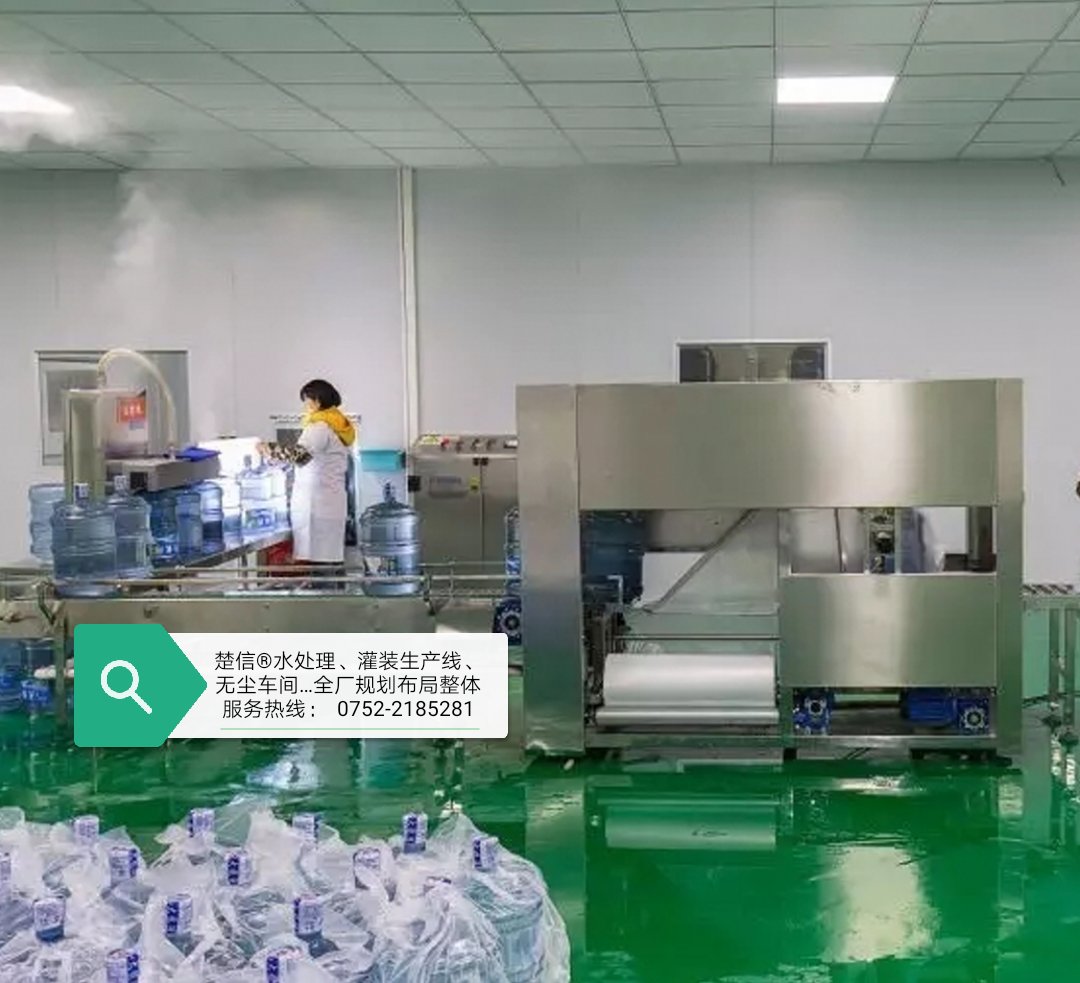
The Operational Fact
While standard consumables (seals, gaskets, filter cartridges) are often readily available, specialized components may require lead time. This is particularly true for:
- Custom-configured filling valves matched to specific bottle neck finishes
- PLC modules or HMI panels with project-specific programming
- Membrane elements sized for the line's specific flow rate and recovery ratio
Conditions and Exceptions
Availability depends on the supplier's inventory strategy, the equipment's age, and whether the component is proprietary or industry-standard. A practical approach is to negotiate a recommended spare parts list during procurement and stock critical items on-site before commissioning.
Myth 4: "Spring Water Lines Don't Need Cleanroom-Grade Air Quality"
The Assumption
Because spring water is often marketed as "natural" and undergoes less aggressive purification than RO-treated water, some operators assume that air quality in the filling area is less critical.
The Operational Fact
Spring water retains minerals and natural characteristics, but the filling environment still requires controlled air quality to prevent secondary contamination at the bottle mouth. Chuxin Mingwei's clean air purification systems are engineered to ISO Class 8 (100,000) standards, with optional upgrades to Class 7 (10,000), specifically for water bottling and barrelled water filling cleanrooms.
Key considerations include:
- HEPA filtration (H13 grade) for particulate removal
- Airflow zoning designed around the filling line layout to maintain positive pressure in critical areas
- Real-time diagnostics via PLC + HMI control for continuous monitoring
Conditions and Exceptions
The required cleanroom class depends on the product's microbial risk profile, bottle format, and cap type. A line filling 18.9 L returnable barrels with a multi-stage internal wash may have different air quality requirements than one filling single-use 5 L bottles with minimal pre-rinsing.
Myth 5: "Line Capacity Ratings Translate Directly to Daily Output"
The Assumption
A line rated at 200–1,800 bottles/hour (based on 18.9 L bottles) is assumed to produce that volume consistently across every shift.
The Operational Fact
Rated capacity reflects ideal conditions during testing. Actual daily output must account for:
- Changeover time when switching bottle formats (e.g., from 5 L to 18.9 L)
- CIP (Clean-in-Place) cycles for sanitation between production runs
- Planned and unplanned downtime for maintenance, inspections, and adjustments
- Upstream and downstream bottlenecks, such as bottle supply rate, labeling speed, or palletizing capacity
Conditions and Exceptions
A realistic production plan should calculate net output per shift based on actual run time, subtracting CIP duration, format changeovers, and a buffer for minor stoppages. The material balance—covering raw water intake, purification losses, CIP water consumption, and finished product volume—should be confirmed during project engineering, not assumed from the nameplate rating.
Myth 6: "All Water Sources Can Be Treated with the Same Process"
The Assumption
Some buyers assume that a standard purification train (multi-media filter → activated carbon → UF/NF → disinfection) will work for any spring water source.
The Operational Fact
Spring water sources vary significantly in turbidity, mineral content, microbial load, and seasonal fluctuation. The treatment process must be selected based on:
- Source water testing reports covering physical, chemical, and microbiological parameters
- Target product standards (retaining beneficial minerals while ensuring safety)
- Seasonal variation in water quality, which may require adjustable process parameters
For spring water, a dual-membrane NF + UF process is often used to balance purification efficiency with mineral retention—but this is not universal. Some sources may require additional pre-treatment (e.g., iron removal, pH adjustment) or alternative membrane configurations.
Conditions and Exceptions
The treatment intensity must satisfy safety requirements without unnecessarily stripping the water's natural characteristics. This balance is a core engineering decision, not a default configuration.
Practical Evaluation Checklist for Maintenance and Support
When assessing a fully automatic bottled spring water filling line, consider the following:
| Evaluation Area | Key Question | What to Verify |
|---|---|---|
| Maintenance schedule | What are the recommended intervals for each subsystem? | Request a maintenance matrix covering filtration, filling, capping, sterilization, and controls |
| Spare parts strategy | Which parts are consumable, which are critical spares? | Negotiate a spare parts list with lead times and sourcing options |
| Support scope | What does post-installation support include? | Clarify boundaries between warranty, service contracts, and operator responsibility |
| Training coverage | Are operators trained on routine maintenance tasks? | Confirm training scope includes daily checks, filter replacement, and fault diagnosis |
| Cleanroom requirements | What air quality class is required for the filling zone? | Match cleanroom specification to product risk profile and bottle format |
| Capacity planning | What is the realistic net output per shift? | Calculate based on actual run time, CIP cycles, and changeover frequency |
Delivery and Support Boundaries
Chuxin Mingwei's service model for bottled spring water filling lines covers end-to-end engineering: design based on actual source water quality and facility constraints, manufacturing, installation, commissioning, operator training, and after-sales support. However, certain boundaries apply:
- Site utilities (water supply, electrical capacity, compressed air, drainage) are the buyer's responsibility and must meet specifications provided during design.
- Consumable replacement and routine maintenance after commissioning are operational responsibilities, though guidance and support are available.
- Process adjustments due to source water changes or new product formats may require engineering review and are not covered under standard warranty.
Next Steps
If you are evaluating maintenance and support requirements for a bottled spring water filling line, the most effective next step is to share your source water report, target production capacity, bottle formats, and facility layout. This allows for a site-specific assessment that clarifies maintenance demands, support scope, and realistic output expectations—rather than relying on generic assumptions.
For further context on cleanroom integration, see our guide on water plant cleanroom process flow. For cost planning considerations, refer to our overview of bottled water production line cost factors.