
Evaluating Maintenance and Support for a Bottled Spring Water Filling Line: A Scenario-Based Decision Guide
The Scenario: Commissioning a Spring Water Line with Seasonal Source Variation
A mid-sized beverage company is preparing to install a fully automatic bottled spring water filling production line. The source water comes from a natural spring with measurable seasonal variation in mineral content and turbidity. The target output includes 5 L, 11.3 L, and 18.9 L PET bottle formats, with a rated capacity range of 200 to 1,800 bottles per hour based on the 18.9 L format. The facility has limited floor space and must integrate water treatment, filling, and packaging within an existing building envelope.
The core question facing the project team is not whether the equipment can fill bottles at the required speed. It is whether the line can sustain stable production over months and years with manageable maintenance effort, predictable consumable costs, and responsive technical support when issues arise.
This scenario reflects a recurring decision point for procurement managers and plant operators in the beverage sector: how to evaluate maintenance and support readiness as part of the equipment selection process, rather than discovering service gaps after installation.
Goals and Constraints for Spring Water Filling Operations
Balancing Purification with Mineral Retention
Unlike purified water production lines that rely on dual-stage reverse osmosis to strip nearly all dissolved solids, spring water processing must balance safety treatment with the retention of naturally occurring minerals. The typical approach uses a dual-membrane NF (nanofiltration) and UF (ultrafiltration) process chain. This process choice has direct maintenance implications: membrane systems require specific cleaning intervals, differential pressure monitoring, and replacement schedules that differ fundamentally from RO configurations.
The process design must be anchored to the actual source water report, product positioning, packaging format, and facility layout. A generic membrane maintenance schedule will not account for seasonal shifts in spring water composition that accelerate fouling during certain months.
Capacity Planning Beyond Nameplate Speed
A common planning error is converting the line's rated bottles-per-hour figure directly into finished product volume. This calculation overlooks auxiliary water consumption that is integral to production. Bottle washing, CIP (Clean-in-Place) cycles, equipment flushing, blending losses, peak buffering, and planned runtime all consume process water. The correct approach is to calculate finished product volume per shift first, then overlay process water demand with safety margins, and verify that raw water storage and finished water tanks can absorb short-term fluctuations. Final capacity figures should be confirmed through a project-level material balance, not a simple arithmetic conversion.
Hygiene Control Across the Integrated Filling Path
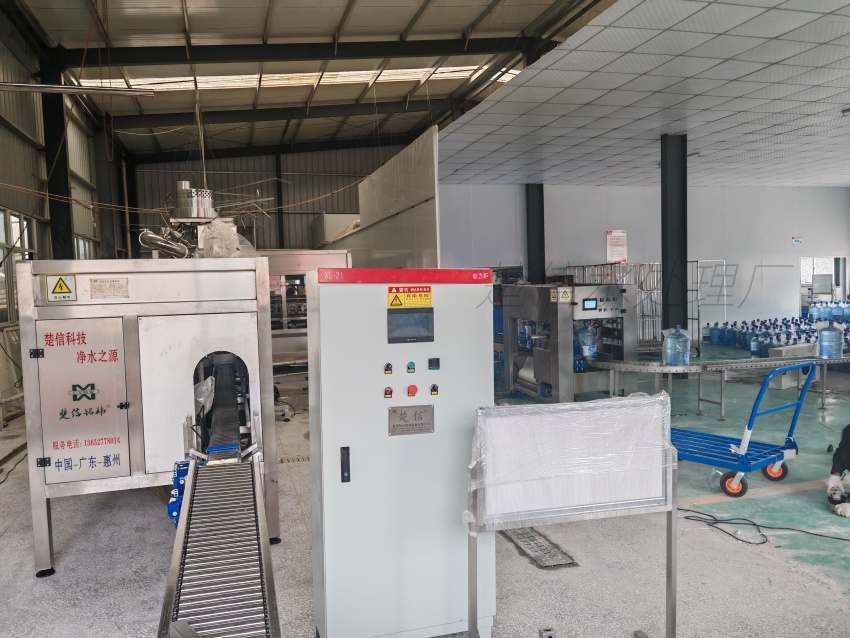
The washing-filling-capping monoblock concentrates three processes into a continuous conveying path, reducing transfer points and bottle-mouth exposure compared to separate standalone machines. However, this integration does not replace front-end water treatment, bottle supply systems, or back-end labeling and packaging. Key quality control points that require ongoing maintenance attention include rinse water quality and pressure, secondary contamination prevention at the bottle mouth, fill-level consistency, no-bottle-no-fill logic, cap presence detection, capping torque verification, changeover time between formats, and the elimination of cleaning dead zones within the filling path.
Evaluating Maintenance Readiness Before Purchase
1. Membrane System Service Protocol
For NF and UF spring water treatment, confirm that the equipment supplier provides a maintenance protocol calibrated to your specific source water characteristics. This should include:
- Documented cleaning frequency tied to your water quality report, not a generic calendar schedule
- Differential pressure monitoring thresholds with defined alarm points
- Membrane element replacement lead times and verified sourcing channels
- CIP integration parameters specific to the water treatment segment
- Seasonal adjustment procedures for periods of elevated turbidity or mineral concentration
2. Filling Machine Accessibility and Changeover
The monoblock unit is the operational center of the line. Evaluate the following before committing to a purchase:
- Physical access points for routine inspection, lubrication, and cleaning
- Documented changeover procedures when switching between bottle sizes such as 5 L, 11.3 L, and 18.9 L formats
- Availability and lead times for wear parts including filling valves, capping heads, and bottle grippers
- PLC and HMI diagnostic capabilities that enable fault identification without requiring an external technician visit for every alarm condition
3. Defining the Support Scope in Writing
Clarify the supplier's after-sales commitment before the purchase order is signed. The documented scope should address:
- Installation and commissioning timeline with defined responsibilities for both parties
- Operator training content, specifically whether it covers routine maintenance procedures or only basic machine operation
- Remote diagnostics capability through the PLC interface
- On-site response commitments for critical equipment failures
- Spare parts inventory list and guaranteed availability period
Chuxin Mingwei structures its service engagement as an end-to-end engineering delivery covering design, manufacturing, installation, commissioning, operator training, and after-sales support. The focus is on delivery execution and sustained post-installation performance, not merely equipment shipment.
Acceptance Criteria: What to Verify Before Sign-Off
Operations teams should establish measurable acceptance criteria before the equipment arrives on site. These criteria should be written into the commissioning protocol and agreed upon by both buyer and supplier.
| Criterion | Verification Approach |
|---|---|
| Filling accuracy | Sample measurement across a sustained production run |
| Capping reliability | Statistical sampling of cap seal integrity over multiple batches |
| CIP effectiveness | Swab tests and conductivity verification after cleaning cycles |
| Format changeover time | Timed drill for switching between bottle sizes under normal conditions |
| Alarm response logic | Simulated fault conditions to verify HMI displays actionable diagnostics |
| Water quality output | Laboratory analysis confirming mineral retention within target range and microbial compliance |
Negotiating these standards after installation is significantly more difficult than embedding them in the commissioning protocol from the outset.
Risk Boundaries: Conditions That Maintenance Cannot Resolve
Even a well-maintained filling line operates within constraints that must be acknowledged during the planning phase.
Source water instability. If the spring water composition shifts beyond the design envelope of the NF and UF system, membrane fouling accelerates and maintenance intervals compress. An up-to-date source water report covering seasonal variation is a prerequisite for finalizing equipment configuration.
Cleanroom environment. The air purification system supporting the filling area must maintain ISO Class 8 (100,000) compliance as a baseline, with optional upgrade paths to Class 7 (10,000). Airflow volume, duct routing, and pressure zoning are site-specific engineering decisions. If the cleanroom environment degrades due to inadequate HVAC maintenance or facility modifications, filling hygiene cannot be sustained regardless of how well the filling machine itself is maintained.
Consumable compatibility. Bottle preforms, caps, and labels must match the equipment's design specifications. Substituting incompatible consumables causes jams, sealing failures, and accelerated mechanical wear that no maintenance program can fully compensate for.
Next Steps for Evaluation Teams
If you are assessing a bottled spring water filling line, begin by assembling three foundational documents: your current source water quality report with seasonal data, your target production capacity per shift including buffer requirements, and your facility layout with utility connection points identified. These inputs form the basis for a site-specific equipment proposal that addresses maintenance and support from the first day of operation.
For a deeper understanding of how cleanroom design integrates with your filling line layout, review the water plant cleanroom process flow to understand zoning logic and equipment placement.
To evaluate total investment considerations beyond the equipment purchase price, see the breakdown of bottled water production line cost factors that influence long-term operational expenditure.
Request a technical consultation with Chuxin Mingwei's engineering team to map your specific scenario against a maintenance-aware equipment configuration.