
Matching Blending Capacity for a 12,000 BPH Juice Line: Configuration Guide & Constraints
Matching Blending Capacity for a 12,000 BPH Juice Line: Configuration Guide & Constraints
For procurement managers and operations leads planning a 12,000 BPH juice production line, the primary challenge is rarely the filler itself, but the synchronization of the upstream blending and sterilization processes. A mismatch in these areas leads to temperature drops, inconsistent Brix (sugar content), and production bottlenecks that prevent the line from reaching its rated speed.
Unlike pure water lines, juice and tea beverages often require hot-fill processes (typically 85°C–95°C) to ensure shelf stability without preservatives. This imposes strict thermal and hydraulic constraints on the entire system configuration.
1. The Core Constraint: Thermal Balance in Hot-Fill Systems
The most common failure point in a 12,000 BPH juice line is the inability to maintain product temperature from the blending tank to the filling valve.
Sizing the Blending & Sterilization Unit
To support 12,000 bottles/hour (assuming a standard 500mL PET bottle), your blending system must deliver approximately 6–7 m³/h of finished product. However, you cannot simply match the flow rate 1:1.
- Buffer Capacity:*
- The sterile tank must have sufficient volume to absorb fluctuations in the filler's speed without causing pressure spikes or drops that affect fill level accuracy.
- Temperature Maintenance:*
- The piping from the UHT (Ultra-High Temperature) sterilizer to the filler must be short, insulated, and equipped with temperature compensation loops. If the product cools below the critical filling temperature (e.g., dropping from 88°C to 82°C) before reaching the valve, microbial stability is compromised.
- Flow Dynamics:*
- High-viscosity juices (e.g., pulpy orange juice) require larger diameter pipes and specialized pumps compared to clear tea drinks to prevent shear damage and maintain flow velocity.
Critical Selection Criteria
When evaluating suppliers, verify if their blending and mixing equipment supports:
- Continuous online Brix and acidity adjustment.
- Vacuum deaeration to prevent oxidation and preserve color/flavor.
- CIP (Clean-in-Place) coverage for all dead-legs in the piping network.
2. Filler Configuration: Hot-Fill vs. Ambient
A standard water filling machine cannot be used for hot-fill juice without significant modification. For a 12,000 BPH line, the filler must be engineered specifically for thermal expansion and material tolerance.
- Valve Technology:*
- Hot-fill fillers typically use gravity or electro-pneumatic valves designed to handle viscous liquids and high temperatures. The valve seals must be made of high-temperature resistant materials (e.g., PTFE/Silicone combinations) to prevent leakage and degradation.
- Bottle Handling:*
- PET bottles deform under heat. The line must include a neck-handling conveyor system that suspends bottles by the finish (ring) rather than gripping the body. This prevents deformation during the filling and cooling stages.
- Inverted Sterilization:*
- Post-filling, the line usually requires an inversion mechanism to spray hot product onto the cap and neck area, ensuring the entire package is sterilized. This step adds time to the cycle and must be factored into the total line speed calculation.
3. The "Blow-Fill-Seal" Integration Risk
A frequent question in modern plant design is whether to use an integrated Blow-Fill-Seal (Combi) machine for a 12,000 BPH juice line. While combi systems reduce space and eliminate air conveyors for water, they present specific risks for hot-fill juice:
- Thermal Shock to Fresh Bottles:*
- Blown bottles are still warm from the molding process. Introducing hot liquid immediately can exacerbate deformation if the cooling cycle in the blow molder isn't perfectly synchronized with the filler's thermal load.
- Material Limitations:*
- Not all PET preforms are suitable for both high-stretch blowing and high-temperature filling. You must validate your preform specification with the equipment manufacturer.
- Maintenance Complexity:*
- If the blowing module requires maintenance, the entire filling line stops. For a 12,000 BPH line running 24/7, a modular approach (separateBlow Molding Machine and filler) often offers higher overall equipment effectiveness (OEE) by allowing independent maintenance schedules.
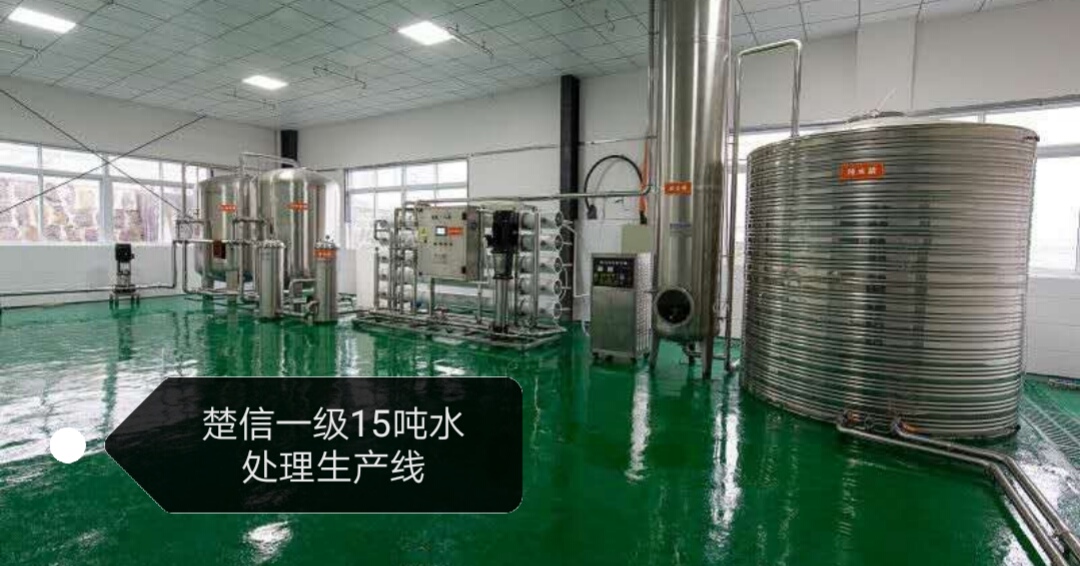
Note: Chuxin Mingwei specializes in water treatment and filling systems. While we provide robust solutions for purified and mineral water, hot-fill juice projects require a detailed feasibility study regarding preform specifications and thermal process validation.
4. Implementation Steps & Risk Boundaries
To ensure a successful deployment of a 12,000 BPH juice line, follow this validation workflow:
- Product Characterization: Define viscosity, pulp size (if any), target Brix, and exact filling temperature. These parameters dictate pump selection and valve type.
- Utility Verification: Hot-fill lines consume significantly more steam and hot water than water lines. Verify your boiler capacity and water treatment system (e.g., softening and RO) can handle the increased load.
- Layout Optimization: Minimize the distance between the blending room and the filler. Long transfer lines increase heat loss and product hold-up time.
- Cooling Tunnel Sizing: After hot filling, bottles must be cooled gradually to prevent stress cracking. The cooling tunnel length must match the 12,000 BPH speed with adequate residence time.
Common Purchase Risks
- Underestimated Blending Time:*
- Batch mixing systems may not keep up with a continuous 12,000 BPH filler, causing the line to stop waiting for product.
- Incorrect Preform Specification:*
- Using preforms designed for cold fill in a hot-fill environment leads to bottle collapse.
- Lack of CIP Integration:*
- Manual cleaning of complex juice piping is a food safety hazard. Ensure the system is fully automated for CIP.
Conclusion
Matching the blending capacity for a 12,000 BPH juice production line is a systems engineering challenge, not just a equipment purchase. Success depends on the precise thermal integration of the syrup room, sterilization unit, and hot-fill filler. Prioritize suppliers who can demonstrate experience with hot-fill valve technology, neck-handling conveyors, and thermal balance calculations specific to your product recipe.
For projects involving complex beverage formulations, a site-specific engineering review is essential to validate utility requirements and process flow before manufacturing begins.
---
Ready to evaluate your project requirements?
Share your product viscosity, target temperature, and bottle specifications. Our engineering team will provide a preliminary process flow diagram and equipment configuration assessment tailored to your 12,000 BPH target.