
Matching Sleeve Labeling Speed (2,000–40,000 BPH) to Production Line Output: Configuration & Constraints
Matching Sleeve Labeling Speed to Production Line Output
For procurement managers and operations leads in the beverage and water industry, selecting a sleeve labeling machine is not just about picking the highest speed rating. The core challenge lies in synchronizing the labeling station with the upstream filling line and downstream packaging systems. A mismatch here often results in bottle jams, label misalignment, or unnecessary capital expenditure on over-spec equipment.
This guide focuses on the specific decision-making process for matching sleeve labeling machines within the 2,000 to 40,000 bottles per hour (BPH) range to your actual production requirements, ensuring stability and efficiency.
The Core Logic: Converting Bottles Per Hour to Packs Per Minute
A common error in equipment selection is comparing the filling line's BPH directly with the labeling machine's rated speed without accounting for downstream packaging configurations.
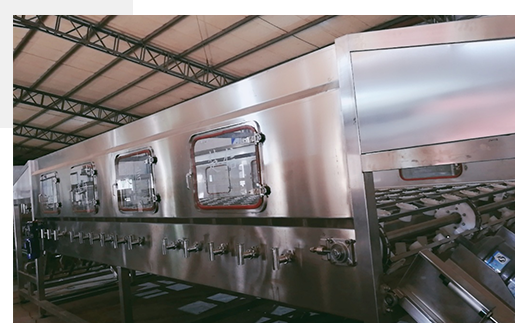
Sleeve labeling machines often feed directly into shrink tunnel and film wrapping systems. If your final output is measured in packs per minute (e.g., 10–40 packs/min for multi-packs), you must calculate the required labeling speed based on the pack formation:
- Formula:*
- `Required Labeling Speed (BPH) = Target Packs Per Minute × Bottles Per Pack × 60`
- Buffer Factor:*
- Always add a 10–15% safety margin to account for start-up losses, film changes, and minor stoppages.
Example Scenario:
If your target is 20 packs per minute with 12 bottles per pack:
`20 × 12 × 60 = 14,400 BPH`.
Adding a 15% buffer suggests a machine rated for at least 16,500 BPH. Selecting a unit rated exactly at 14,400 BPH would force the machine to run at 100% capacity continuously, increasing wear and the risk of bottlenecks.
Critical Selection Criteria Beyond Rated Speed
When evaluating suppliers for sleeve labeling solutions, the rated speed is only the starting point. Real-world performance depends on several variable factors identified in industry technical benchmarks:
1. Bottle Geometry and Stability
High-speed labeling (above 20,000 BPH) is highly sensitive to bottle shape and center of gravity.
- Round vs. Square:*
- Round PET bottles generally allow for higher stable speeds. Square or irregular bottles may require derating the machine speed by 15–20% to ensure label accuracy.
- Label Position:*
- Full-body sleeves require precise tension control. If the bottle wall thickness varies (common in lightweight PET), the labeling machine must have advanced servo-driven film feed systems to prevent wrinkling or tearing.
2. Film Material Characteristics
The type of sleeve material (PVC, PETG, OPS) directly impacts achievable speed.
- Shrinkage Rate:*
- Films with high shrinkage rates require longer dwell times in the shrink tunnel, which can become the true bottleneck even if the labeler is fast.
- Static Electricity:*
- At speeds exceeding 30,000 BPH, static buildup can cause labels to stick prematurely or misalign. Equipment must include ionizing air bars or static eliminators integrated into the feed system.
3. Buffer Zone Design
A critical but often overlooked component is the accumulation table between the filler and the labeler.
- Why it matters:*
- If the filling line stops momentarily (e.g., for cap sorting issues), the labeler should continue running using the buffer stock to avoid frequent start-stop cycles that degrade label quality.
- Recommendation:*
- Ensure the conveyor system provides at least 2–3 minutes of accumulation capacity relative to your line speed.
Deployment Boundaries and Risk Assessment
Procurement decisions must account for the physical and operational boundaries of the equipment.
- Changeover Time:*
- If your facility produces multiple SKUs (e.g., 500mL, 1L, 1.5L), verify the changeover mechanism. Quick-change parts (star wheels, guide rails) should allow format switches in under 30 minutes. Complex changeovers reduce effective daily output.
- Integration with Upstream/Downstream:*
- The labeling machine cannot operate in isolation. It must sync with the filling line (such as Chuxin Mingwei's automated barrel or bottled water lines) and the downstream packaging machine. Mismatched conveyor heights or transfer star wheels can cause bottle tipping, especially at high speeds.
- Maintenance Access:*
- High-speed machines generate more heat and wear. Ensure the design allows easy access to cutting blades and drive motors without dismantling the entire housing.
Implementation Steps for Procurement Teams
- Define Actual Peak Demand: Do not size for average output; size for peak seasonal demand plus a growth factor.
- Audit Bottle Samples: Provide potential suppliers with actual empty bottles and film rolls for live testing. Do not rely solely on catalog specifications.
- Validate Utility Requirements: High-speed sleeve labelers often require specific compressed air pressure (dry and oil-free) and precise voltage stability. Verify your facility's utility capacity matches the machine's specs.
- Request a Layout Review: Before finalizing the purchase, have the supplier simulate the line layout to confirm buffer lengths and transfer points.
Conclusion
Matching a sleeve labeling machine to your production line is a balancing act between rated speed, bottle stability, and system integration. For lines targeting 2,000 to 40,000 BPH, the key is not maximizing the number on the datasheet, but ensuring the equipment can sustain that speed with your specific bottle shape and film material without creating a bottleneck downstream.
By focusing on conversion logic, buffer capacity, and real-world testing, you can avoid costly mismatches and ensure a smooth, continuous production flow.
Ready to optimize your line configuration?
Share your bottle samples, target capacity, and film specifications with our engineering team. We will provide a tailored compatibility assessment and layout recommendation based on your specific facility constraints.