
What Configurations Determine Small-Bottle Water Filling Line Price? A Step-by-Step Cost Assessment for Procurement Team
Who This Guide Is For
If you’re evaluating a production line for 300 mL to 2,000 mL PET bottled water—whether you’re launching a new brand, expanding capacity, or replacing aging equipment—price is never a single number. The final quote depends on how the line is configured to match your actual water source, bottle design, production volume, and facility constraints.
This article walks through the configuration decisions that most influence small-bottle water filling line cost, from pre-treatment to packaging. It also explains how to compare initial investment against long-term operational expenses such as water yield, energy, consumables, and maintenance.
---
Step 1: Raw Water Quality Dictates the Treatment System
Why the water source is your first cost driver
A common mistake is to request a filling line quote without first analyzing the raw water. As [KB3] indicates, source water from groundwater, surface water, or municipal supply will have different levels of suspended solids, hardness, iron, manganese, total dissolved solids (TDS), and microbiological risk. The same 10 m³/h output can require completely different pre-treatment and membrane configurations.
Checkpoint: Before you contact any equipment manufacturer, obtain a comprehensive water quality report covering:
- Turbidity, color, odor
- TDS, conductivity
- Hardness (calcium, magnesium)
- Iron, manganese, silica
- Chloride, sulfate
- Microbial indicators
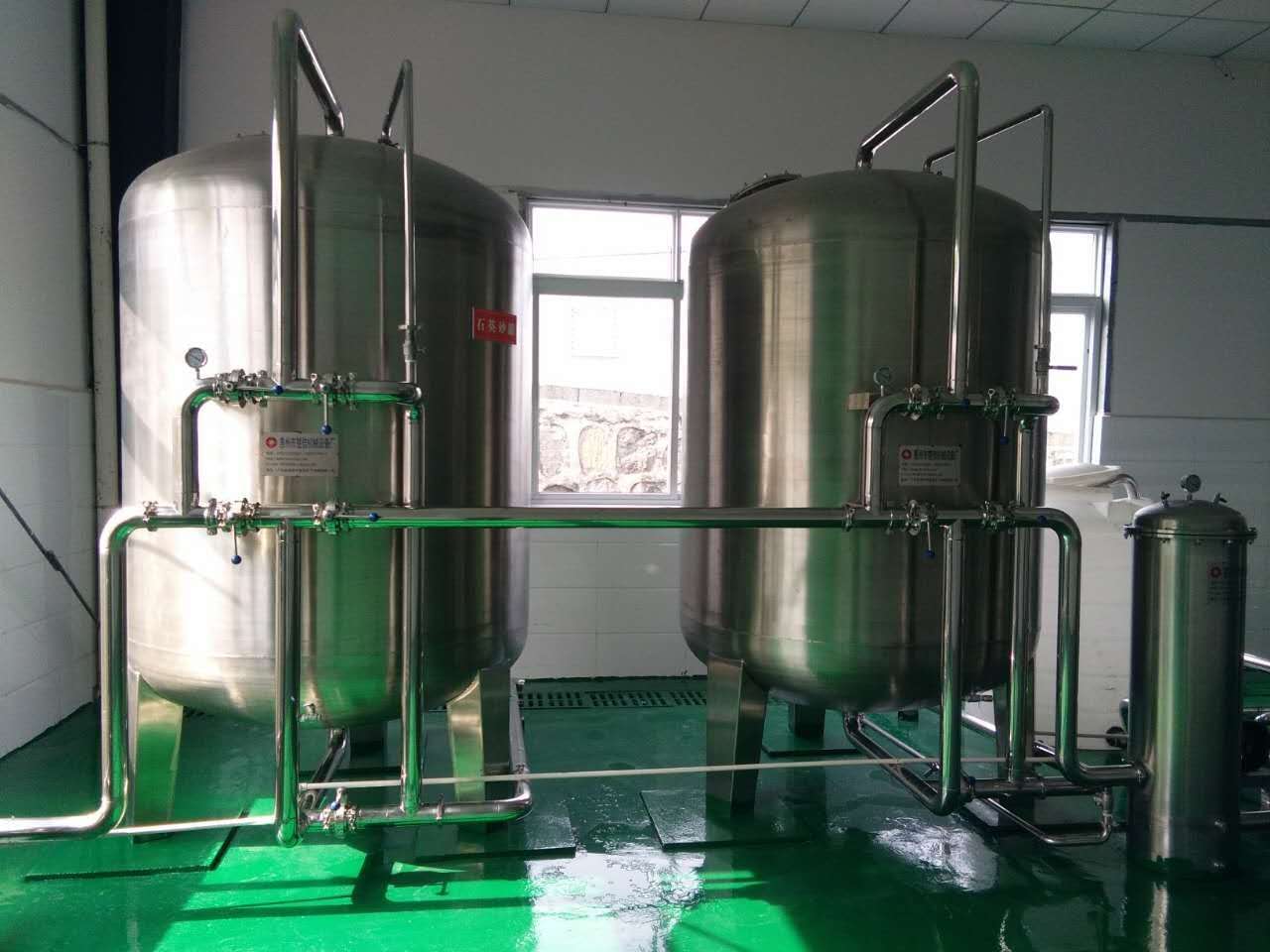
How treatment configuration affects price
- Multi-media filtration + activated carbon
- (basic pre-treatment) is standard for relatively clean municipal water.
- Softening or antiscalant dosing
- may be required if hardness is high, adding capital and operating cost for salt or chemicals.
- Ultrafiltration (UF)
- is often used for spring water or mineral water applications where mineral retention is desired, as seen in our Bottled Spring Water Filling Production Line with dual-membrane NF+UF. This increases initial investment compared to a simple cartridge filter.
- Reverse osmosis (RO)
- is the go-to for purified water. A two-stage RO, as used in our Fully Automatic Bottled Purified Water Filling Line, delivers higher purity but raises both equipment cost and energy consumption.
Long-term cost implications
A more complex treatment system increases capital expenditure, but the right choice can reduce chemical cleaning frequency, membrane replacement cycles, and water waste (recovery rate). For example, a properly sized RO with anti-scalant may achieve 70–75% recovery, while a poorly designed system may waste 50% of feed water—a direct hit to your per-bottle cost.
---
Step 2: Bottle Design and Filling Technology
Bottle specifics directly influence machine design
Small-bottle lines handle a range of diameters and heights. [KB1] lists typical dimensions of 50–100 mm diameter and 150–330 mm height for similar equipment. Your bottle neck finish, cap type (plastic flat, sports cap, aluminum), and labeling requirements will determine the filling valve, capping head, and changeover parts.
Checkpoint: Define your primary bottle and any future variants early. Multi-format capability adds cost but may be necessary if you plan to run multiple SKUs.
Filling method matters
- Gravity or volumetric filling
- is common for still water, offering lower initial cost and simplicity.
- Isobaric filling
- is needed for carbonated products—not relevant for most still water, but a critical distinction if you ever consider sparkling water.
- Cleanroom requirements
- (see Step 4) can also force the selection of a specific filler enclosure, increasing cost.
Integration level: monoblock vs. standalone units
A monoblock rinser-filler-capper (as referenced in KB1 for “JR-COMBI-01”) reduces footprint and conveyor complexity but may cost more upfront than separate machines. However, the integrated approach often saves on installation and service costs over the line’s life.
---
Step 3: Production Capacity and Automation
Throughput targets define the machine scale
Output capacity—typically from 3,000 to 36,000 bottles per hour in small-bottle lines—directly scales the cost of the filling turret, number of rinsing stations, capping heads, and conveyor speed. Even within the same “model,” doubling the capacity may increase the price by 40–60% due to larger rotary tables, more valves, and stronger motors.
Checkpoint: Be realistic about your current and 3-year demand. Over-specifying capacity ties up capital; under-specifying leads to expensive retrofits later.
Automation and control systems
- PLC with HMI
- is standard on modern lines, enabling recipe management and fault diagnostics.
- Full servo-driven synchronization
- between filler, capper, and labeler improves accuracy and reduces changeover time but adds to initial cost.
- Data integration
- (e.g., OEE monitoring, remote support readiness) is increasingly requested by operations teams. While not a massive hardware cost, it may require software licensing and network setup.
---
Step 4: Cleanroom and Air Handling
Water bottling lines must operate in a controlled environment to meet hygiene standards. Our Clean Air Purification Systems are designed to provide ISO Class 8 (100,000) or better conditions, directly impacting both the upfront cost and ongoing energy expense.
Air treatment cost factors
- Cleanroom classification:*
- ISO 8 is standard for many drinking water operations; ISO 7 is required for high-risk or extended shelf-life products. The latter demands higher air change rates and more HEPA filters, raising both capital and fan energy.
- Airflow volume:*
- Systems can range from 1,500 to 20,000 m³/h, depending on the room size. Oversizing is wasteful; undersizing leads to contamination risks.
- Integration:*
- The air handling system should be engineered to match the filler enclosure and bottle conveyance layout, ensuring positive pressure where needed.
Checkpoint: Consider the cleanroom as part of the filling line, not a separate building project. An integrated design avoids gaps in responsibility and simplifies commissioning.
---
Step 5: Post-Filling Equipment and Packaging
After the bottle is capped, a series of ancillary machines add to the line cost:
- Labeling:*
- Wrap-around, self-adhesive, or shrink-sleeve labeling—each has different capital and consumable costs.
- Coding and inspection:*
- Laser or inkjet coders, fill-level inspection, and leak detection are often required by retailers.
- Packaging:*
- Shrink wrapping, tray packing, or cartoning—the choice depends on your distribution model.
These modules are not optional extras; they affect line speed and labor requirements. A line that stops due to a slow labeler negates the filling speed you paid for.
---
Initial Investment vs. Long-Term Operational Costs
When comparing quotes, break down the total cost of ownership (TCO) over 5–7 years:
| Cost Category | Impact |
|---------------|--------|
| Water treatment consumables | Membrane replacement (every 2–4 years), filter cartridges, CIP chemicals, salt for softeners |
| Energy | Pumps, chillers, air compressors, and hvac for cleanroom—often 10–15% of annual operating cost |
| Spare parts | Fill valves, gaskets, grippers, capping heads—consumables that wear with bottle contact |
| Labor | Highly automated lines reduce operators but require more skilled technicians for maintenance |
| Water yield | A system with 75% recovery vs. 60% can save thousands of dollars in water and wastewater charges annually |
A lower upfront price may hide higher energy consumption, more frequent downtime, or limited local support. We recommend requesting a detailed spares list and preventive maintenance schedule with any quotation.
---
Exception Handling and Risk Boundaries
- Bottle development:*
- If your bottle mold is not yet finalized, the filler manufacturer may need to design filling valves around theoretical neck dimensions. Changes later can cause delays and added engineering costs.
- Local codes and certifications:*
- Electrical standards (CE, UL), food-contact material approvals, and pressure vessel regulations vary by market. Ensure your quotation includes compliance for the destination country.
- Installation and commissioning:*
- Site preparation, utilities (power, compressed air, water, drainage), and operator training are often excluded from the equipment price. Clarify scope early to avoid budget overruns.
---
Next Steps for Your Equipment Selection
A properly configured small-bottle water filling line is an engineered system, not a catalog item. The price depends on choices made at every stage—from water treatment to packaging. By gathering your water quality data, defining your bottle and capacity targets, and understanding the long-term cost implications of each module, you can evaluate supplier proposals more effectively.
For a customized configuration and quotation based on your specific project requirements, contact our engineering team. We provide end-to-end services including design, manufacturing, installation, and after-sales support, ensuring your line is stable, applicable, and maintainable over its full lifecycle.