
3/5-Gallon Barrel Water Line: System Composition and Co-line Feasibility
3/5-Gallon Barrel Water Line: System Composition and Co-line Feasibility
For procurement managers and operations leads in the beverage industry, establishing a new bottled water production line requires balancing initial capital expenditure with long-term operational flexibility. A common strategic question is whether to invest in dedicated lines for specific bottle sizes or configure a flexible system capable of handling multiple formats. Chuxin Mingwei designs and manufactures custom water treatment and filling systems tailored to actual source water quality, target standards, and facility constraints. This article clarifies the standard composition of our barrel water filling lines and provides a technical assessment of the feasibility and conditions required for co-producing 3-gallon (11.3 L) and 5-gallon (18.9 L) barrels on a single line.
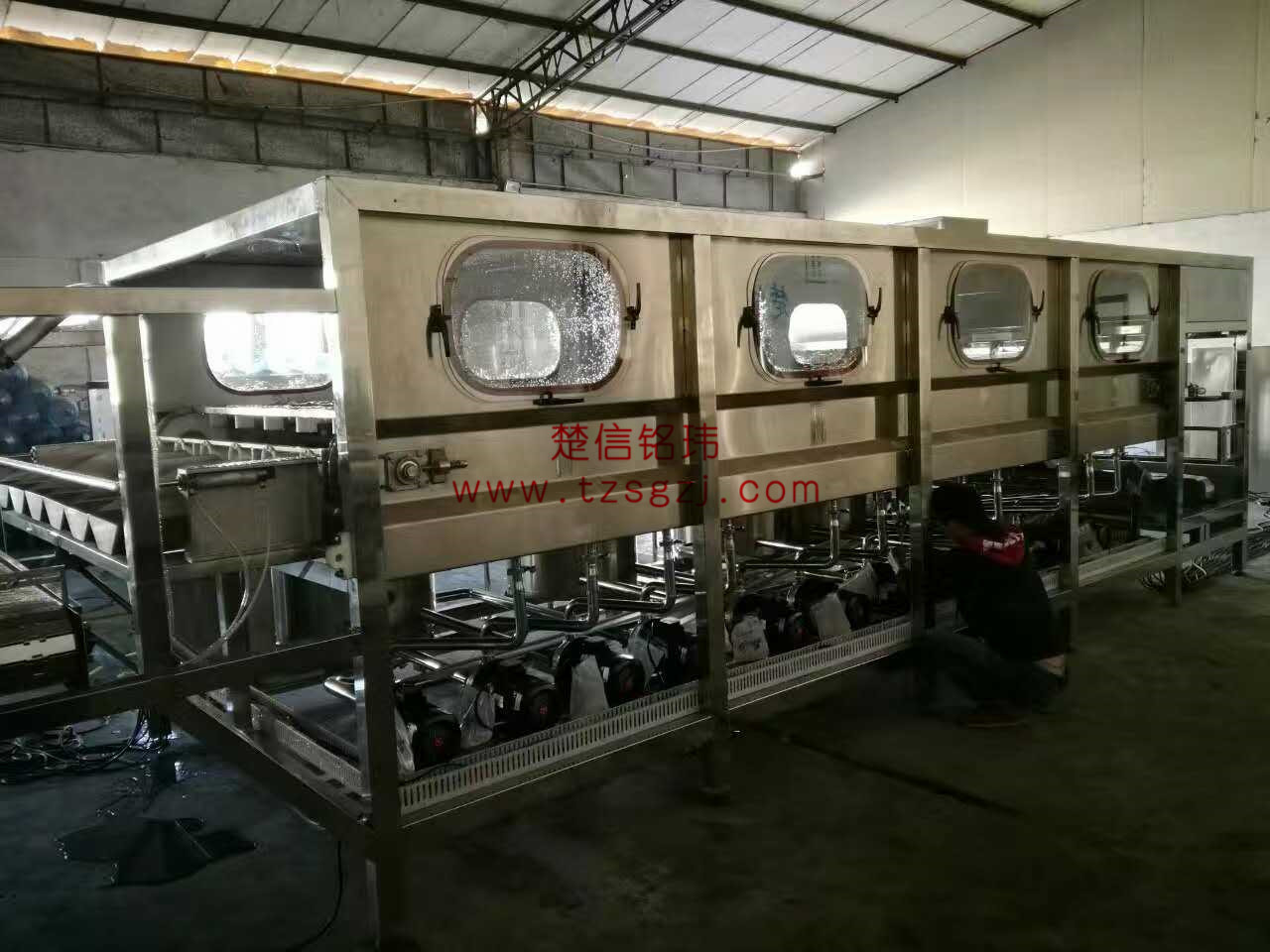
Standard Composition of a Fully Automatic Barrel Water Filling Line
A complete end-to-end engineering solution from Chuxin Mingwei integrates raw water purification, container handling, precise filling, and post-filling packaging. The system is engineered to prioritize stability, applicability, and maintainability.
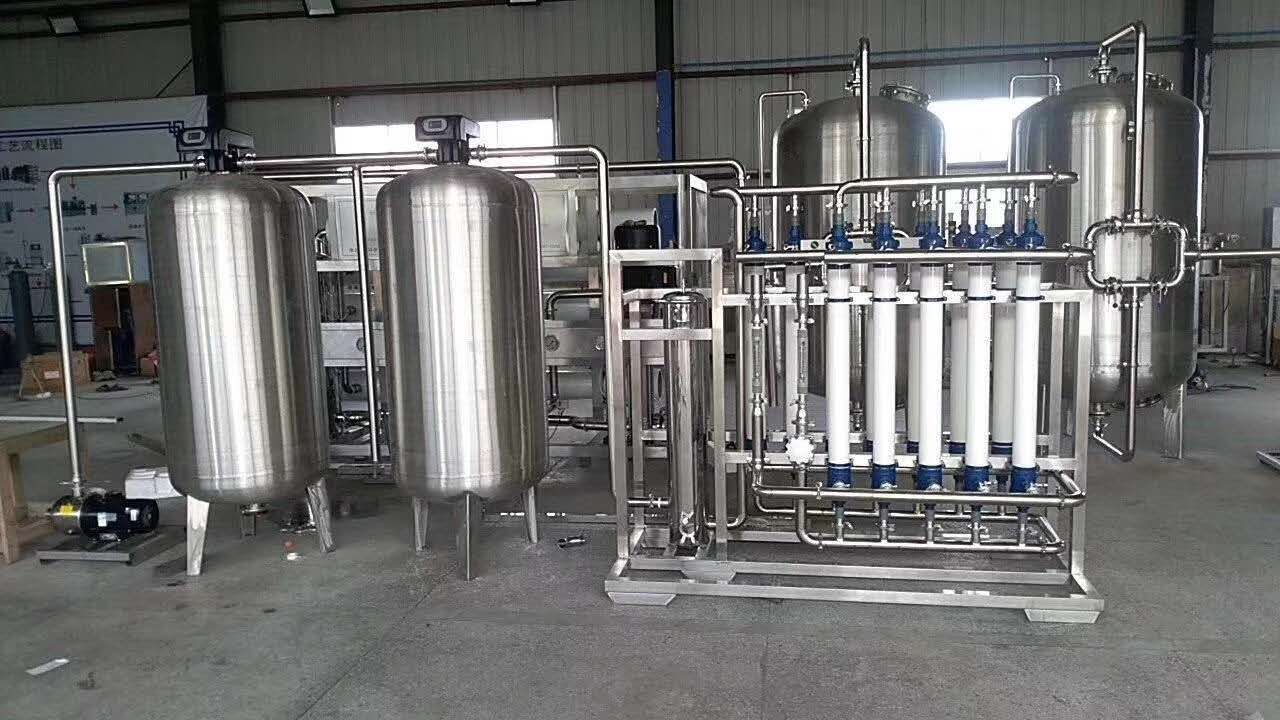
1. Water Treatment & Purification Subsystem
The foundation of any filling line is consistent water quality. Depending on the source water characteristics and product requirements (e.g., purified vs. spring water), the subsystem may include:
- *Multi-media Filtration & Activated Carbon:
- For removal of suspended solids, chlorine, and organic matter.
- *Reverse Osmosis (RO) or Nanofiltration (NF):
- Dual-stage RO is standard for purified water, ensuring deep purification. NF is often selected for spring water to balance purification efficiency with mineral retention.
- *Sterilization:
- Integrated ozone and UV (254 nm) dual sterilization ensures microbiological safety before filling.
2. Barrel Washing-Filling-Capping Integrated Unit
This is the core mechanical assembly. Chuxin Mingwei’s units are designed for minimal manual intervention, synchronizing washing, filling, and capping processes.
- *Washing:
- Multi-stage rinsing (external brushing, internal high-pressure flushing) using treated water.
- *Filling:
- Gravity or pressure-based filling valves calibrated for high accuracy. For example, our bottled spring water lines achieve filling accuracy ≤ ±2 mL.
- *Capping:
- Automated cap sorting, placement, and tightening. Capping pass rates are engineered to be ≥99.6%.
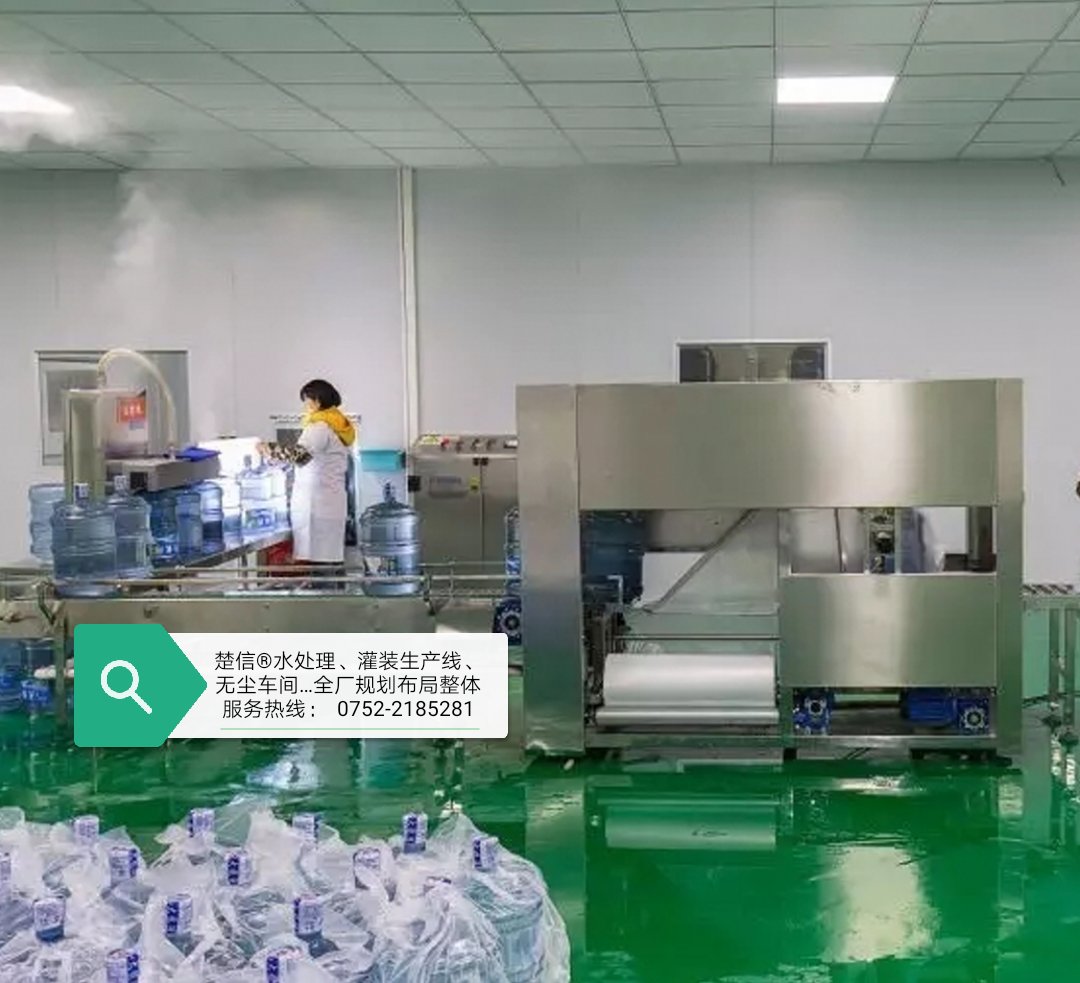
3. Post-Filling Packaging & Output
- *Labeling/Wrap-around Labeling:
- Application of shrink sleeves or labels.
- *Film Wrapping/Palletizing:
- Automated grouping and wrapping for transport.
Co-line Production: Can 3-Gallon and 5-Gallon Barrels Share One Line?
Many facilities consider co-line production to maximize asset utilization. While technically feasible, it requires careful engineering configuration rather than simple mechanical adjustment.
Technical Feasibility Analysis
Chuxin Mingwei’s equipment supports compatible bottle sizes including 18.9 L (5-gallon), 11.3 L (3-gallon), and 5 L. However, "compatibility" does not imply instantaneous changeover without downtime or reconfiguration. Key Conditions for Co-line Operation:
- Mechanical Adaptation (Star Wheels & Guides): The primary difference between 11.3 L and 18.9 L barrels is their base diameter and height. The integrated washing-filling-capping unit must be equipped with interchangeable star wheels, guide rails, and clamping mechanisms. Switching between sizes requires physical replacement of these parts, which typically takes 30–60 minutes depending on operator proficiency. It is not a "one-button" switch.
- Control System Configuration: Our PLC-based intelligent control systems allow for recipe storage. Operators can select the "11.3 L" or "18.9 L" program via the HMI interface, which automatically adjusts filling time, capping torque, and conveyor speeds. However, mechanical alignment must still be verified manually after part changes.
- Capacity Implications: Rated output capacity varies by format. For instance, a line rated at 200–1,800 bottles/hour (based on 18.9 L bottles) may have a different effective throughput when running 11.3 L barrels due to differences in cycle times and conveyor spacing. Procurement teams should calculate total daily output needs based on the primary product format to ensure the motor and drive systems are adequately sized for the heavier load (usually the 18.9 L barrel).
- Clean Air & Environment: If the facility utilizes Clean Air Purification Systems (ISO Class 8 or higher), the cleanroom zoning must accommodate the footprint of both bottle types during changeovers. The airflow design should prevent cross-contamination during the transition period.
Decision Recommendation
- *Choose Dedicated Lines If:
- Your production schedule involves high-volume, continuous runs of a single size (e.g., >8 hours/day of one format). This minimizes changeover downtime and maximizes overall equipment effectiveness (OEE).
- *Choose Co-line Configuration If:
- You have mixed demand patterns, seasonal fluctuations, or pilot production needs. Ensure your operations team is trained in rapid changeover procedures (SMED) to mitigate the mechanical adjustment time.
Implementation Boundaries & Next Steps
When planning a new barrel water line, avoid assuming that "standard" equipment fits all scenarios without site-specific engineering. Chuxin Mingwei emphasizes non-standard, site-specific solutions. Critical Pre-Installation Checks:
- *Source Water Quality:
- Provide a full water analysis report to determine the correct purification process (RO vs. NF).
- *Facility Layout:
- Confirm floor space for the integrated unit, water tanks, and packaging modules. Consider maintenance access paths.
- *Utility Supply:
- Verify compressed air quality (oil-free, dry) and power supply stability, as these directly impact PLC control reliability and pneumatic actuator performance. Next Steps for Procurement Teams:
- Define Product Mix: Determine the percentage split between 11.3 L and 18.9 L production to decide on dedicated vs. co-line architecture.
- Request Site Survey: Engage Chuxin Mingwei for a preliminary layout design based on your factory drawings.
- Review Quotation Scope: Ensure the quote explicitly lists included components (e.g., water treatment skid, filling monoblock, labeling machine) and excludes external items (e.g., main power cable, water source piping). For detailed technical specifications on our Fully Automatic Bottled Purified Water Filling Production Line or Clean Air Purification Systems, please refer to our product pages or contact our engineering team for a customized proposal.
Recommended
Bottled Spring Water Filling Production Line
Chuxin Mingwei’s customized bottled spring water filling production line is specifically...
Fully Automatic Bottled Purified Water Filling Production Line
Chuxin Mingwei’s customized fully automatic bottled purified water filling production li...
Clean Air Purification Systems
Custom-engineered air purification systems for water bottling and barrelled water fillin...