
Industrial Equipment Use Cases: Deploying Custom Water Treatment and Filling Lines
Industrial Equipment Use Cases: Deploying Custom Water Treatment and Filling Lines
For procurement managers and operations leads in the beverage, food, and pharmaceutical sectors, selecting industrial equipment is not about buying a standard catalog item. It is about engineering a system that fits your specific source water quality, target production capacity, and facility layout. At Chuxin Mingwei, we define industrial equipment use cases not by generic machine types, but by the successful integration of water treatment, filling, and clean air support into a stable, maintainable production line. This guide outlines the composition of our engineered solutions, the prerequisites for successful deployment, and the critical decision points for first-time implementers.
Solution Composition: Beyond the Machine
A functional industrial water use case involves more than just a filling station. Our end-to-end engineering services deliver a cohesive system comprising three core pillars:
1. Source-Specific Water Treatment
The foundation of any bottling line is the water quality. We do not apply a one-size-fits-all filtration method. Instead, we engineer the purification process based on your raw water analysis and desired product standard:
- *For Spring Water:
- We utilize a Dual-membrane NF + UF process. This configuration balances purification efficiency with the retention of natural minerals, ensuring the final product meets spring water standards without over-processing.
- *For Purified Water:
- We deploy a Two-stage RO (Reverse Osmosis) deep purification process, often combined with ozone and UV sterilization to ensure microbial safety for drinking water applications.
2. Automated Filling and Packaging
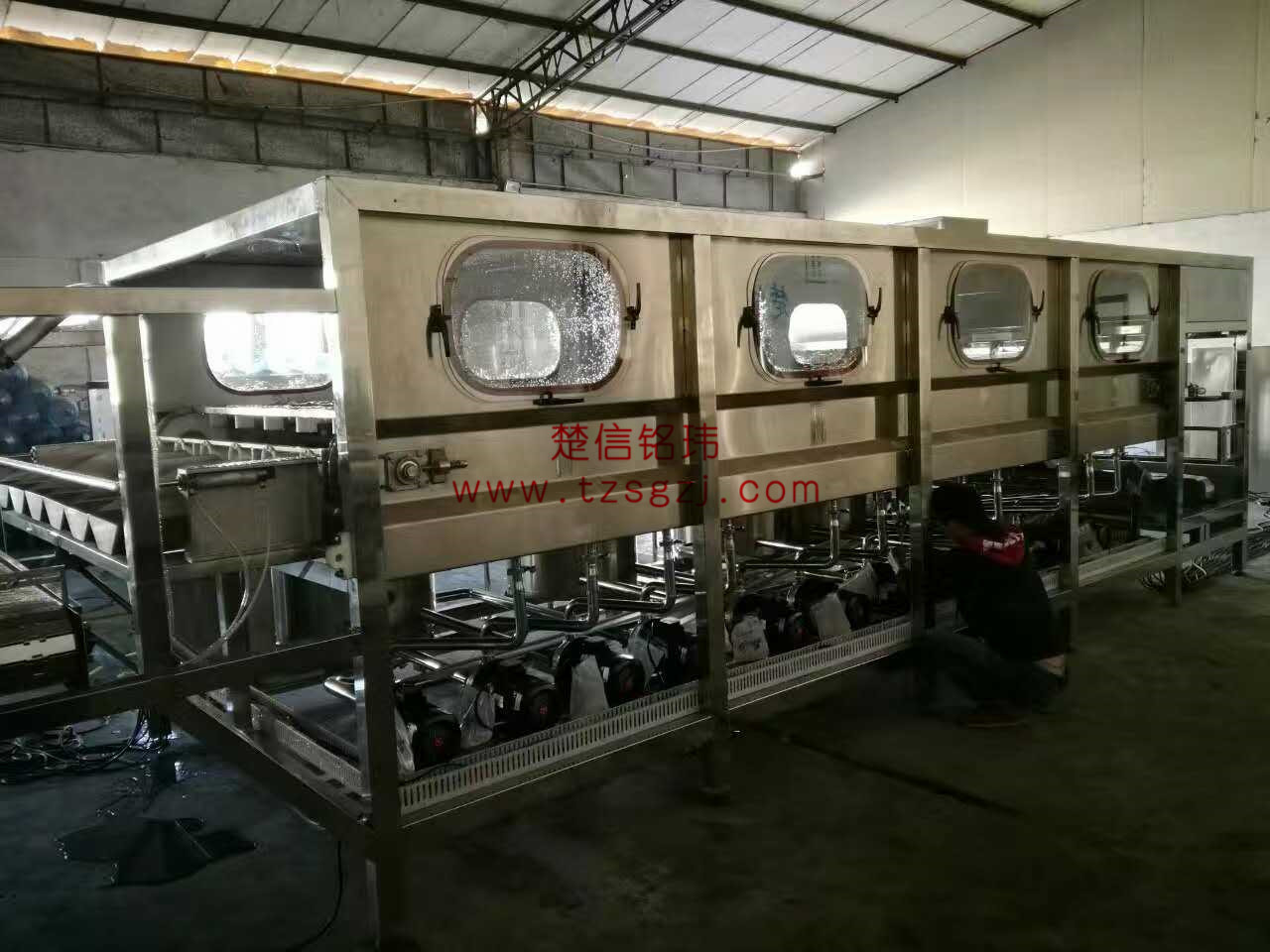
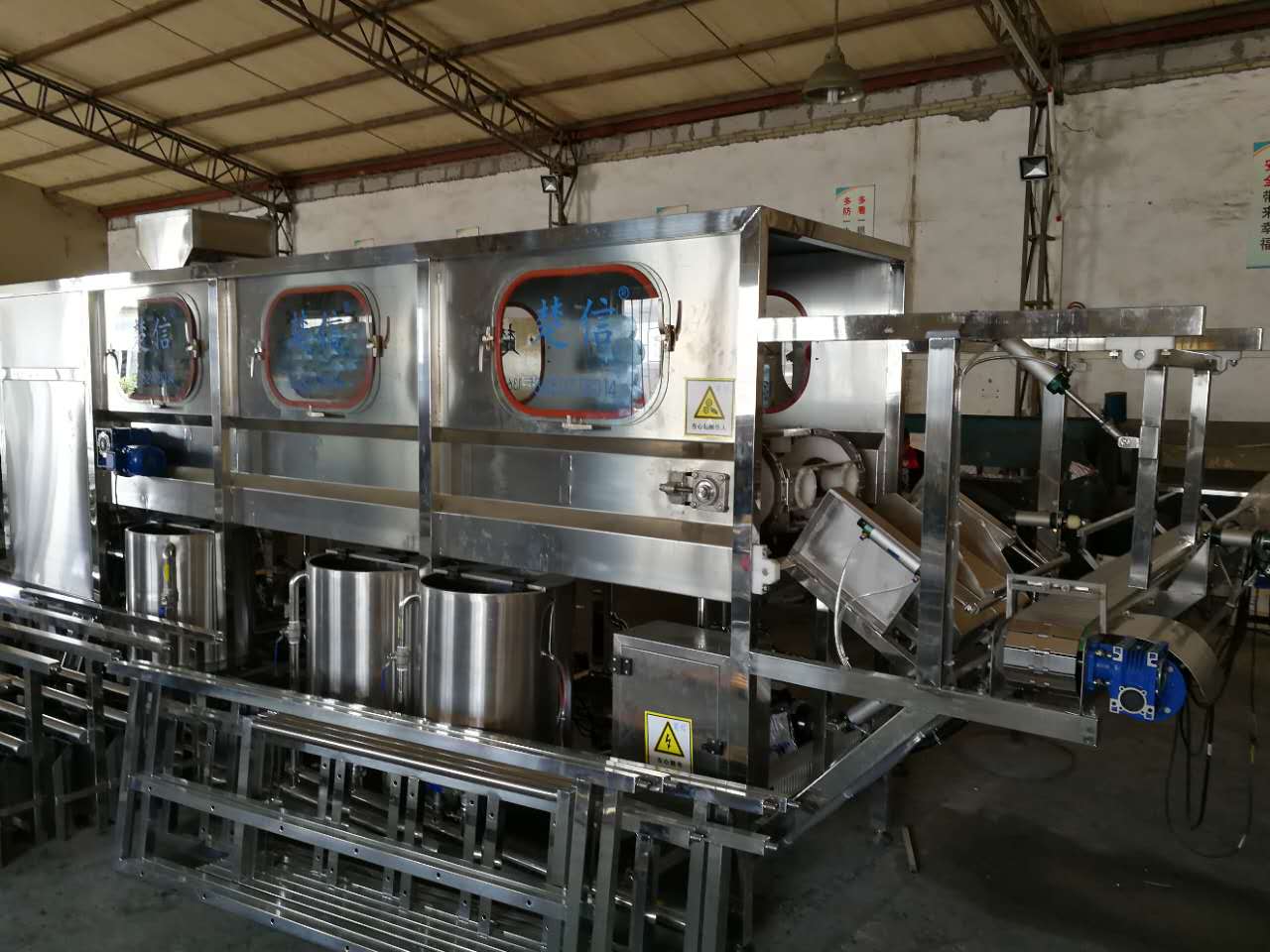
Once the water is treated, the filling line must handle the specific packaging format with precision. Our automated lines integrate bottle washing, filling, and capping into a single synchronized unit.
- *Precision:
- Our integrated units are engineered for high filling accuracy and consistent capping performance.
- *Flexibility:
- Systems are engineered to accommodate various bottle sizes, including 18.9 L, 11.3 L, and 5 L formats, with rated output capacities ranging from 200 to 2,500 bottles per hour depending on the specific configuration and bottle volume.
- *Control:
- All lines feature PLC-based intelligent control systems for minimal manual intervention and real-time operational diagnostics.
3. Clean Air Support Systems
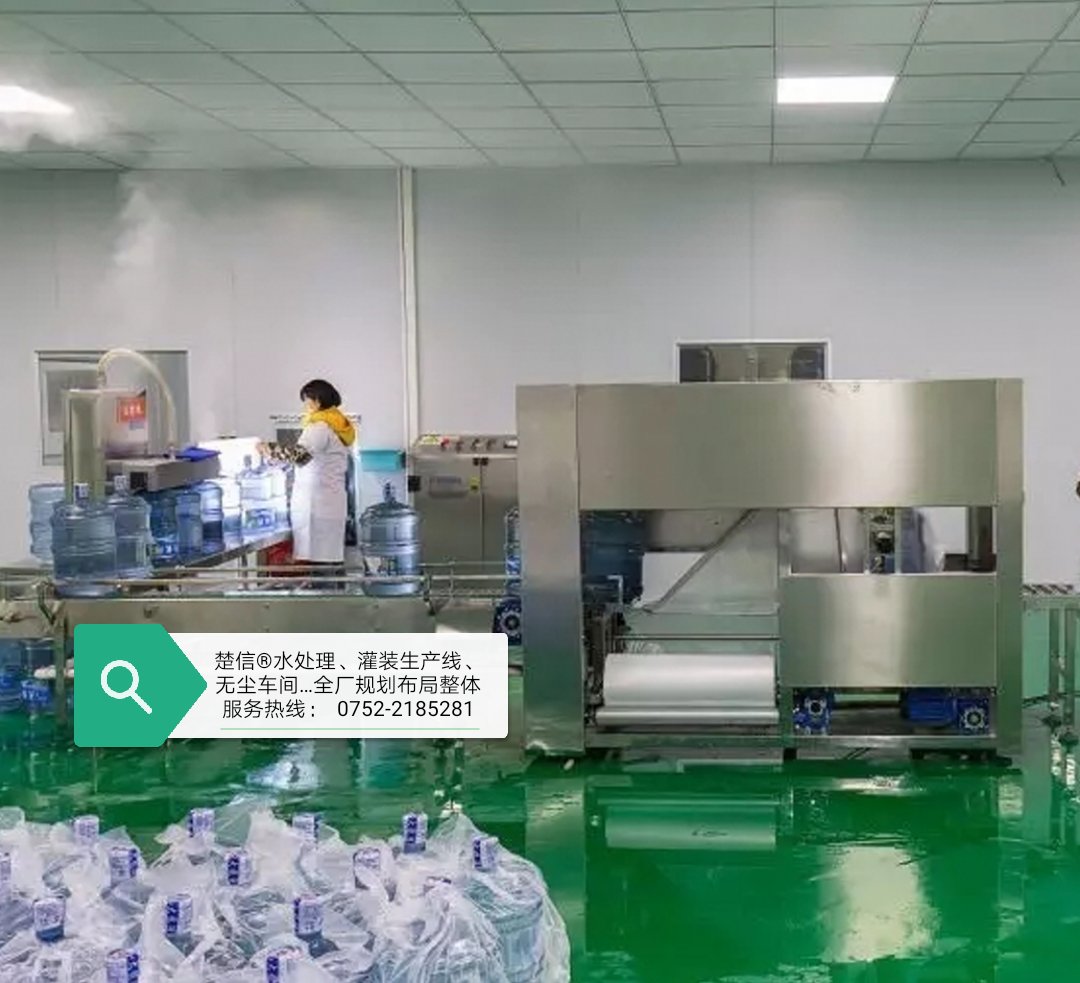
In pharmaceutical and high-hygiene food applications, the environment is as critical as the water. We provide custom-engineered air purification systems designed to meet ISO Class 8 (100,000) standards, with upgrade paths to Class 7 (10,000). These systems include H13 HEPA filtration and site-specific airflow zoning to protect the filling zone from contamination.
Prerequisites for Deployment
Before manufacturing and installation can begin, several key data points must be established to ensure the solution matches the scenario. Skipping these steps often leads to capacity bottlenecks or compliance issues later.
Raw Water Quality Report
You must provide a comprehensive analysis of your source water. The difference between surface water, well water, and municipal tap water dictates the pre-treatment stage (multi-media filtration, activated carbon) and the core membrane technology (NF vs. RO). Without this, the system cannot be sized correctly.
Target Capacity and Packaging Format
Define your peak production requirements clearly. Are you targeting lower volumes for a niche local brand or higher volumes for regional distribution? Additionally, specify the exact bottle dimensions (diameter and height) and cap types. Our equipment is customized to these physical constraints; a line designed for 18.9L barrels cannot simply be adjusted for smaller PET bottles without significant re-engineering.
Facility Constraints and Utilities
The installation site must support the equipment's utility requirements. This includes:
- *Floor Load and Layout:
- Sufficient space for the linear arrangement of washing, filling, and capping units, plus room for operator access and maintenance.
- *Utilities:
- Availability of stable power supply, compressed air pressure, and drainage capacity for wastewater from the rinsing and CIP (Clean-in-Place) processes.
Implementation Boundaries and Risks
Understanding what the equipment cannot do is as important as knowing its capabilities.
- *Liquid Compatibility:
- Our standard bottled water lines are engineered for non-carbonated liquids. Attempting to fill carbonated beverages on a line designed for still water requires different valve technologies and pressure ratings. Do not assume a standard water filler can handle gas-containing products without explicit confirmation.
- *Capacity Realities:
- Rated capacity is based on ideal running conditions with specific bottle sizes. Real-world throughput must account for changeover times, maintenance windows, and upstream water supply stability. We recommend calculating based on shift targets rather than peak theoretical speed, factoring in process water usage, cleaning cycles, and buffer times.
- *Environmental Compliance:
- While our clean air systems meet ISO standards, the overall facility compliance (wastewater discharge, noise levels) depends on local regulations and additional civil engineering works that may fall outside the equipment scope.
Next Steps for Procurement Teams
If you are in the discovery phase for a new production line:
- Compile Your Data: Gather your latest water quality report and define your target hourly output.
- Map Your Workflow: Identify where the new line will sit within your existing facility and note any spatial or utility limitations.
- Engage for Technical Validation: Contact Chuxin Mingwei to discuss your specific use case. We will review your parameters against our NF+UF or RO configurations and propose a layout that ensures long-term stability.
Conclusion
Successful industrial equipment deployment relies on precise matching between your operational needs and engineered solutions. By focusing on source water characteristics, accurate capacity planning, and strict hygiene standards, Chuxin Mingwei delivers filling lines that are not just machines, but reliable production assets tailored to your business.
Recommended
Fully Automatic Bottled Purified Water Filling Production Line
Chuxin Mingwei’s customized fully automatic bottled purified water filling production li...
Clean Air Purification Systems
Custom-engineered air purification systems for water bottling and barrelled water fillin...
Barrelled Water Sterilization & Filling Production Line
A fully integrated, modular production line for sterilized barrelled water — engineered...