
Upgrading Barrelled Water Lines: Critical Risk Checks for RO+UF Configuration Before Finalizing
Upgrading Barrelled Water Lines: Critical Risk Checks for RO+UF Configuration Before Finalizing
For enterprise owners overseeing the replacement or upgrade of a Fully Automatic Bottled Purified Water Filling Production Line, the primary decision point often centers on adopting a advanced Dual-stage RO (Reverse Osmosis) + UF (Ultrafiltration) purification architecture. While this configuration offers superior stability and deep purification capabilities, finalizing the design without a rigorous cross-team risk review can lead to significant operational failures post-installation.
The most common symptom of a failed upgrade project is not mechanical breakdown, but systemic underperformance: the new line cannot achieve target output because the upstream water treatment system is bottlenecked by existing utility constraints, or the facility fails compliance audits due to air quality mismatches in the filling zone.
Symptom: The "Hidden" Utility Mismatch
A frequent scenario in replacement projects involves specifying a high-capacity filling line (e.g., targeting 2,500 bottles/hour) paired with a sophisticated multi-media + activated carbon + dual-stage RO core purification process, only to discover during commissioning that the existing raw water pressure, drainage capacity, or electrical supply cannot support the recovery rates required by the new membranes.
Unlike simple mechanical swaps, upgrading the water treatment core changes the entire mass balance of the plant. If the raw water quality has shifted since the original installation—or if the new RO system requires higher feed pressure than the existing pumps can deliver—the line will operate below capacity, or worse, suffer premature membrane fouling.
Cause: Overlooking Site-Specific Engineering Boundaries
The root cause of these issues is often a disconnect between the equipment specification and the actual site conditions. A generic "off-the-shelf" RO+UF configuration assumes ideal input conditions that rarely exist in brownfield upgrades.
Chuxin Mingwei's engineering approach emphasizes that non-standard, site-specific solutions must be engineered based on actual source water quality reports and facility constraints. The risk arises when procurement teams approve a configuration based solely on rated output (e.g., "200–2,500 bottles/hour") without validating the following critical variables:
- Source Water Variability: Has the TDS (Total Dissolved Solids) or hardness of the source water changed seasonally? A system designed for summer water quality may fail in winter without adjustable dosing or pre-treatment modifications.
- Utility Interface Gaps: Does the existing plant have sufficient space and structural support for the expanded footprint of a dual-stage RO skid plus ozone/UV sterilization units?
- Cleanroom Integration: For purified water, the filling environment is as critical as the water itself. Upgrading the water line without simultaneously verifying the Clean Air Purification System can lead to immediate re-contamination.
Diagnostic Checks: The Owner's Pre-Approval Checklist
Before signing off on a replacement contract involving RO+UF water treatment lines, enterprise owners should mandate the following three verification steps:
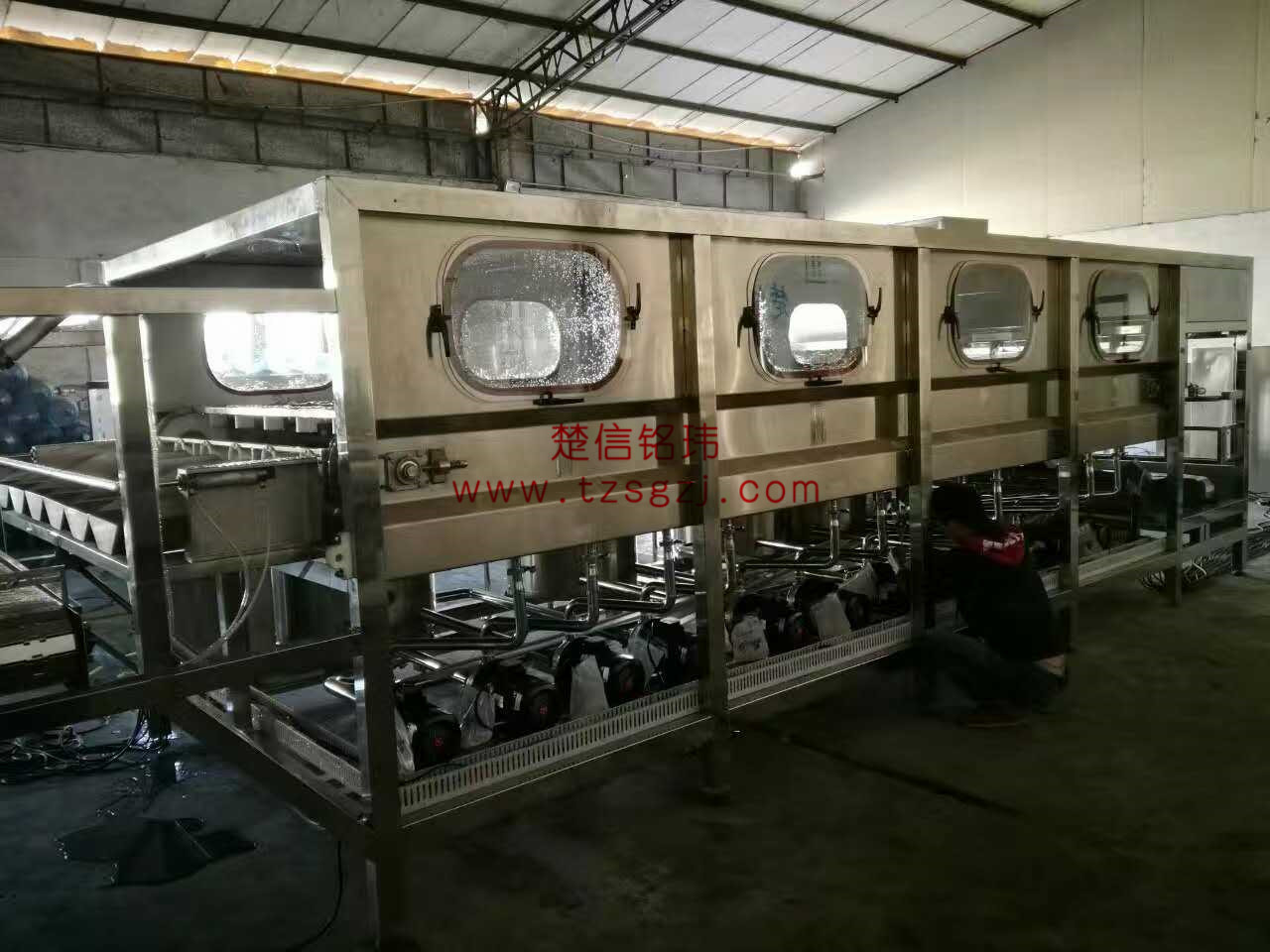
1. Validate the Purification Process Against Current Source Data
Do not rely on historical water reports. Commission a fresh analysis of the current source water. Ensure the proposed Dual-stage RO deep purification combined with ozone and UV (254 nm) dual sterilization is explicitly sized for the current worst-case water quality parameters, not the average.
Check: Does the vendor's proposal include a mass balance calculation showing expected reject water volume and required feed pressure based on your latest lab report?
2. Confirm Cleanroom Compliance Compatibility
Upgrading the filling line often increases airflow turbulence or changes the layout of the sterile zone. If your facility targets ISO Class 8 (100,000) standards, verify that the existing HVAC or the proposed Clean Air Solutions can maintain positive pressure and particulate limits with the new equipment footprint.
Check: Is the air filtration system (e.g., H13 HEPA with airflow ranges matching your room volume, typically 1,500 – 20,000 m³/h) integrated into the control logic of the new filling line? The system should feature PLC + HMI control with real-time diagnostics to alert operators if air quality deviates during production.
3. Clarify Delivery and Utility Boundaries
A major risk in replacement projects is ambiguity over who supplies what. The equipment manufacturer delivers the skid; the client often owns the civil works, piping interconnects, and utility hookups.
Check: Does the scope of work clearly define the boundary where the vendor's responsibility ends? For instance, while Chuxin Mingwei provides end-to-end engineering services including design, manufacturing, installation, and commissioning, the compatibility of upstream utilities (like raw water tank elevation or drain trench capacity) must be confirmed by the site team prior to fabrication.
Resolution: Engineered Site-Specific Configuration
The solution to these risks is a site-specific engineering approach rather than a catalog selection. For a Fully Automatic Bottled Purified Water Filling Production Line, the configuration must be derived from:
- Target Water Standards:*
- Defining the exact conductivity and microbial limits required for your market.
- Packaging Format:*
- Ensuring the filling accuracy (e.g., ≤ ±2 mL for integrated units) matches your bottle types (5 L, 11.3 L, 18.9 L).
- Facility Constraints:*
- Adapting the layout to fit existing floorspace without compromising maintenance access.
By prioritizing stability, applicability, and long-term maintainability, owners can ensure the new line integrates seamlessly with existing operations.
Escalation Boundary: When to Pause and Re-Evaluate
If the vendor cannot provide a customized process flow diagram (PFD) based on your specific water report, or if the proposal treats the cleanroom air system as an optional afterthought rather than an integrated component, the project carries high compliance risk.
Furthermore, if the delivery workflow does not explicitly include operator training and after-sales support boundaries, you risk extended downtime during the transition. A robust partner will clarify these service scopes upfront, ensuring that delivery execution and sustained post-installation support are part of the core value proposition.
Conclusion
Upgrading a barrelled water line is a strategic investment that demands more than just buying new hardware. It requires a rigorous review of the interaction between the new RO+UF configuration, the existing site utilities, and the cleanroom environment. By focusing on product-scenario matching and clarifying delivery boundaries early, enterprise owners can mitigate the risk of costly retrofits and ensure a stable, compliant production launch.
For a detailed assessment of your current site conditions and a customized upgrade roadmap, contact our engineering team to initiate a technical review based on your specific water quality and capacity goals.
Recommended
Bottled Spring Water Filling Production Line
Chuxin Mingwei’s customized bottled spring water filling production line is specifically...
Fully Automatic Barrelled Purified Water Production Line
A turnkey, fully automated production line for purified water in barrels — engineered fo...
Fully Automatic Bottled Purified Water Filling Production Line
Chuxin Mingwei’s customized fully automatic bottled purified water filling production li...