
Operational Risks of Mixing New and Recycled 5-Gallon Barrels on the Same Filling Line Without Dedicated Zoning
Operational Risks of Mixing New and Recycled 5-Gallon Barrels on the Same Filling Line Without Dedicated Zoning
For operations managers and production leads in beverage, food, and industrial water facilities using a Fully Automatic Barrel Filling Line, mixing new and recycled 5-gallon barrels on a shared line without clear zoning or documented changeover procedures poses significant technical and compliance risks.
This article diagnoses the core issues—rooted in actual equipment design and process engineering—based on verified product specifications and operational guidelines from Chuxin Mingwei’s custom-built systems. It clarifies when co-line use is feasible, what must be formally agreed upon in technical contracts, and how to mitigate risk through process control and system configuration.
Why Mixing New and Recycled Barrels Is Technically Risky
Recycled 5-gallon barrels have undergone multiple transport cycles, handling, and prior use. They carry higher risks of external contamination (dust, microbial residue), internal wall degradation, and inconsistent seal integrity compared to new barrels. As such, they require a more rigorous cleaning sequence:
- External brushing
- to remove surface dirt
- Internal washing and disinfection
- with chemical or thermal treatment
- Multiple rinse stages
- to ensure no residual sanitizer remains
- Visual inspection (light check)
- before filling
New barrels, while cleaner, still require at least basic rinsing and may need sanitation depending on the target water quality (e.g., spring water vs. purified water).
According to Chuxin Mingwei’s internal process documentation, "Recycling buckets experience greater contamination risk than new ones, requiring complete inspection, de-capping, external brushing, multi-stage internal washing, and disinfection. These steps are not applicable to all new barrels but must be defined by project hygiene standards."
Attempting to run both types on the same line without separate zones or validated changeover procedures can lead to:
- Cross-contamination between batches
- Inconsistent fill accuracy due to varying barrel cleanliness affecting sealing and pressure
- Increased downtime during transitions
- Non-compliance with ISO 8 cleanroom standards if the line operates in a controlled environment
Equipment Design Implications: What the System Can and Cannot Handle
Chuxin Mingwei’s Fully Automatic Barrel Filling Line is engineered for specific configurations. The system integrates bottle washing, filling, capping, and inspection into a synchronized workflow. However, this integration does not automatically support mixed-use scenarios unless explicitly designed.
Key facts from the product specification:
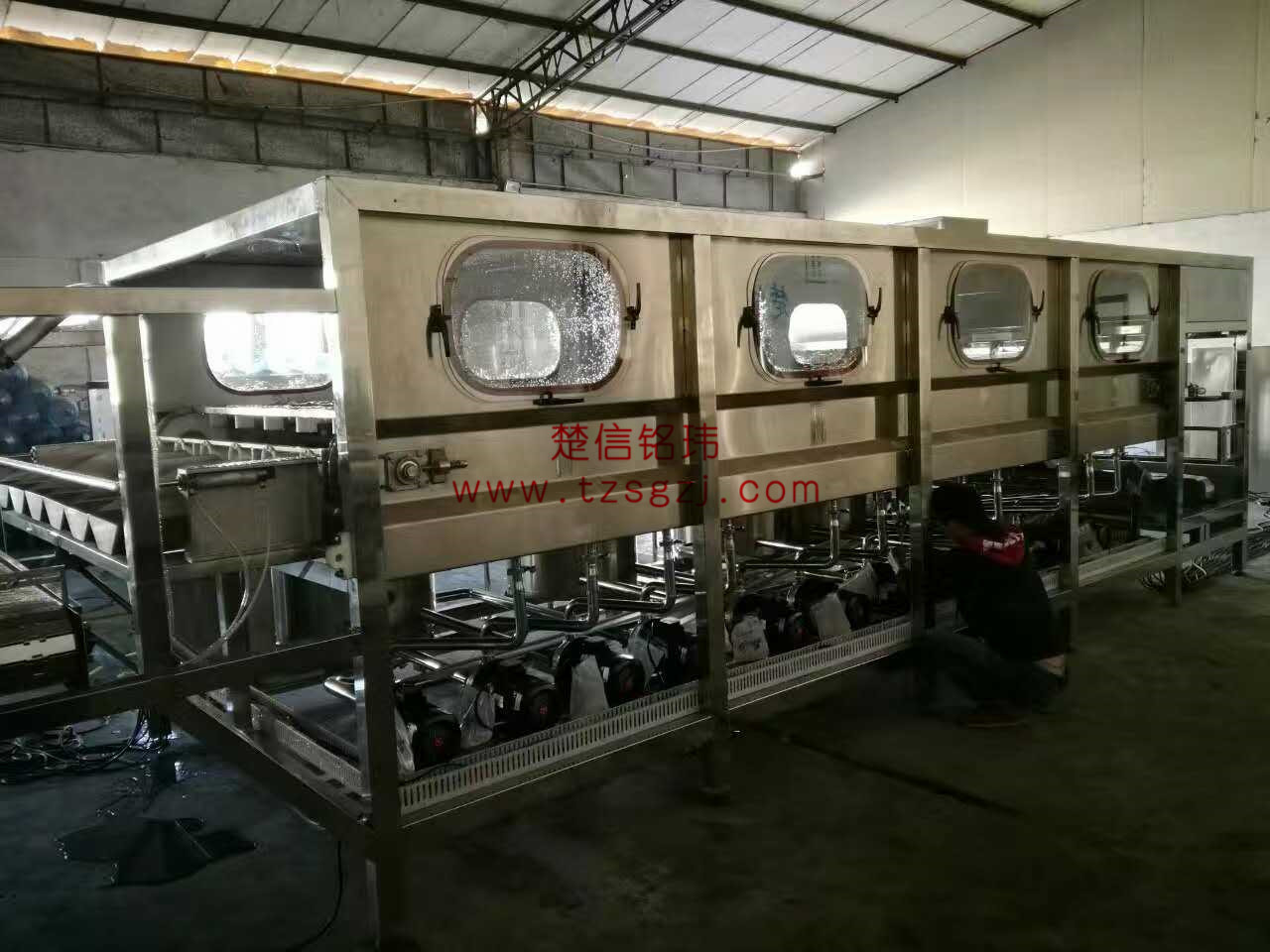
- Compatible Bottle Types: 5 L, 11.3 L, 18.9 L (5-gallon); bottle diameter range: 240–300 mm
- Core Process Flow: Includes pre-washing, internal cleaning, final rinse, filling, cap placement, and torque verification
- Changeover Requirements: Must include replacement of wash heads, adjustment of conveyor guides, and reconfiguration of inspection sensors
As per internal technical guidance, "While some QGF series equipment lists compatibility with both 3- and 5-gallon containers, actual co-line use requires verification of bucket dimensions, neck size, cap type, guiding mechanisms, filling head alignment, and conveyor width. If recycling is involved, additional steps like de-capping and internal scrubbing must be confirmed as part of the technical agreement."
Thus, simply having a machine that accepts different barrel sizes does not mean it supports mixed-use without engineering modifications or procedural controls.
Mitigation Strategy: When Co-Line Use Is Acceptable
Co-line operation of new and recycled barrels is possible—but only under strict conditions:
- Dedicated Zoning: Physically or logically separate the washing and filling sections for new vs. recycled barrels. This includes distinct conveyor paths, wash stations, and airlocks if operating in a cleanroom.
- Formal Changeover Protocol: Define in writing which components must be replaced or adjusted (e.g., wash brushes, nozzle sets, sensor thresholds) during transition.
- Process Validation: Conduct validation runs after each changeover to confirm cleanliness, fill accuracy, and seal integrity.
- Documentation: Include these requirements in the technical contract and commissioning checklist.
Without these, even a high-precision automatic bottle washing-filling-capping machine with ≤ ±2 mL filling accuracy cannot guarantee consistent output across mixed barrel types.
Implementation Boundary: What Is Included in a Turnkey Solution
Chuxin Mingwei delivers end-to-end engineering services including design, manufacturing, installation, commissioning, operator training, and after-sales support. However, the scope of changeover automation or dual-zone design is not included by default.
The company’s service delivery model emphasizes site-specific engineering. Therefore, any requirement for mixed-use capability must be specified upfront in the project brief.
Note: Customization beyond standard configurations (e.g., dual-zone washing, automated tool changers) will affect lead time and cost. These must be confirmed in the technical proposal.
Next Steps for Operators
If your facility plans to mix new and recycled barrels on the same line:
- Review your current process flow against the equipment’s documented capabilities
- Identify required changeover parts (wash heads, seals, sensors)
- Request a technical assessment from Chuxin Mingwei to validate feasibility
- Update your SOPs to include changeover timing, verification steps, and documentation
- Schedule a site visit or remote consultation to align on system configuration
Conclusion
Mixing new and recycled 5-gallon barrels on a single line without proper zoning or documented changeover procedures introduces avoidable risks to product safety, process consistency, and regulatory compliance. Operators must treat this as a system-level engineering requirement, not an operational convenience. Only with formal technical agreements and process validation can such a setup be safely implemented.
Recommended
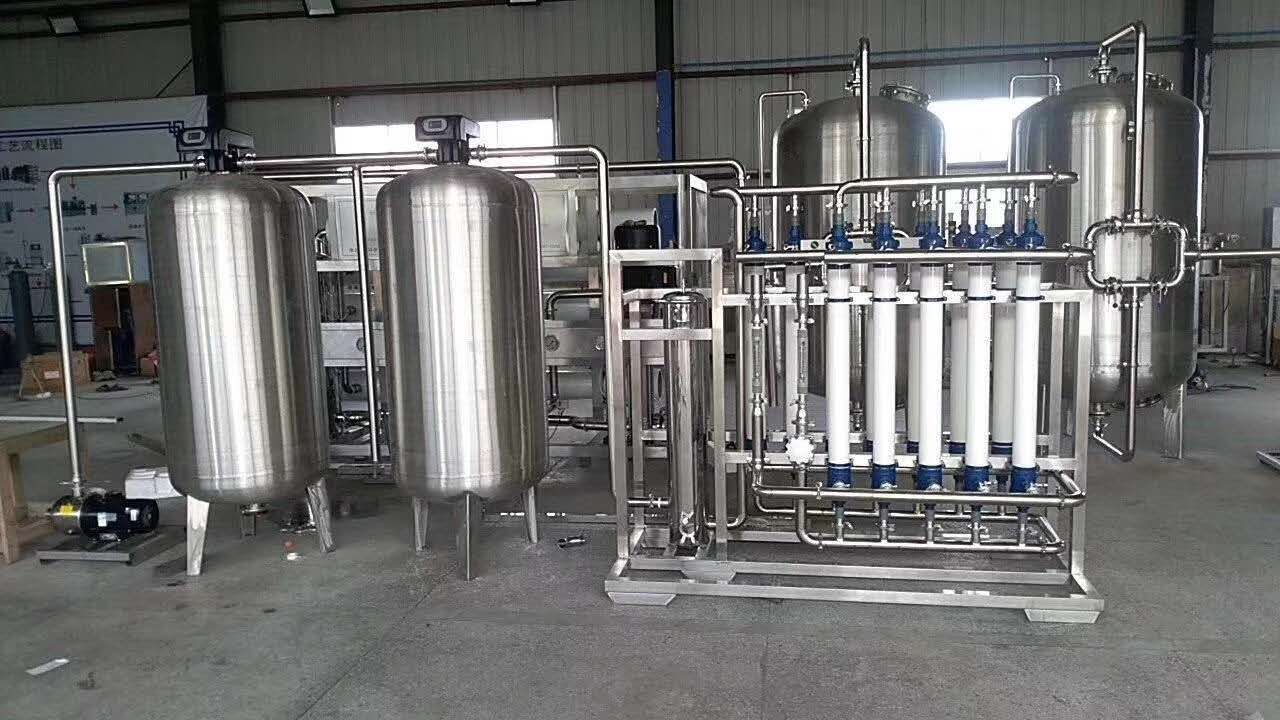
Bottled Spring Water Filling Production Line
Chuxin Mingwei’s customized bottled spring water filling production line is specifically...
Fully Automatic Bottled Purified Water Filling Production Line
Chuxin Mingwei’s customized fully automatic bottled purified water filling production li...
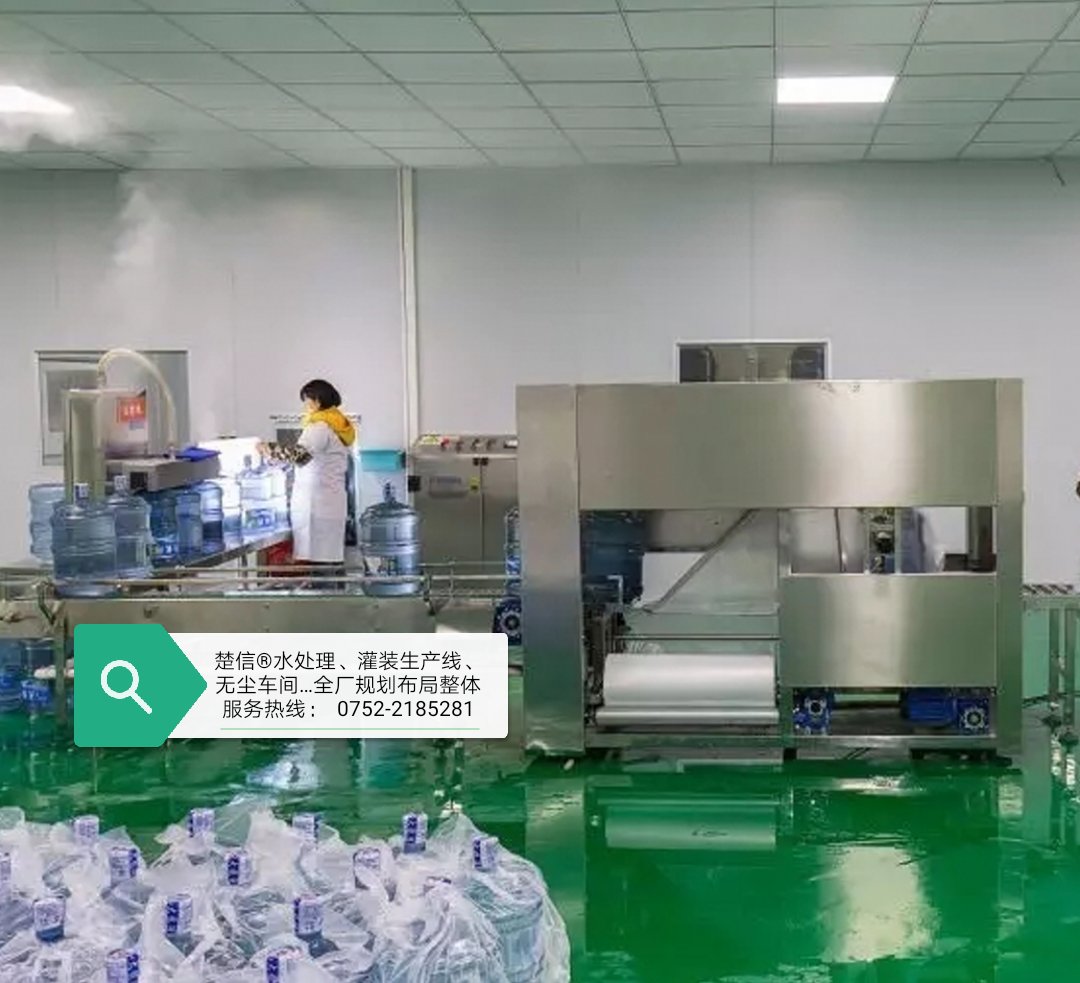
Clean Air Purification Systems
Custom-engineered air purification systems for water bottling and barrelled water fillin...